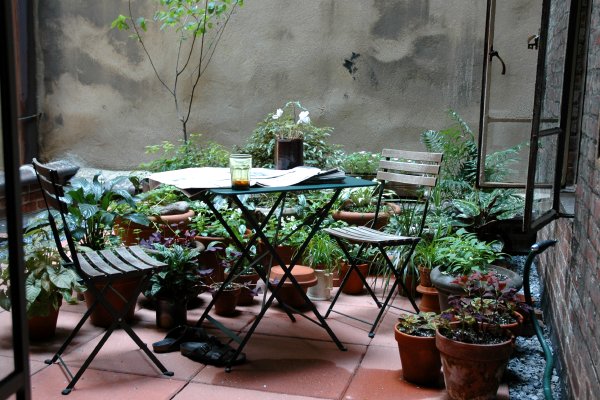
I found the table I’d been looking for!
Now I may never be tempted to leave town, at least not before morning papers and iced coffee. Even the plants seem happier.
Author: jameswagner
Eric Rofes, pleasure even in the manner of his departure
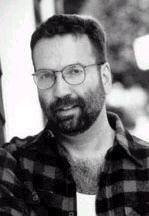
Eric Rofes
Eric Rofes died on Monday.
This remarkable and very gentle activist was one of the most important voices to ever represent the “sexual outsider” – meaning effectively just about everyone who’s ever done the thing, or even only thought of doing it, and still of course all women, as charter members of the tribe. Rofes was an individual thinker and mover, and as his own queer sub-community became more and more interested in pursuing an elusive and illusory respectability he often found himself a voice crying in the wilderness – when his arguments were not actually demonized, described as monstrously sexually-compulsive.
In the death announcement on the PlanetOut site, Richard Burns, executive director of New York’s Lesbian, Gay, Bisexual and Transgender Center, is quoted: “He was a critical thinker and someone who didn’t feel it was necessary to go with the flow in his analysis. He believed we needed to build a healthy community and respect adult sexual decisions and not pathologize or infantilize gay men’s sexual lives. In the face of HIV/AIDS that was not always a popular view.”
Ben Shepard, who also knew Rofes as a friend and a fellow activist, has written this memorial:
GOODBYE TO ERIC ROFES
I just got word that Eric Rofes died of a heart attack. I had known Rofes since our time in San Francisco with Shanti Project in the early 1990’s. We reconnected together in the late 1990’s doing SexPanic! stuff in 1998. He was a caring voice who hoped for pleasure to be part of our democracy. He argued for this, screamed about it, yearned for it. When he was attacked he fought back about it. And many attacked Rofes. They attacked him for wearing leather when he testified at the National AIDS Commission in San Francisco. He was criticized for embracing Walt Odets and the notion of survivor guilt among gay people who had lost whole cohorts of friends to HIV. And he was attacked when he ran Shanti Project. But he kept going. And he kept on asking people to think about the complexity of their lives and struggles and emotions. After leaving Shanti Project, he earned at PhD at Berkeley and wrote two enormously influential books, Reviving the Tribe: Regenerating Gay Men’s Sexuality and Culture in a Period of Ongoing Epidemic and Dry Bones Breathe: Gay Men Creating Post AIDS Identities and Subcultures. Both were enormously important, contextualizing the losses to community, pleasure, friendship, and social knowledge of the connection between public sexual space and community organizing with the AIDS years. Early in Reviving the Tribe, Rofes wrote about standing with tears in front of a sex club where he had once enjoyed so much pleasure. Rofes was intensely aware of the multiple losses to AIDS and the need to think through what was going on. “I believe that any hope for collective survival is rooted in the realities of our lives, however, harsh and seemingly unacceptable,” Rofes wrote. “Our inability to continue confronting the ever-intensifying manifestations of AIDS has brought us to the point of paralysis.”
Rofes railed against those who suggested gay men should just ‘grow up’ and reject public sexual culture. “Even a cursory look at the histories of our movement will show that sexual liberation has been inextricably bound together with gay liberation, the women’s movement, and the emancipation of youth,” he wrote. He suggested a vast cultural amnesia was taking place as the lessons of the gay liberation years were lost amidst panic over continued rates of HIV. Rofes was keenly aware of the complexity of questions of sexual self determination. “For many, the forbidden becomes desired; taboo produces cravings; the return of the repressed is made corporeal and is experienced as an enormous hunger,” he wrote in his newest book. He was always aware telling gay men or anyone to just say no served no one’s ends but the moralists. Thus, HIV prevention would have to be considered within a broad holistic, harm reduction approach. For Rofes, there was far more to the question of pleasure than just getting off or male privilege. Central principles of democracy in America lay at the core of the sex panic question. Rofes wondered, can you lose your job for deviating from conventional sexual norms? For many, the answer is affirmative. Like so much else within our democracy, what one person enjoys, another will inevitably find offensive, he counseled. Variation is a core component of social life. And some people built alternative kinship networks. This should not be condemned, at least not in a pluralistic democracy. “Among the most effective ways of oppressing a people is through the colonization of their bodies, the stigmatizing of their desires, and the repression of their erotic energies,” he claimed during the National Gay and Lesbian Task Force‘s Creating Change Conference San Diego, November 16, 1997. “We believe continuing work on sexual liberation is crucial to social justice efforts,” (see complete speech here).
In 1998, Rofes came to New York to speak on a panel for the one year anniversary of SexPanic! and contacted me. I had just finished a book about the San Francisco AIDS years (White Nights and Ascending Shadows: An Oral History of the San Francisco AIDS Epidemic) and he wanted to talk about the book. We talked about survival, the capacity for resiliency, and the hope for a lusty pleasure in a democracy. I told him about my work with the group as a kinky straight man and he encouraged me to push forward and help forge a different kind of politics based in caring connection and social justice rather than identity, despite what people said. I had always had an image of him being a radical, but in person he was a caring, thoughtful person willing to consider each of our unique contributions. He was ever aware of all of our capacities to contradict ourselves and be bountiful. And was painfully aware that some of his greatest critics were gay men who scorned him for integrating his own personal story into a larger story of gay liberation and the need to revive the tribe. ‘Where are your sexual politics?’ he wondered after such attacks.
In the years that followed Rofes tried to build a broad based movement for gay men’s health. He was keenly aware of the need for social movements to support broad based struggles for social justice. When I interviewed Rofes for my dissertation, he helped tease out the relationship between embodied experience and the history of struggles for pleasure. Rofes saw that the role of the gay liberation movement was to reject notions that pleasure should be considered a peripheral component of social movement activity. Rofes helped me think about pleasure and play as strategy for organizing. “Play is a term for drag, ACT UP zaps, the use of food in the Latino Community, the use of dance dramaturgy, culture jamming, the carnival, and other forms of creative community building activities,” he helped explain to me, as we talked. Thus, play is the exhilarating fun, the pleasure part, the joy of building a more emancipatory, caring world. Rofes would point out that humor, drag, eating food together, cultural rituals support activism. “Ultimately, does a sober form of organizing appeal to more than white people in a sustainable way?” he asked. We concluded that play was part of expanding networks, social capital, and friendships extended around activism.
As we walked away after the interview in the West Village, Rofes said to me that he felt like a strange kind of survivor from a storm, from a different kind of era. Many, many of his friends had passed. AIDS was still around and so was Rofes, who had recently gotten tenure at the school where he happily taught and wrote.
That Spring of 2005, Rofes wrote that his life was a success despite the losses. “Recently I attended a dance party, one of the many evenings of intense music and cavorting available to thousands of gay men in my city each weekend. I looked over the crowd of primarily twenty-something and thirty-something men, shirtless, gyrating, arms reaching to the heavens. I thought immediately at how the doomsayers criticize this population of young gay men, saying things such as, ‘I didn’t work my ass off during the past 30 years to create a culture of drug use and unprotected sex and self-centered me-me-me attitudes. This is not what the gay movement was all about….’ And then I realized something, something surprising and simple. As someone who has spent the last 30 years working on gay liberation and AIDS activism and sexual liberation, what I saw before me was precisely the world I was trying to create. When we fought during the 1980s and 1990s to prevent gay men’s sexual cultures from being destroyed, when we worked to preserve certain values about gender play, friendship, and erotic desire, when we quietly worked behind the scenes to ensure that certain spaces would survive gentrification and public health crackdowns, we were fighting to preserve the ability of new generations of gay men to create worlds of pleasure and desire. As I looked out over the sea of dancing men, I realized, despite all the battles we’ve lost in terms of politics and discourse and the media, gay men and gay sexual cultures had managed to survive and, indeed, thrive.”
The last time we saw each other was last Spring during the Pacific Sociological Association Meetings. In between a tour to Slammer‘s sex club in West Hollywood we talked about other heroes of the movement who were facing their mortality. Rofes was always concerned about AIDS, but none of us know how we are going to go out.
Eric Edward Rofes was 51 years old. He is survived by his long time partner Crispin and friends from around the world. He will be missed.
[image from Gay Today]
Rolfes had a lover and died in Provincetown, on a summer day, while working on a writing project, unexpectedly, of a heart attack. There aren’t many more attractive scenarios for a departure, especially for a pleasure-loving activist in the age of AIDS.
Aaron Krach at DCKT
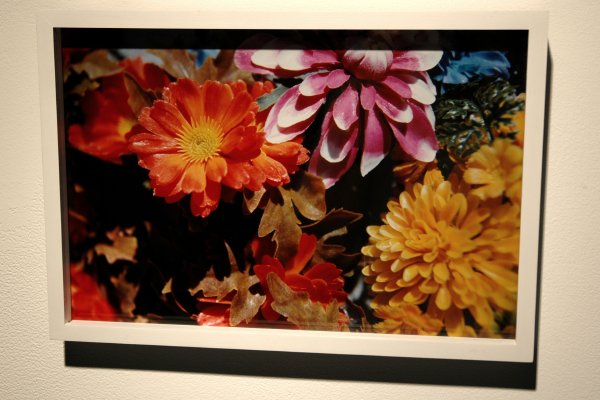
Aaron Krach Enough #1 2006 R-print 8.75″ x 13.25″ [view of installation]
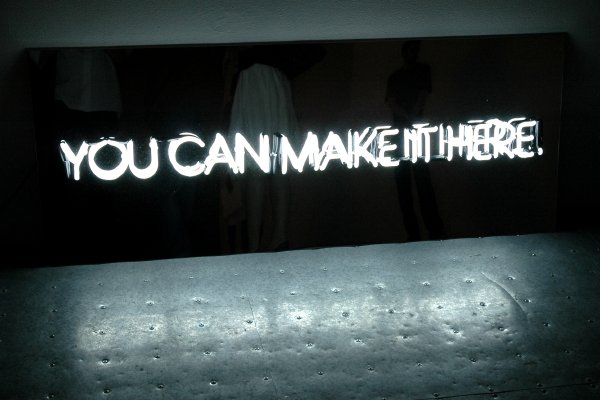
Aaron Krach You Can Make It Here 2006 neon on Plexiglas mirror 24″ x 61.25″ [view of installation, with reflected viewers]
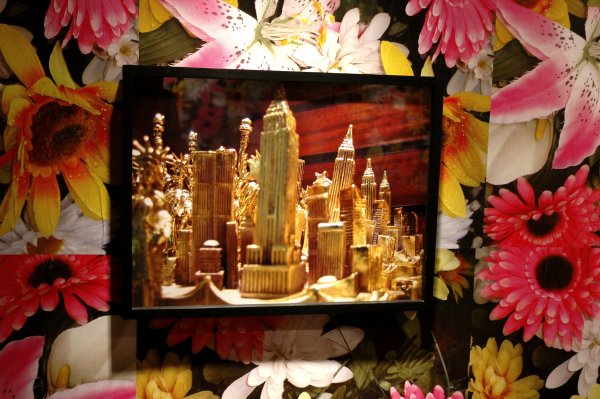
Aaron Krach United Nations Gift Shop 2006 digital C-print mounted on Plexiglas 14.25″ x 19.25″ [detail view of installation]
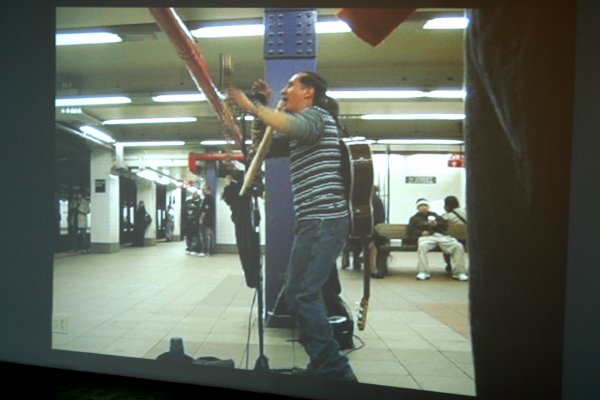
Aaron Krach Performance #1 2006 DVD [still from video installation]
How much longer will we be able to [heart] NY?
What does New York mean to young artists today? Many of us who love the rich and raw exuberance of the creativity which brought us or kept us here are now very concerned about the future of [all of] the arts in a city which seems increasingly unable to accomodate those who don’t already have, well . . . money.
But maybe all most of us can do is continue to wonder at the things that still make us [heart] NY.
Aaron Krach‘s beautiful exhibition in multiple media at DCKT Contemporary isn’t ordered to address the real estate problem directly, but it does remind us, with sensitivity and great beauty, of some of the ordinary delights and extraordinary serendipities which have always inspired the neighbors we would miss the most if Luxurycondoland proves triumphant in the end.
From the gallery press release:
Aaron Krach stakes a claim to a piece of the rich and varied history of artists inspired by New York City. “My new work fits somewhere between late, jazzy Piet Mondrian and early, East Village Madonna,” says Krach. “It’s a genuine but perhaps futile attempt to capture the beauty of Manhattan streets and the sex appeal of pure, unadulterated pop culture.”
Works in the exhibition include photographs of new and discarded consumer goods as well as the artist’s own sculptures comprised of commercially manufactured objects. The raw materials of Krach’s art are the overlooked and underappreciated parts of the cityscape-wheat-pasted advertising, steam that billows up from under the streets, and discarded kitsch.
Watch for larger or smaller bits of Krach’s posters featuring bunches of fake flowers on billboards all around the city, starting with the outside west wall of the gallery building itself.
Scroll down inside this Bloggy post, and inside my own posts here and here for more of Krach.
Oppenheimer would not be surprised
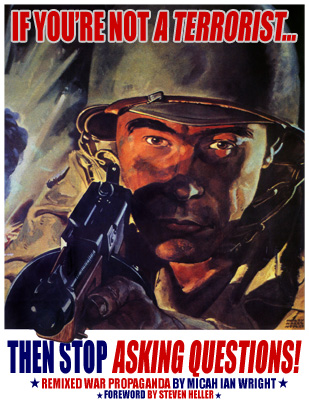
In the last hours these two stories have appeared in the NYTimes:
“Cheney Assails Press on Report on Bank Data” and:
“Court Bars Info Request on NSA Wiretapping”
So, the engineer behind the systematic destruction of our liberties is outraged that the media might inform us of the fact, and in a related case our courts have once again ruled on the side of the rogue executive. Even the third branch of our government is paralyzed to resist these authoritarian depredations, fearing the accusation of being soft on terrorism (the new McCarthyism) while ignoring the terrorism at the top.
Wednesday evening we were privileged to attend a magnificent performance of Heinar Kipphardt’s 1968 play, “In the Matter of J. Robert Oppenheimer” at the Connelly Theatre in the East Village. In the drama, which is based on actual transcripts from a 1954 hearing, Oppenhiemer has been summoned before a committee of the Atomic Energy Commission charged with determining whether his security clearance will be reinstated. In the first act he responds to one of the lawyers arguing against his case,
“There are people who are willing to protect freedom until there is nothing left of it”.
Can anyone say the phrase, “police state”? Or are we going to wait until we are totally forbidden to do so?
[image from Micah Wright]
Reed Anderson at Pierogi 2000
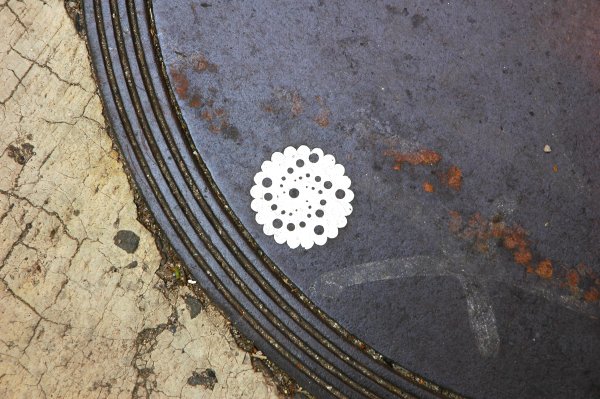
painting on manhole cover, most likely that of Reed Anderson [view of site-specific installation]
I didn’t manage to get to Reed Anderson’s show at Pierogi until this past weekend, so as much as I would like to I can’t send anyone over to Brooklyn to see it now.
Especially since my own photographs came out very yellow, there’s at least a small consolation in the fact that the gallery itself has a number of good images of the work shown [odd as it may seem, even now that’s not always a given].
Judging from past experience, there should still be at least one of Anderson’s works visible somewhere in the office area if you do stop by, but there is almost certainly one piece remaining outside. It’s lying on the top of a manhole cover located just below and west of the building’s stoop. When I descended the steps this past Saturday and spotted the tiny work I pointed out the silver medallion to several people sitting or standing around. It seemed to be a complete surprise to everyone, including at least one person connected with the gallery. It certainly looks like something Anderson would enjoy carrying off without announcing it to anybody.
UPDATE on Brooklyn College MFA suit
[Somehow this announcement got lost in my email one week ago while I was distracted at home, but it’s still worthy of a post, since we haven’t heard the end of this story yet.]
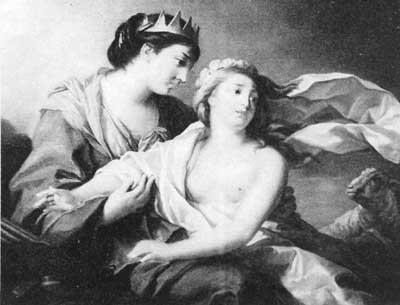
Elizabeth Louise Vigée Le Brun Innocence seeking refuge in the Arms of Justice 1779
The eighteen students whose Master of Fine Arts thesis show was summarily shut down on May 4th by a parks official, with the work removed and damaged by their school shortly thereafter, filed suit this month against the City of New York, the NYC Parks Department and Brooklyn College, citing First Amendment violations and property damages.
I would expect this case to be a no-brainer for any court, but I no longer have the naive confidence in American justice with which I was brought up.
For details on the suit, see the PLAN C(ENSORED) site.
[this image from Bat Guano may be a bit melodramatic, but I love Le Brun as I love Justice; besides, we should give her some slack (if not a cheer), since she was still working here under the ancien regime]
“Gay Art Now” at Paul Kasmin
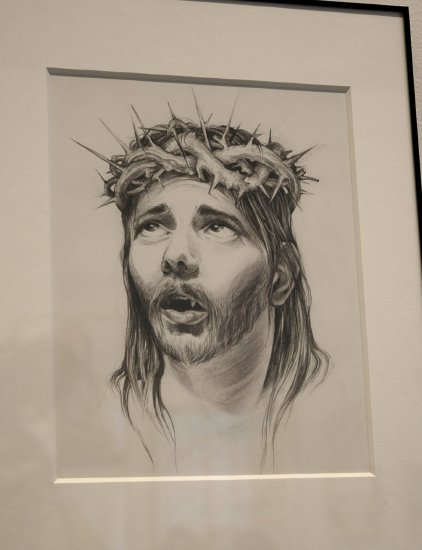
Daniel McDonald Jesus Christ, Vampire 2006 pencil drawing 14.25″ x 11.25″ framed [installation view]
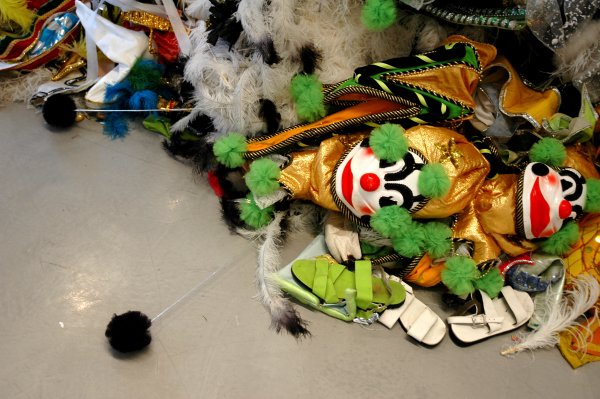
Andrea Fraser Um Monumonto As Fantasias Descartadas 2003 mixed media (Brazilian carnival costumes) dimensions variable [detail of installation]
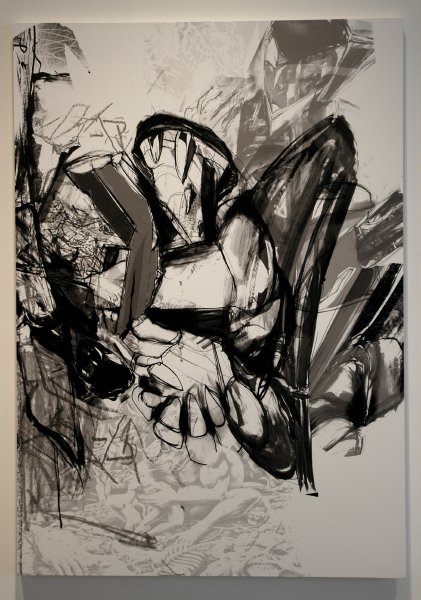
Dennis Balk Untitled digital print on canvas 68.25″ x 48″ [installation view]
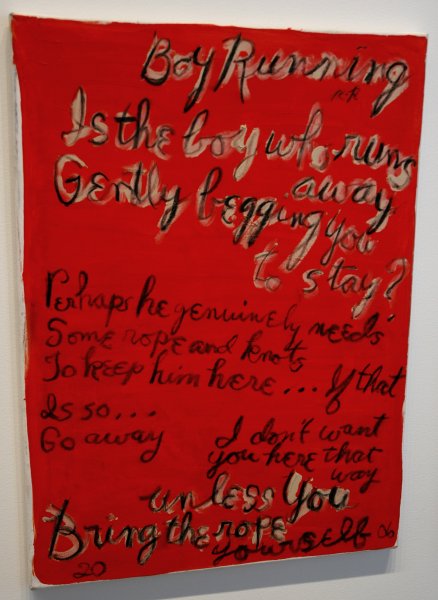
Rene Ricard Untitled (Boy Running) 2006 30″ x 22″ [installation view]
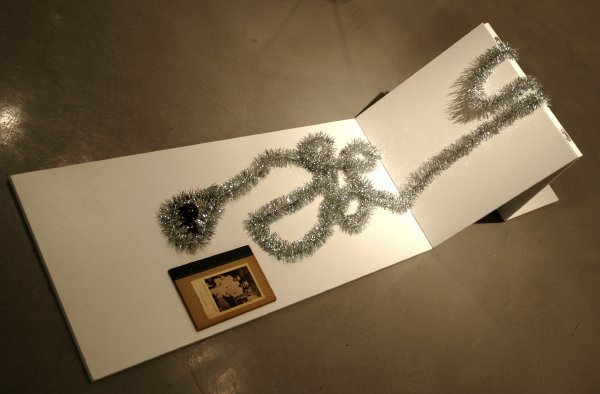
Tom Burr Christmas Collapse 2005 wood, latex paint, metal hardware. galss, paper [installation view]
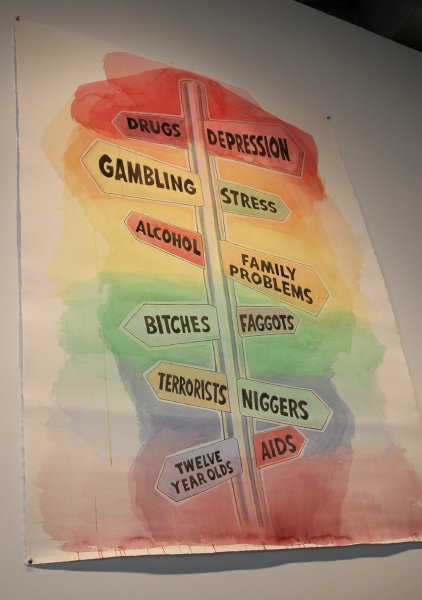
Ivan Witenstein Help 2006 watercolor and graphite on paper 68.75″ x 51.75″ [installation view]
It’s a terrific title for a show, and an even better excuse for a great press release, but best of all is the work itself. The artist Jack Pierson has curated one of the most arresting group shows of the year for Paul Kasmin’s main space on 10th Avenue.
Pierson introduces his choices under the headline, “THE NAME OF THIS SHOW IS NOT GAY ART NOW“:
It seems to me the notion of Gay Art is somewhat passé and this show is an ode to its passing. It includes work by over fifty artists, not all of whom are gay, identify as gay, and not all of whom are living. The name of this show is not Gay Art Now. Maybe the link being made is about sensibility, maybe it’s about society. âJack Pierson
our little scrub farm

it only appears restful between regular campaigns replacing casualties with new recruits
Our apartment envelops this bit of the outside on its north side, but nature refuses to forgive a building for totally blocking all direct sun with its height, so the possibilities for happy plants are very limited.
I don’t ask for much however, and the only thing I think we’re really missing is a proper surface for a newpaper and a coffee. Does anyone know where I could find the folding steel table designed to go with these dark green chairs?
extensions for both “Spring Awakening” and “Dead City”
The Atlantic Theater’s “Spring Awakening”, which I wrote about on June 10, has been extended through August 5, and the New Georges’ “Dead City”, which Barry wrote about on June 1, has been extended until June 30.
Bush absolutely did not visit Iraq or Baghdad last Tuesday
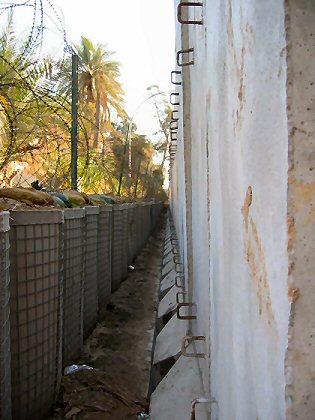
no hanging garden, this [a section of the Green Zone perimeter]
I’m tired of the media’s [continuing] misleading descriptions of last week’s flight by Bush to Baghdad International Airport and the Green Zone. If I thought it was just a question of semantics, I’d leave it alone, but words are important, especially when they are instruments of propaganda and they are going unexamined.
He didn’t “visit Iraq”.
He didn’t “visit Baghdad”.
He visited a god-damned super-bunker sheltering people who call him sir.
Even at that our heroic conqueror’s departure for his five-hour stop-off inside a fortified headquarters (“the Ultimate Gated Community”) shared by his victorious army of pacification and a more-or-less client local government had to be kept secret from his own staff. Also, what does it say about this stunt that Nouri al-Maliki, the Iraqi Prime Minister and Bush’s host, didn’t know the President of the United States was coming until virtually the moment he showed up at the door?
[image from Rich Galen’s Mullings]