eighteenth-century New England trivet

trivet_2.jpg
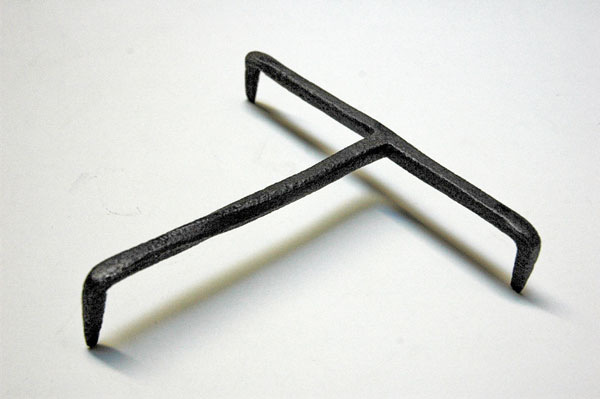
wrought iron trivet, likely late eighteenth century, probably Rhode Island 7″ x 5.75″ x 1.75″

I’m normally almost dysfunctional if asked to speak in front of a group, but I hardly hesitated when Austin Thomas asked if I would be a part of �One Image, One Minute: Significant People Present Significant Images�. The event, hosted at Hyperallergic on June 22, was a benefit for Camp Pocket Utopia, a creative summer project, social school and free arts camp for kids, being put together by Thomas and the nonprofit space Norte Maar. Their ambitious program, to be located at Rouses Point in upstate New York, will be based on a learning model created at Black Mountain College, as interpreted by Thomas, who describes it further:

The Camp hopes to inspire a conversation amongst artists, creative thinkers, and the community, empowering participants and observers to think for themselves while offering a free arts camp for the kids of Rouses Point, NY, and the surrounding North Country.

I was honored, and eventually psyched (almost) to be a part of the terrific “show and tell” organized as a fundraiser for the project. Thomas had asked twenty-five people to each submit an image of something very important to them, and to talk about it for one minute. Almost immediately I thought of the trivet shown at the top of this post, and told her I would contribute, since I knew I wouldn’t have any trouble talking about something I know well and which has meant a lot to me.
I only had to stand up there for 60 seconds. How hard could that be? It turned out that the hardest part was the time restriction. I didn’t want to read from notes, and I didn’t want to stress out by doing too much preparation, but, less than an hour before leaving for Williamsburg, when I first did a run-through, I realized I had enough material for five or ten times my time slot.
We were told we would be called up in alphabetical order, so I had plenty of time while I waited. Grade school flashback: Once again Wagner was going to be the last to give his report (I’d like to think Austin had thought of that conceit, for its connection to her larger, school-ish project). I managed to pare it down a lot from my piece while I sat waiting my turn, but much of the story survived.
It was a successful experiment. It made for a thought-provoking evening, and it drew a great group of people – on both sides of the tiny apron stage.
One of the reasons the trivet had come to my mind must have been that it was a simple and beautiful thing. It was a rough material, yet it had left the forge with an awesome grace. It was totally functional, but perfectly sculpted: Each of its branches was chamfered along its entire length and the 90-degree twist of the longest arm was an artist’s aesthetic gesture and, perhaps, a strengthening fillip.
It was also a thing whose description, and even its personal importance, I originally thought could be described in one minute.
In spite of, or perhaps because of, my enthusiasm for contemporary visual art, It had not occurred to me to look there for a subject. The reservoir was too vast, and I probably sensed that I’d never be able to focus on the one work which, using the adjective in Austin’s invitation, was particularly “important to me”. I had looked elsewhere for my subject.
For many years I had created, and still cherish, an environment pretty much removed from modernism of any kind. I chose to share something from that world; I chose this trivet, a humble piece of worked (“wrought”) iron.
It was created in southeastern New England, probably somewhere in Rhode Island, and probably in the late eighteenth century. Its working purpose: to elevate a plate, pan or heavy pot above hot coals spread onto a hearth, or, alternatively, above a table surface which would be damaged by a hot vessel.
The material is bog iron, which was once found locally near the surface of the ground (no longer of any practical interest except to antiquarians). It’s a very low-carbon metal (unlike steel), and easily malleable. It was the work of a skilled blacksmith. It has a characteristic “grain” (again, unlike steel). Because of its purity, it’s extremely resistant to rusting.
I brought it with me from Rhode Island 25 years ago, when I decided to give up the simple mid-eighteenth-century clapboard house in Providence which I and my partner at the time had bought (in 1970). We restored it [I have to say, “lovingly” restored it] over a number of years, until it looked like it had never needed restoring. It was both a home and a house museum: I thought we would live there until we died, and it was furnished entirely with things appropriate to its date, its geography and the particular economic circumstances of its original occupants. There was essentially no upholstered furniture.
This trivet was a working part of that house, and so was I.
The curatorial assignment my partner and I had undertaken (after we learned the real antiquity of what we had initially thought was just an old rundown house, a very rundown house) precluded living with contemporary art, in spite of the interest we both had for the art of our own time. Instead, for 15 years I lived with art that was contemporary to the earliest period of the house, and there was very little of that.
In the years of assembling things for the house I consciously avoided interesting examples of regional New England folk art, even though it wouldn’t have been difficult to secure such things, because it seemed so unlikely that the interior of our very modest, and genuinely urban, house would have seen much of the folksy kind of decoration so prized today. Also, Shaker design did not yet exist at the time the house was built, and when it did, the communities which produced it were nowhere near Rhode Island. Much of what I did have may have looked “Shaker”, but I can’t say any of it was.
But I kept my passion for both historic and contemporary art, even if I was sheltered under a very old roof and beside a large, fully-equipped cooking hearth. Beyond my newly-founded antiquarian interests, I still wanted to be surrounded by art. The house itself was an incredibly understated design, and I found myself going for the simplest, most elegant forms of practical furniture and artifacts, in wood, glass, metal and pottery: There was that fabulous Mochaware mug with a geometric shape and pattern which would not have looked out of place in the Bauhaus, and that beautiful provincial Sheraton side chair with squared, vertical splats, that could have posed as a Josef Hoffman prototype.
I did some serious cooking in that house, in both the almost-modern kitchen and on the open hearth (I cook more than ever today, but without those wood fires), so I’m not surprised that I almost immediately fell in love with the small tool which I had picked up, probably in an old barn, soon after we were first able to use the fireplaces.
My partner and I broke up, and when I finally decided to decamp to New York, in 1985, I sold much of its contents and put the house up for sale.
I brought the trivet with me. Today it rests only on the counter or the table. Its cooking days may be over, but I prize it as much as I ever did, for its function, its beauty and its associations. Although there are hundreds of drawings and paintings hanging on our walls, when guests are here, especially for dinner, I’m just as likely to pull this little black tripod off the kitchen counter and play “show and tell” with it as anything else in the apartment.
So is it sculpture? I seems to defy categories. Although it may end up on the table at many meals, while the pot it supports will return to the kitchen, the trivet remains. I never tire of looking at it.

The other presenters at the benefit were Laura Braslow, Deborah Brown, Paul D’Agostino, Anna D’Agrosa, Jen Dalton, Kianga Ellis, Louise Fishman, Veken Gueyikian, Rachel Gugelberger, Chris Harding, Valerie Hegarty, Roger Hodge, Lars Kremer, Ellen Letcher, Matthew Miller, Brooke Moyse, Ellie Murphy, James Panero, Gravelle Pierre, Cathy Nan Quinlan, Paul Rome, Adam Simon, Jonathan Stevenson, and Douglas Utter.

[someday soon I hope to set up a gallery devoted specifically to images of the house]
June 28 again, and all not so quiet on the eastern front

All_Quiet_On_the_Western_Front.jpg
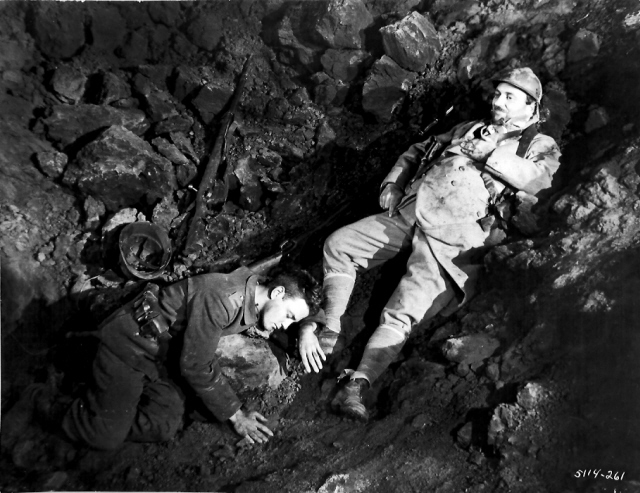
the enemies finally come face to face

We watched the restored version of “All Quiet on the Western Front” at home late last night. Before yesterday I had neither read the book nor seen the film. This early talkie, an eighty-year-old masterpiece, has survived, both as art and as a surprisingly strong piece of theater. It’s terrifying, when it’s not heart-braking, and there’s nothing maudlin or melodramatic about it.
It’s an extraordinary film; don’t wait for the remake.
As if it just watching “Front” were not already enough of a profound and moving experience, today we learned that the event that precipitated The Great War. The conflict that inspired Remarque’s seminal anti-war novel, and Russian-born Louis Milestone’s 1930 film of the same name which was based on the world-wide best-seller, occurred exactly ninety-six years ago (still within living memory – of at least a very few). While today is the anniversary of the assassination in Sarajevo of the heir to the Austro-Hungarian throne, It’s also the anniversary of the Versailles Treaty which officially ended the hostilities between the remaining major combatants. That accord was signed ninety-one years ago today.
The war was supposed to be “the war to end all wars”, the phrase a perverse, but catchy rationalization which was actually invented early on by its most enthusiastic champions.
It’s clear however that, as the direct heirs of its horrors, which include the Second World War, among others, we haven’t learned a thing in the intervening years. This is in spite of the hopes of the remarkable German author of “Front” and most of the people connected with the film, including its fictional chief protagonist, Paul B�umer, and the very real pacifist actor who played him, Lew Ayres.
In the image above Paul is lamenting the death, by his own hand, of a French Soldier who had lept into his trench in the chaos and heat of a particularly violent infantry battle.
In the Turner Classics commentary supplied with the DVD, film historian Robert Osborne sincerely and persuasively proposes that subtitles be created in every language, that the film be shown to people all over the world, and that they should see it again and again, once every year.
But today a country whose people mistakably believe themselves to be the most peace-loving on earth, have created two optional, trillion-dollar, asymmetric wars, killing fields inside dirt-poor nations which have no working governments, on the other side of the planet, and it seems we can give no justification for our continuing these wars other than the fact that we are at war(s). In retrospect, a century later, even the fools and jingoes who marched off in 1914 don’t look so singularly absurd as we once thought they did.
Besides, while the number of casualties in 1914-1918 certainly dwarf the total of all losses in the Middle East, that war was at least brought to a halt in four and a quarter years. Our own, current madness has already gone on twice that long.

[image from leftofcybercenter]

Cooper Union End of Year Show

Raoul_Anchondo_graphite_torso_diptych.jpg
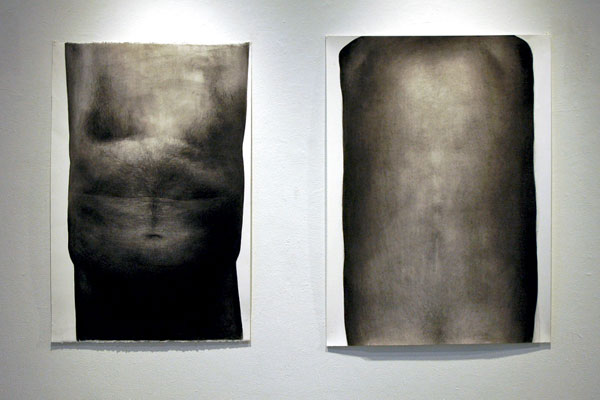
Cleo Newton’s large graphite diptych of a male torso is stunningly powerful

CORRECTION: Contrary to what I had written here originally, having seen the dates on the school’s own site, I have now learned (June 24) that the End of Year Show had already closed last week, and have edited the headline and text accordingly.

Although we caught the Cooper Union End of Year Show a number of weeks back, I’m just now getting around to posting a few images. Barry and I were pretty excited about much of the work, and really liked the vibe. We didn’t manage to see everything, barely touching the work from the Architecture faculty, and we never even got to the Engineering installation.
When we left I resolved to go back for more, but never did. These images represent just a small part of what I went home with after the opening reception.

Raoul_Anchondo_wall_drawing.jpg
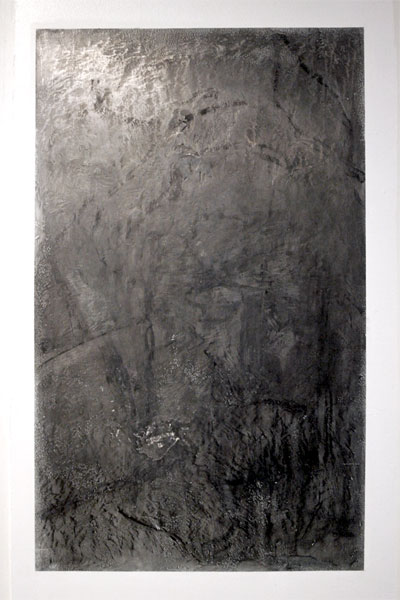
Raoul Anchondo’s large graphite piece is drawn directly onto the irregular-surface of a white-painted plastered wall, suggesting an embedded sheet of metal, something of an opaque mirror, in fact.

Cooper_Union_Cella_Henkel_Maxwell_Pitegoff.jpg Cooper_Union_Christian_Hincappie.jpg
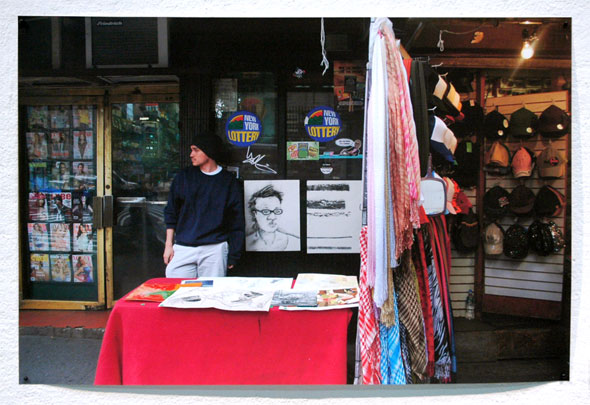
Christian Hincappie’s images were accompanied by a placard with this note: “For this performance piece I collected the work of my classmates without their consent. Performing the role of a street vendor at the intersection of St. Marks’s Place and 3rd Avenue allowed an appropriate context in which to sell the work I collected.”

Cooper_Union_Won_Cha.jpg

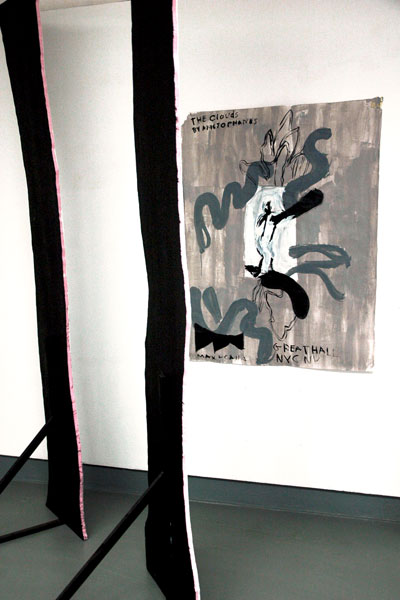
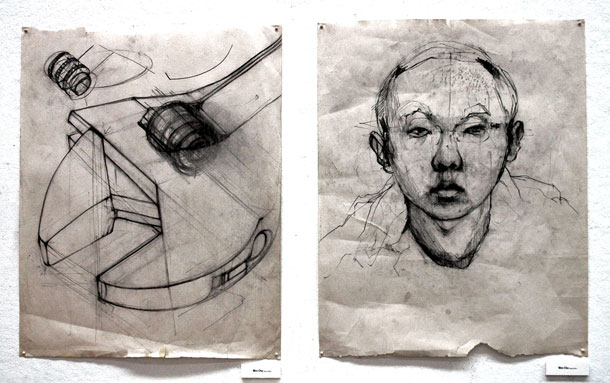
Won Cha’s exquisite drawings seem to bridge all three faculties of the Cooper Union

Cooper_Union_Skye_Chamberlain.jpg
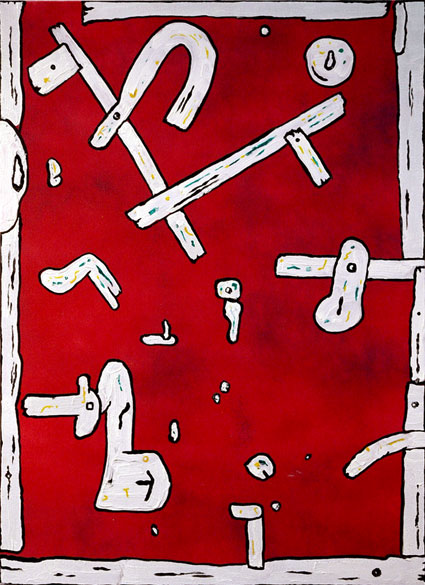
Skye Chamberlain’s painting is a thing of beauty, and great charm

Cooper_Union_Larry_Lairson.jpg
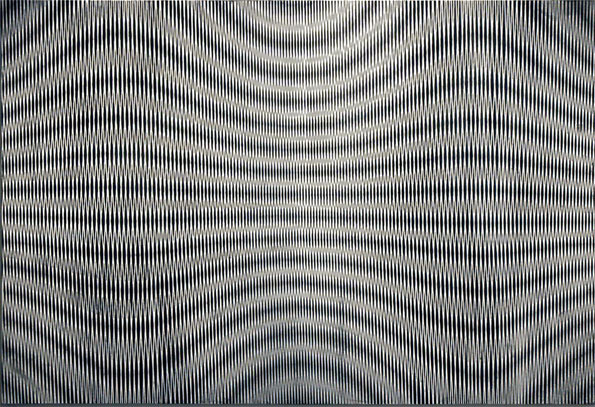
Larry Lairson resurrects op art, and the idealism of its Bauhaus antecedents

Cooper_Union_Joseph_Kay.jpg
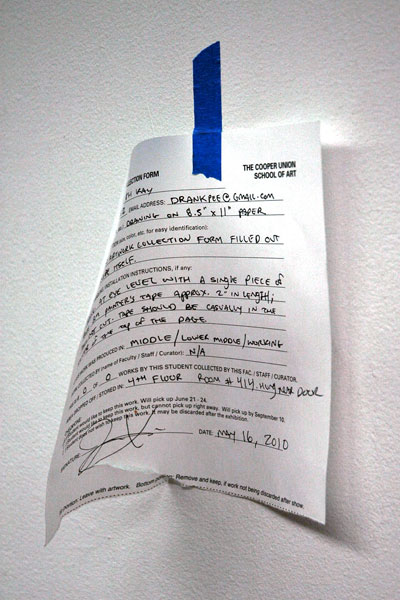
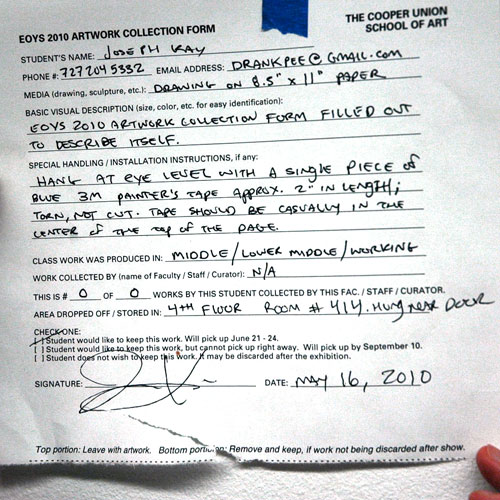
Joseph Kay’s work on the wall of a narrow hallway almost manages to escape notice
Cooper_Union_Joseph_Kay_detail.jpg
[detail]

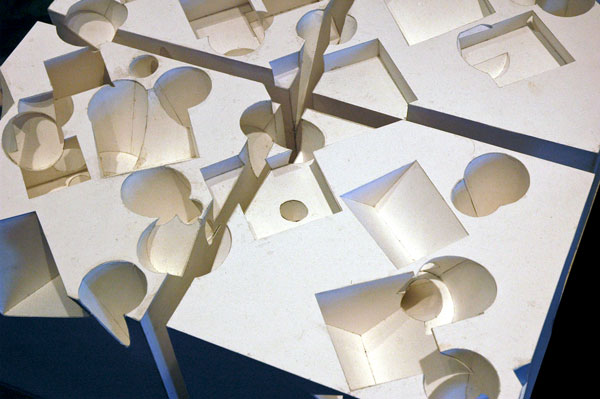
This is the only image I shot from the architecture section, thinking at that moment that I would have plenty of time to come back:
Cooper_Union_architecture_model.jpg
[I couldn’t locate the name of the creator of this beautiful paper model]

Finally, one more large drawing by Raoul Anchondo. In this piece the graphite had been applied directly onto an irregular white-painted plastered wall surface, producing the appearance of an embedded sheet of metal, something of an opaque mirror, in fact.
Raoul_Anchondo_wall_drawing.jpg

friends to celebrate Harry Wieder in Cooper’s Great Hall

harry_wieder.jpg

There will be a great congregation of friends and activists inside the Great Hall at the Cooper Union tomorrow evening at six o’clock. There they will be celebrating the rich life of Harry Wieder, cut short, shockingly, in an accident in April.
Harry was a familiar friend and powerful advocate of many progressive causes, so I expect the room will resemble a portrait of the face of New York grassroots activism (of almost every sort) as it operated over the last few decades.
I also expect that this memorial will not be a lugubrious affair. Harry meant a lot to the people who shared his life and his dedication. But we also knew how to share in laughter, and there should be plenty of that tomorrow.
Harry was also completely familiar with the historic Great Hall, not least for his regular attendance at ACT UP meetings, which continued while they were being held there in the early 90’s. It was a time, difficult to imagine today, when the press of hundreds of AIDS activists (I’m sure I remember hearing the number 700 one week), attracted by the urgency of the issues and the energy of the coalition, had forced a move from the pre-restoration Center to a larger venue. It was Cooper which welcomed us.
I’ve been back many times since those years, and Barry and I will be there tomorrow.
Speaking of ACT UP, and the kind of energy which seems in scarce supply these days, the incredibly-important ACT UP Oral History Project has just added 14 new interviews with ACT UP activists and add 9 important video clips and transcripts to its web site. Visit, rummage around, then go out and change the world.

While working on this post I once again found myself Googling for an image of “Harry Wieder”; there aren’t a great number, and most of them are mixed in with a much, much larger number of images of “Prince Harry”. Our Harry would love that.

[image via pinknews]

tomorrow is the last chance to “Escape from New York”

An_Xiao_The_Artist_is_kinda_present.jpg
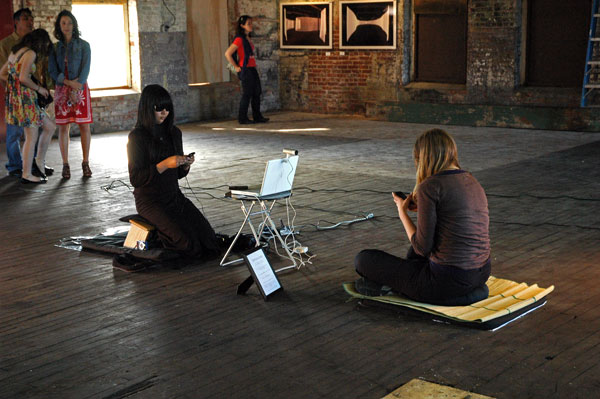
An Xiao The Artist is Kinda Present [still from five-hour performance]

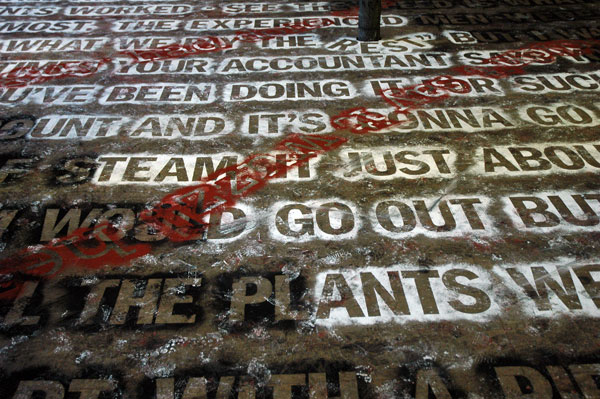
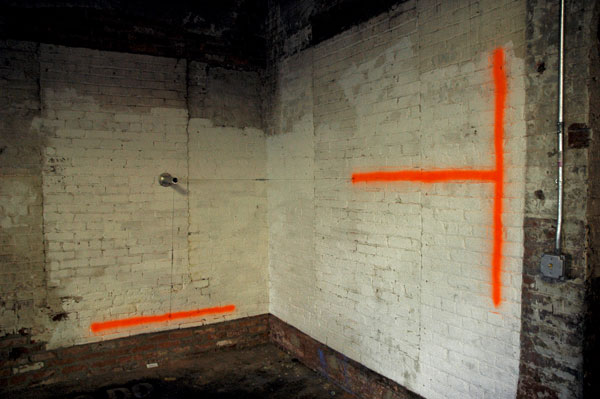
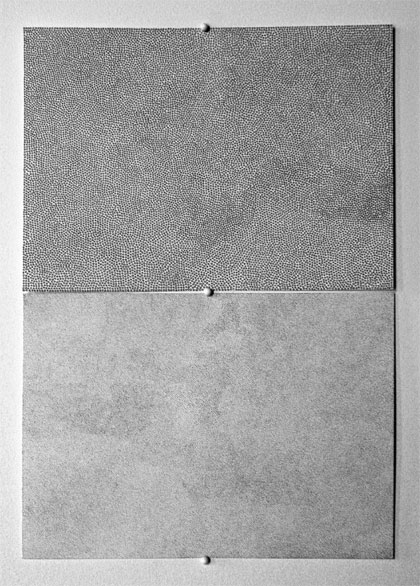
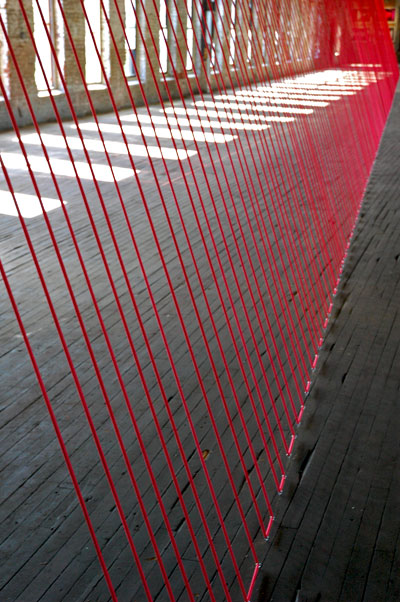
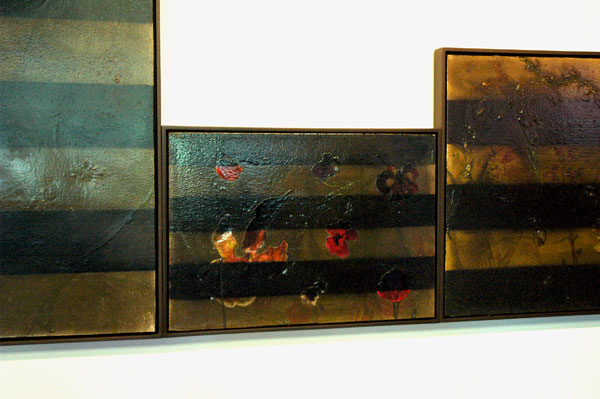
Tomorrow is the last day for the tonic and pleasures of the huge-scale Paterson, New Jersey installation, “Escape from New York“, and I just realized that I hadn’t uploaded any images yet. The show, curated by Olympia Lambert, is a treat on its own, but added to that, for those willing to leave familiar streets, are the curiosities (nineteenth-century usage) represented in the numerous and varied reminders of the town’s industrial and social history.
The old core of Paterson still displays countess monuments to its former wealth, most of the public, banking and commercial buildings plainly marked to show they were erected at the turn of the twentieth century.
There are also an amazing number of nineteenth-century mill buildings just beyond the center, many of them handsomely restored (and presumably looking for artists), One of them (unrestored) shelters the work of the 43 “Escape” artists Lambert has collected. It and its dozens of sturdy brick neighbors share an old mill race and are perched below tree-covered hills just below a surprisingly idyllic Passaic Falls.
The cataract is the the second-highest large-volume falls on the U.S. East Coast, which accounts for Paterson’s importance 200 years ago. Okay, the day we were there we saw a wedding party being photographed before it on a wide grassy ledge while we watched from above. Together with the architectural treasures the falls offer an additional incentive for a rail trip, a brief, comfortable ride on NJ Transit from Penn Station.
If you miss your own escape to New Jersey and these combined pleasures, there will be at least a chance to see some of the work in Manhattan in July (minus Paterson, of course). Lambert is putting the finishing touches on arrangements for “Return to New York”, to be installed at HP Garcia Gallery July 7-31.

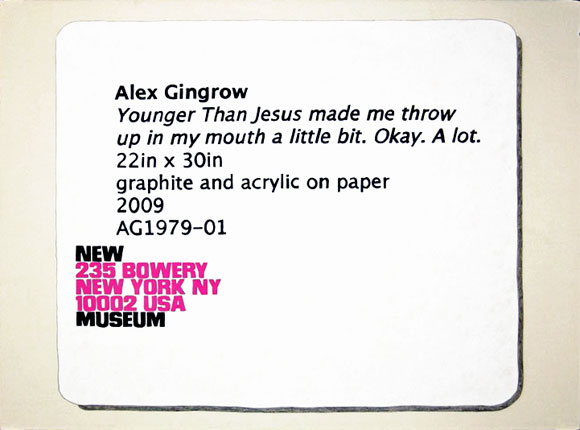
Alex_Gingrow_Younger_Than_Jesus.jpg
Alex Gingrow Younger Than Jesus made me throw . . .

Nicholas_Fraser_Paterson-Project.jpg
Nicholas Fraser The Paterson Project [detail]

Peter_Soriano_Other_Side.jpg
Peter Soriano Other Side # 82 (MEC)

Man_Bartlett-drawings_efny.jpg
Man Bartlett circle drawing XII – rendition above pointpiece II – constant

Thomas_Lendvai.jpg
Thomas Lendvai Untitled ([large detail]

Tamas_Veszi_Dark_Matter.jpg
Tamas Veszi Dark Matter [detail]

Lagniappe: An abbreviated look at a few of the mills, and the falls:

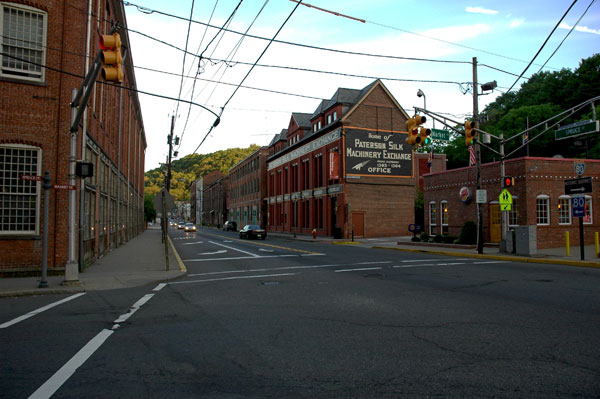
Paterson_Spruce_and_Market.jpg
the corner of Spruce and Market, at dusk on a Saturday
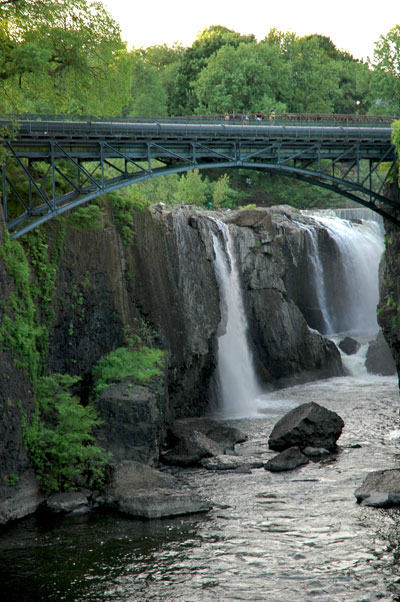
Passaic-_Falls.jpg
the footbridge is historically the eighth on the site

[image of “Younger Than Jesus made me throw . . . ” from the artist’s site]

Update on Joel Sternfeld and Luhring Augustine

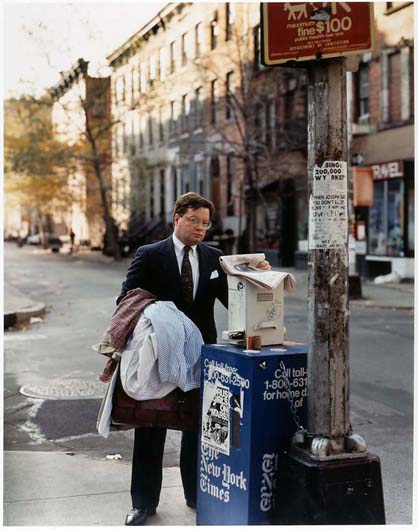
Joel_Sternfeld_attorney_with_laundry.jpg
Joel Sternfeld Attorney with laundry 1988

NOTE: This is a follow-up to the preceding post.

This morning it was made clear to me that Joel Sternfeld himself had nothing to do with the contretemps over the recently-published Idiom piece, “The Portrait of a Lawyer“, and it appears that his New York gallery, Luhring Augustine, however good its intentions may have been, was not only overreaching in its representation of the claims of copyright, but also misrepresenting its artist client.
Prior to the publication of the article the author, Sam Biederman, and the editor, Stephen Squibb, had been looking all over the net and elsewhere for the image central to Biederman’s piece, eventually contacting Luhring Augustine. With the wisdom of hindsight it seems they had good reason to have begun elsewhere in their search.
The gallery replied that neither it nor Joel Sternfeld had an image in their possession. When the piece was published, having been frustrated in the unsuccessful pursuit of the original objective, Squibb substituted an image of another work by the artist. It had been found on line, and originated on the site of another gallery, one which also represented the artist.
When Luhring Augustine saw the published Idiom article and image, the editor was contacted and told he was not permitted to show any Sternfeld image without the approval of the artist. Curiously, even after telling the editor to remove it, the gallery’s message critiqued the choice of that particular alternative image as unsuitable for the article.
When Squibb wrote back, offering to exchange the picture for another, Luhring Augustine’s reply was that no picture would be supplied or permitted. The email continued: “. . . the artist does not particularly agree with the opinions expressed in [the article] and does not wish to grant copyright permission for his image to be reproduced in conjunction with the piece.. ” We were then told to remove the image,
“. . . as the artist wishes.”
The assertions about the artist’s wishes don’t appear to represent the facts.
Luhring Augustine does seem to have asked Sternfeld if he had the image Idiom originally requested, but it doesn’t appear that the artist had been told anything else. This morning I received an email from Sternfeld himself. It was extraordinarily gracious, especially considering how hard I had come down yesterday on what I thought had been his response to Idiom’s request.
In his email the artist denied that he had requested the image be taken down and wrote that he would have been pleased to furnish an image of the “barefoot attorney” if he had one (or had been given more time to find one). He added that he thought the piece itself was thoughtful and that he was “grateful” to read it.
He finished, before extending good wishes to everyone involved with the article, by addressing a part of Sam Biederman’s memoir specifically, adding the artist’s own playful thoughts on the photograph he had taken of the author’s father many years back:

I wish [Sam] had considered as a possible reading my intention to to point out� that regardless of societal role one’s feet can hurt at the end of the day and the temptation to kick off shoes and socks may prove irresistible.

The image which served as a stand-in for the one Idiom originally sought, appearing at the top of the Idiom post when it was published and later pulled, has now returned to the site. The jpeg used was found on MoMA’s site.
Me, I went looking for another lawyer, and quickly found “Attorney with laundry”.

[image from hotshoeinternational]

Joel Sternfeld demands removal of his photo on Idiom

Mark_Tansey_Innocent_Eye.GIF
Mark Tansey The Innocent Eye Test 1981

UPDATE: see “Update on Joel Sternfeld and Luhring Augustine

Is it still visual art if it’s not visible? Is it even still there?
A thoughtful piece by Sam Biederman, “The Portrait of a Lawyer” appeared last week on Idiom, which is an online publication produced by Barry and myself. The editor, Stephen Squibb, had tried to include at the top an image of the work by Joel Sternfeld which had inspired the ruminations of the essayist, but he was unable to do so. Instead, he and the author carefully selected another photograph done by the artist to serve as an appropriate and representative substitute.
The photograph they used, “Solar Pool Petals, Tuscon, Arizona, April 1979”, has now been removed from Biederman’s piece, because Idiom was instructed by the artist himself, through the agency of his New York gallery, Luhring Augustine, to remove the image.
An image of “Portrait of a Lawyer” could not be found anywhere on line, so the gallery was asked if they had one that could be used. There was no response, so Squibb uploaded the other photograph. When Luhring Augustine became aware of the piece days later they did reply, writing that neither they nor Sternfeld had in their possession the image requested. They added that they disapproved of the use of the photograph chosen in its stead, and by the way, Idiom had no right to publish any of the artist’s images without his approval. When asked to proffer an image themselves, they refused, and effectively denied the publication’s right to show any any of the artist’s work. The real and expressed reason turned out to be that Sternfeld didn’t like the article and wished to disavow it to the extent he could.
While suppressing the use of an image based on your personal preference may not quite be a form of artistic censorship, it is a story about one artist disrespecting another in a public way, and it does not make Joel Sternfeld look good.
I have always greatly admired Sternfeld’s art, and had believed I had reason to think of the man as humanistic, enlightened and liberal. Now I just don’t know. He confounds my expectations. I have no idea what’s going on here, but nobody should get a free pass, regardless of who they may be, and especially if we’re talking about an artist who might be described as august.
For me this troubling and somewhat unfathomable incident once again suggests thoughts about an artist’s right, and ability, to control how the work is experienced, the distinction between a work of art and the representation of it, the continuing insecurity of artists who work in a photographic medium, the under- and misunderstood principle of fair use, who gets to see art, who decides what art gets seen, and ultimately the question of just how visible, and accessible, the visual arts should be.
And I can’t help thinking of class.
Okay, now can I say I’m crazy I am about the inclusion of the Mark Tansey image, and that it ended up at the top of Biederman’s essay?

[image from the University of Hawaii]

World Naked Bike Ride: raw for cause, in New York City

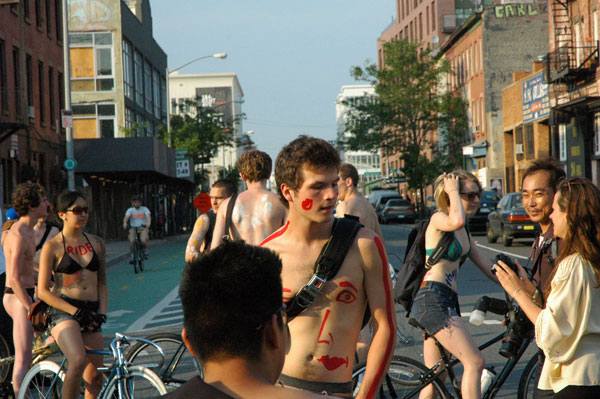
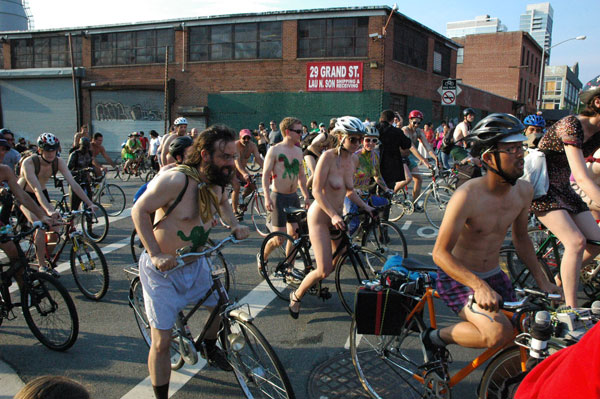
Naked_Bike_Ride_top_of_the_park.jpg

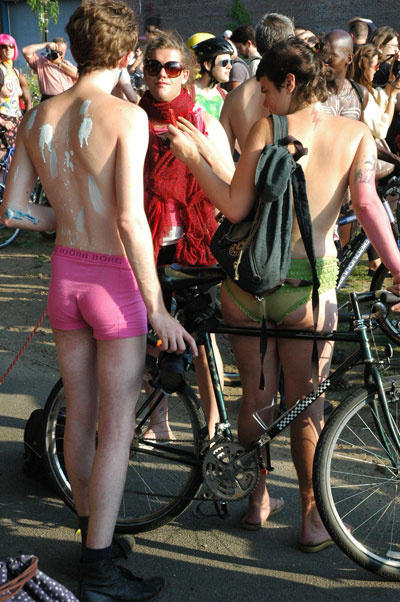
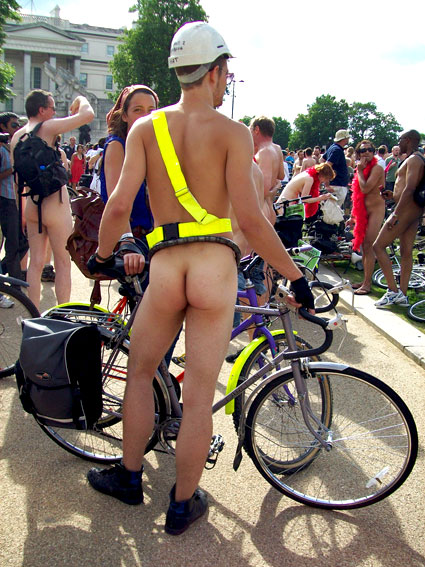
Barry and I were at Grand Ferry Park Saturday afternoon, but, bicycle-less and resolved to remain fully-clothed, we were were able to offer nothing more than admiration and documentation for New York’s contribution to the World Naked Bike Ride. We watched an upbeat crowd of enthusiasts assemble and ride off in a deliciously and infectiously brash rally which took them over the Williamsburg Bridge and into Manhattan as far north as the UN before returning across the river later to party.
Enthusiasts in cities all over the planet have been taking this annual event very seriously for years. They seem to get it, even if New York doesn’t. With an ebullience and a commitment which should be heartening to anyone who questions our culture of oil and cars, and who supports a sustainable transport alternative, people elsewhere have taken to the streets in impressive numbers – and in unashamed expression. Until yesterday however, in spite of (or because of?) the Naked Bike Ride’s Dionysian attractions and its celebration of freedom, New York’s participation had for years been chimerical, and finally pretty underwhelming.
I doubt anyone’s been counting cheeks, but it looks to me like the city “showed” better this year (even if we’re not yet up to the standard set by a certain awesome English seaside resort town).

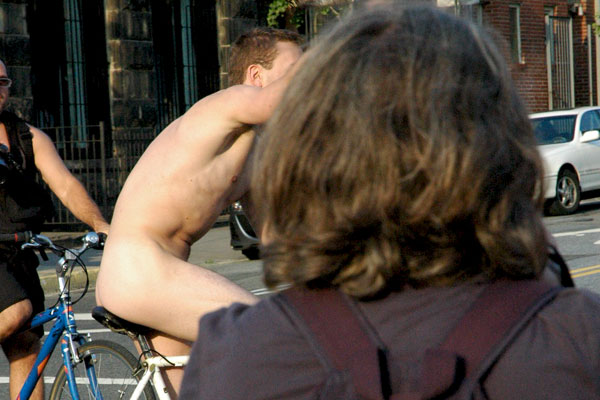
Note: To be fair, the images I’m publishing at the top and bottom of this post are a somewhat misleading representation of what the bicyclists looked like once they hit the road. Many of the costumes seen here were later removed, beginning even as the group was assembling at the top of Grand Ferry Park. To wit:

Naked_Bike_Ride_youth_mounted.jpg
Naked_Bike_Ride_and_off.jpg

In the still and video images I’ve seen on line, most spectators around the city seem to have enjoyed their exposure to the group’s rolling march, but some may be asking what’s the connection between environmentalism, bicycles, and nakedness. Why is this action naked? I may be prejudiced, but I’d say that not only do bikes have a huge potential for raising the quality of the environmental, one which we could start realizing almost immediately, but bikes also (when used civilly) seem to be able to charm almost anyone.
So bikes may be excellent poster children for saving the planet, but why naked bicyclists?
Two years ago Mark Barwell, a very fit-looking English environmental activist, took part in the Brighton & Hove Naked Bike Ride, and the BBC interviewed him prior to the run, photographing him in road costume (“completely starkers”, as the reporter offered in the accompanying audio link). Barwell discussed the serious objectives of the demonstration and went on to address what everyone always zeros in on: “The idea is to be as loud as possible, really”, he said, and then he offered the best explanation ever for its anomalous motif: [my transcript below]

Cyclists on the road are really the most vulnerable road users. Cycle lanes tend to appear and disappear all over the place, and drivers as a rule are quite sensitive to cyclists on the road, but there are quite a lot of issues where we’re very much vulnerable, and that’s where the naked thing comes in. It’s to highlight the vulnerability, and also, as a follow through, to celebrate body freedom, and the fact that a naked body really isn’t that bad a deal.

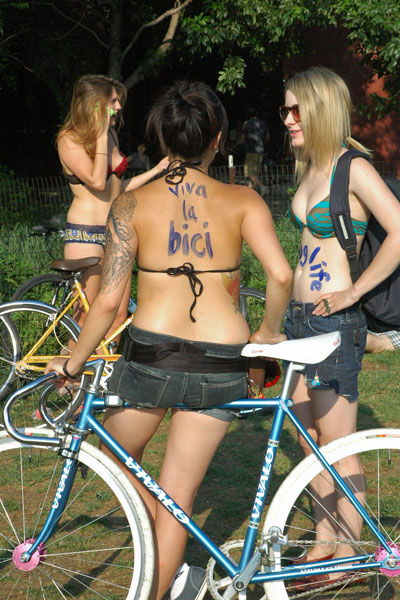
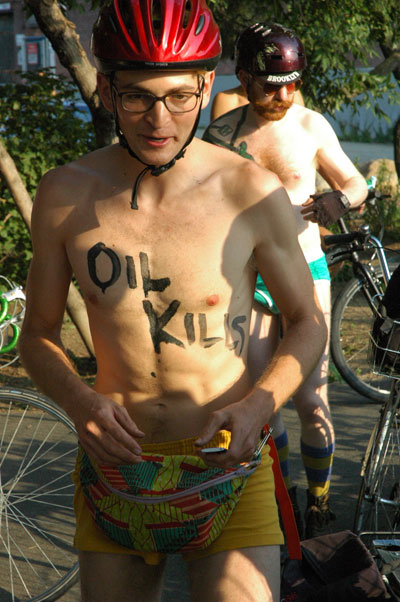
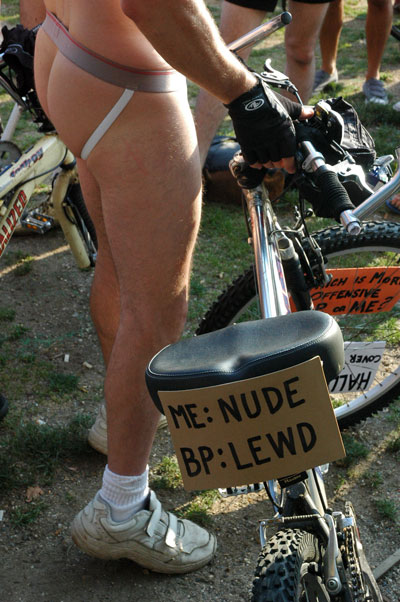
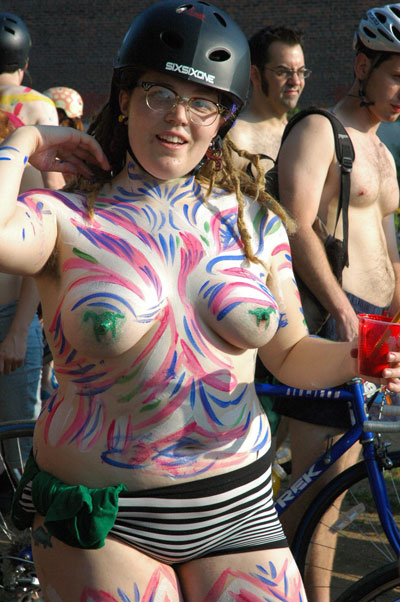
It must have had something to do with the rendezvous’ Williamsburg location: I don’t think I’ve ever before seen so much pale nerd skin, its beauties enhanced here by a lot of body paint broadcasting genuine conviction.

The image at the top is of the group about to leave the park; those which appear below were all collected in the hour before.

Naked_Bike_Ride_three-graces.jpg
Naked_Bike_Ride_three_women.jpg
Naked_Bike_Ride_oil_kills.jpg
Naked_Bike_Ride_me_nude_BP_lewd.jpg
Naked_Bike_Ride_green_nipples.jpg
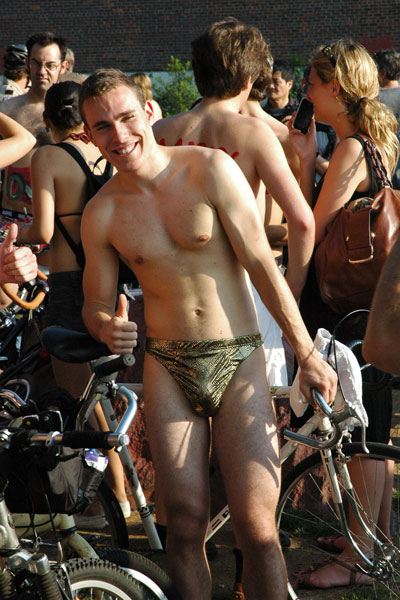
Naked_Bike_Ride_golden_thong.jpg
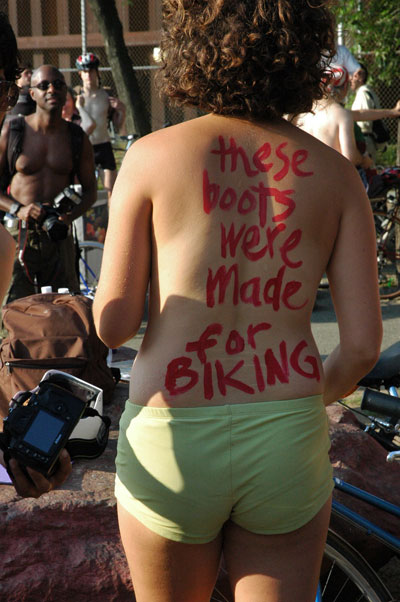
Naked_Bike_Ride_boots_made_for_walking.jpg
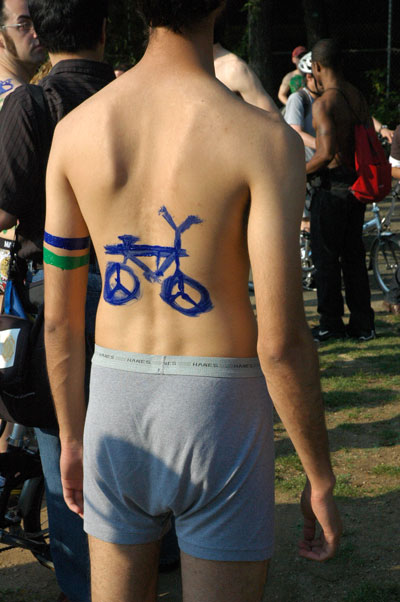
Naked_Bike_Ride_blue_bicycle_drawing.jpg

For much more, go to the New York Post video site for Jeff Lieberman’s excellent video coverage of the ride’s swath through Manhattan.

[I tried my best to get this post up sooner, but I was having serious server problems all day Sunday]

ADDENDA: I’ve uploaded additional images on Flickr, and Gothamist has more photos and video (look for Oliver “waving” to the cars on the bridge); go for the slide show on John Zwinck’s feed and that of dogseat

Williamsburg hosts NYC unit of World Naked Bike Ride

naked_biker_yellow_strap.jpg
but it won’t be just about the uniform

I love bikes; I love bicyclists; I love naked. Tomorrow afternoon, Saturday, in a rare, very special concurrence of the stars, like-minded enthusiasts will be privileged to witness or be part of an awesome event promising all three distractions – if they make their way over to Williamsburg some time around 5 o’clock.
World Naked Bike Ride will be celebrated by New York-area enthusiasts starting with a rally beginning at that hour in Grand Ferry Park. Time’s Up! has the details here.
The annual world-wide event is described by our local activists as “A fun and liberating protest towards reducing the dangers posed to our world and our bodies by auto and oil dependence!”, and they advise:

Clothing is optional, please come as bare as you dare. Creative costuming is also highly encouraged. Body painting and bike decoration will start at 5pm, with the ride departing no sooner than 6:30pm, no later than 7:00pm. Be sure to bring lights, bells, a sense of humor and a positive attitude!

There will be plenty of laughs to accompany a message born in disgust and anger, and one which is growing increasingly louder, but the continuing, and still unfolding, news about the horrors of the Gulf oil spill ensures that both the humor and the protest will be more visible and powerful this year.
The media can no longer afford to ignore the issues which will bring masses of colorful and determined bicyclists into streets all around the world tomorrow.

The picture at the top is from last year’s (world-wide) event, specifically, “Naked Bike Ride London 2009“. The Brits seem totally into it.

[image from itslefty via Flickr]

Louise Bourgeois (1911-2010)

Bourgeois_I_do.jpg
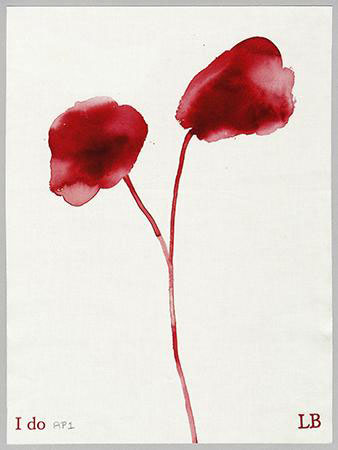
Louise Bourgeois I do 2010 archival dyes on cloth with embroidery

Louise Bourgeois died this morning. I had hoped, and fully expected to see this magnificent, (can I say ballsy?) artist, and extraordinary human being continue well into her second century, but although she almost made it, it was not to be.
Her art is likely to go on forever however; her legend had already begun years ago.
I do“, an edition of an image of two flowers joined on a single stem designed for the Freedom to Marry campaign, was to be one of her last activist contributions to the world blessed by her presence.
I think I first became aware of her generosity and her personal activism in the early 90’s when she agreed to contribute to the ACT UP Art Box (those balls again).

This site includes some wonderful images of both the artist and the artist’s work.

[image from eyeteeth]