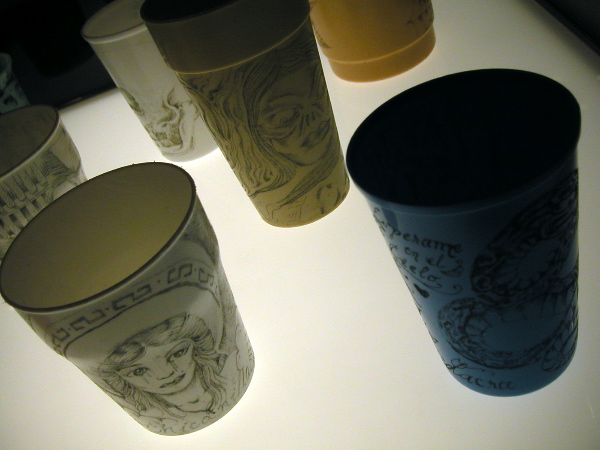
Dr. Lakra, detail of installation
Matthew Marks on 24th Street opened its doors Wednesday on night to a gem of a show, “Deliver Us From Evil,” curated by Matthew himself. I includes the work of four bodies of artists who seemed to be working out of territory carved a century and a half earlier by their fifth colleague, Honore daumier. It was a masterly selection in every sense.
The contemporary artists include R. Crumb, Jake and Dinos Chapman, Dr. Lakra and Keegan McChargue. The names we recognize right off the bat betray the theme of societal caricature which runs through all the work shown, most of them executed on paper.
In the center of the gallery space are several plinths displaying exquisite small sculptures, including the pieces by the inventive young Mexican artist which are shown in the image above. The Chapman Brothers meanwhile had made a standard McDonalds Happy Meal their very own, as seen in the image below.
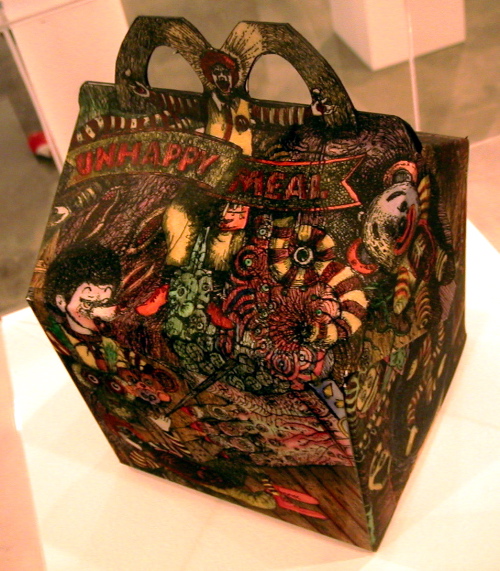
Jake and Dinos Chapman, installation view
The crowd was almost as diverting as the art, even aside from our pleasure in running into our friend Hiroshi Sunairi, who introduced us to Yuh-Shioh Wong, whose work we have been excited about for some time, and Yukie Kamiya, newly-appointed as an assistant curator with the New Museum. Here is part of the scene on opening night, standing in front of the one wall which included a mix of the work of all the artists included in the show:
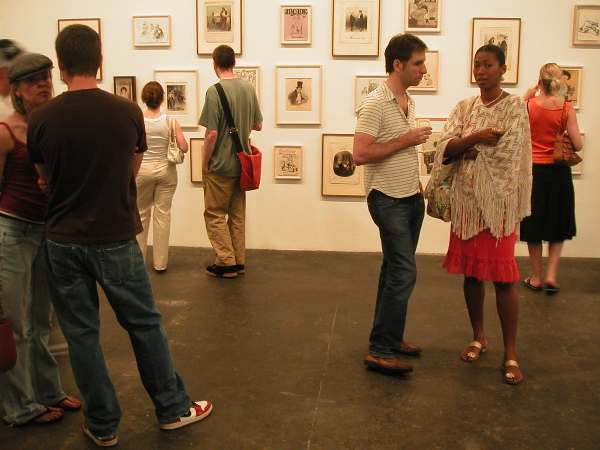
Author: jameswagner
Studio 360
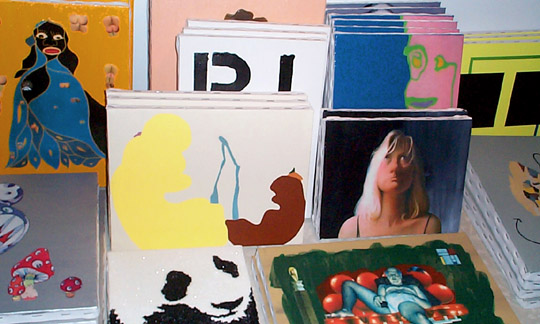
Good artists borrow; great artists steal
This Saturday the Public Radio show, “Studio 360,” will include a segment by Matthew Schuerman on the “Bootlegs” project of the artist, Eric Doeringer.
Good artists borrow; great artists steal the old saying has been attributed to Picasso but he may have stolen it as well. This week on Studio 360, Kurt Andersen and his guest, the writer and musician Greg Tate, talk about the artistic need to take other peoples work.
We delight in collecting his work and Barry and I have both written about him in the past. It’s likely we will be heard in the edited sound picture, and I have the same concern expressed on Bloggy: “I hope I didn’t embarass myself too badly.”
In New York, the program will air on 93.9 FM at 10 AM Saturday, July 10 and on 820 AM at 7 PM on Sunday, July 11. You can also listen online to WNYC.
To find broadcast times/stations in other areas, you can visit Studio 360. The program will also be archived for one week after the broadcast here (after that you have to pay to listen).
[image from Eric Doeringer’s site]
west Chelsea, tomorrow
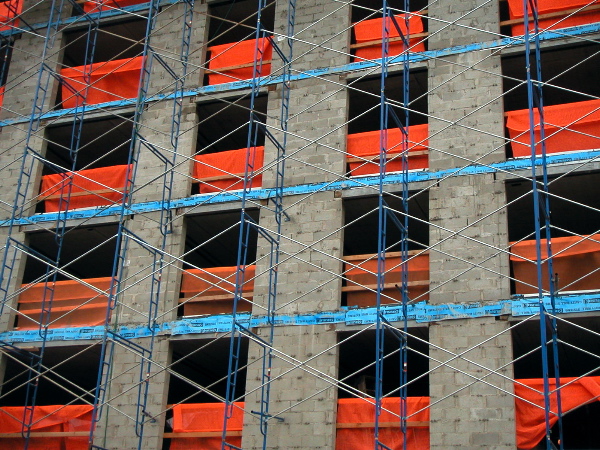
untitled (West 24th Street thus) 2004

untitled (West 24th Street and thus) 2004
Ed Ruscha and Ana Mendieta at the Whitney
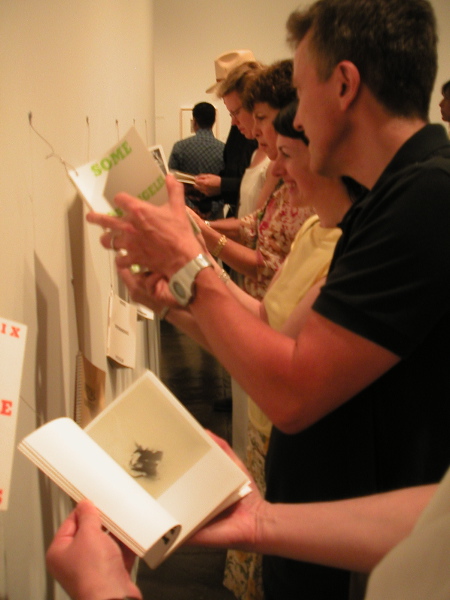
I know it’s been a while since the shows opened, but I’ve been busy with I don’t know what, and, after all, the stuff is still there. The picture above is from a June 30 reception at the Whitney Museum. The guests are tripping through the pages of 16 of Ed Ruscha’s artist books from the 60’s and 70’s. The show? It bears the quite obvious title, “Cotton Puffs, Q-tips®, Smoke and Mirrors: The Drawings of Ed Ruscha.”
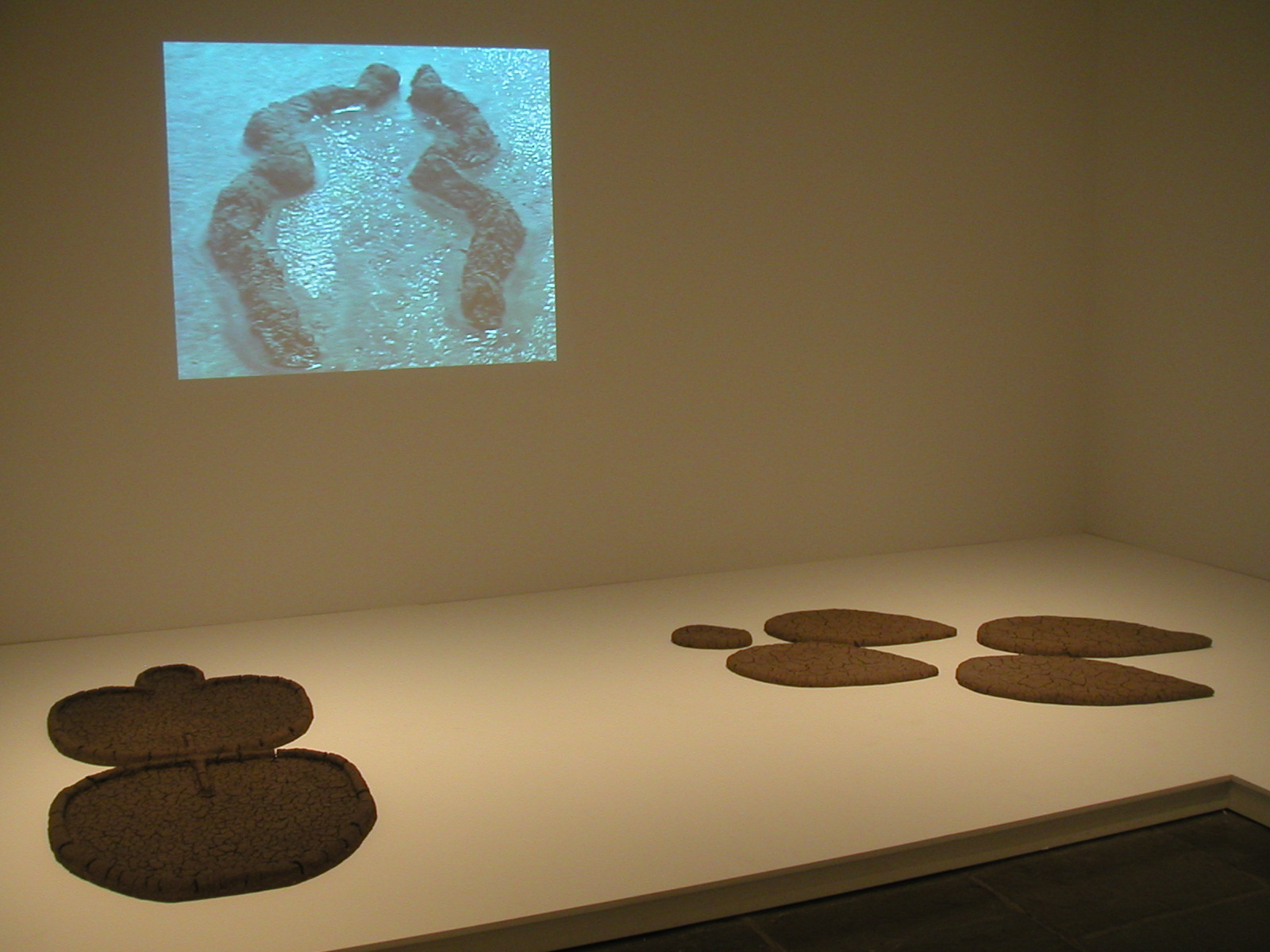
A pretty substantial review of the sculpture and performance art of the Cuban artist, Ana Mendieta, from the 70’s and early 80’s is also been unfolded in the museum’s galleries this summer. Called “Ana Mendieta: Earth Body,” the installation is an extraordinaryily sensitive presentation of this difficult body of work. I believe the image above is that of a detail from the “Maroya (sculpture) Platform.”
Normally I just don’t expect to be able to be able to properly register the work itself in the midst of the buzz of an opening, but the Ruscha and Mendieta shows were exceptions. Both exhibitions are superb shows, and I can only now begin to appreciate, on both an intellectual and an aesthetic level, what my artist friends have been talking about for years.
The Ruscha walls smiled, smartly or broadly, and the Mendieta rooms had the feel either of an ancient religious site or of a world from the future which had yet to find its place of rest. Both are terrific shows, and they oddly complement each other, at least from the position of a visitor to the Museum.
skateboards at ease
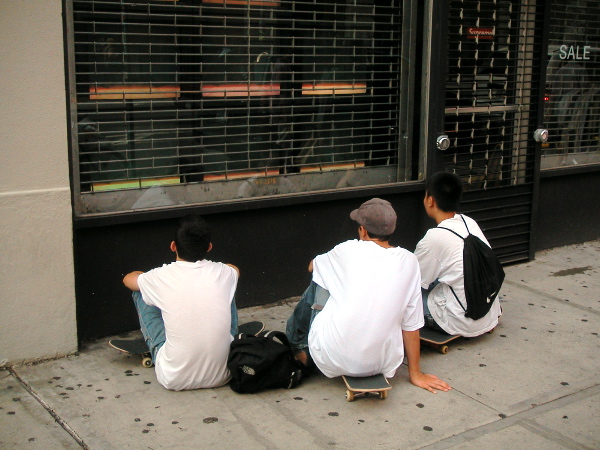
on Lafayette Street this afternoon
The image is that of three skateboarders studying videos of skateboarders. They are looking at a number of monitors behind a grill protecting the display window of a skateboarder shop, Supreme, closed for the holiday. The street, normally quite busy, was otherwise virtually empty.
rigging another presidential election
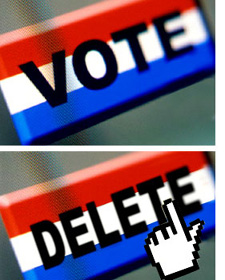
where will your vote go when you leave the booth?
We observed the 4th of July holiday yesterday by watching Michael Moore’s “Fahrenheit 9/11.” [I just can’t imagine how anything traditionally celebratory could be appropriate just now.]
Because I haven’t been tied up in a cellar for four years, I think I can say I did not learn anything new during those two hours, but when the film’s chronological sequence reached the moment that the United States bombed Baghdad I just lost it.
My only thought then was that if we were being watched by a wrathful, Old Testament god he would have instantly crushed our nation for its selfishness, its stupidity and its cruelty. More privileged than any people which has ever enjoyed the bounty of this planet, we have no excuse for the evil we have unleashed upon others. [And no, since we have absolutely chosen ignorance (we have the media we want) there will be no absolution there.]
We are very lucky that old god isn’t out there. It now appears that we’re waking up and don’t like what we have done. I really believe most of us will not vote for Bush in November, but I also firmly believe Bush will be declared winner of the election. They aren’t going to let go.
How will this happen? Nothing has been done in Florida to repair the system responsible for that state’s abominations in the 2000 election, and meanwhile the possibilities for mischief have expanded elsewhere. But the decisive assault to our voting rights is the introduction in many jurisdictions of electronic voting machines which leave absolutely no paper trail and whose programming remains secret to all but their large Republican-dominated corporate makers. Sophisticated push-button control of the ballot box: the dream of every modern tyranny.
Why are we trying to raise millions of dollars and raise up millions of people, if in the end the election can be fixed? Especially after what happened four years ago, why aren’t we hearing about this horrible threat? Even the most energetic opponents of the Administration are not pointing out the danger. Other than to suggest the most cynical of possibilities, I don’t have an explanation for that silence.
Because of his film’s brilliance and because of its huge popular success, Michael Moore seems to have awakened his audience in time, and he should soon enjoy the highest honors available from a grateful nation. But I’m afraid he has one more job to do, and I say it is his because I cannot imagine anyone else who could get the voters’ attention, anyone else who could save us from another, even bigger fix in November.
We’re going to have to ask him to help, and we’re also going to have to talk it up with anyone else who might make a difference.
Everything depends on it.
It’s no longer enough just to pick the right candidate in the voting booth. We have keep our eyes on what happens afterwards.
[image from Dangerous Citizen]
let’s not make their nice

Herds of Republicans in New York?
Can’t wait for the excitement of the Republican Convention, still eight long weeks away? Start celebrating this coming Wednesday, and again on each of the next eight Wednesdays, with the people at White Box. They’re putting together more than two months’ worth of creative events in recognition of the extraordinary significance of this . . . this thing coming to New York. There will be a new curator and a new art installation each week.
The Republicans of course have only one installation, it’s hardly art, it’s definitely not a hit and the whole set will be struck later this fall.
MAKE NICE will be the theme of the fifth edition of White Box’s annual summer series, Six Feet Under. As in previous years, MAKE NICE will consist of exhibitions mounted by critics and curators who will take possession of White Box’s exhibition space for the duration of one week each. This year the topic specifically addresses the Republican National Convention, to be staged in New York from August 29 through September 2, 2004. The premise is that the curators, and the artists they select, respond to an ad-campaign featuring Ed Koch in which he tells New Yorkers: “The Republicans are coming, Make Nice.”
Meanwhile, it looks like Koch has had real trouble finding New Yorkers to volunteer holding Republican hands. Are we surprised?
Many of the tour guides for this summer’s Republican National Convention will be tourists.
The nonprofit committee in charge of making Gotham hospitable to the 4,000-plus delegates has hit its benchmark of recruiting 10,000 volunteers.
But only 42 percent of the unpaid convention guides are New York City residents. The rest are from other areas, including upstate, New Jersey, Connecticut, Pennsylvania and Virginia, according to statistics released yesterday by NYC Host Committee 2004.
10,000 guides for only 4,000 delegates? They should be able to spare at least a few of those volunteers for work toward a cause worthy of a human being. I expect that some of those 4,200 or so New Yorkers are in fact spies or moles, so this could get more interesting than the event planners might have imagined.
[image is logo from White Box site]
a mice day, and penguins in the park
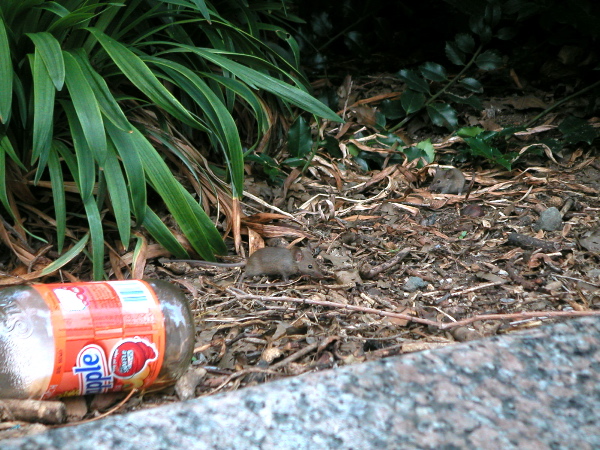
We went to the Central Park Zoo this afternoon. The animals were delightful, but the people (almost all of them escorted by baby people) were pretty wonderful too. Barry said that he thinks everyone should be required to go to a zoo once a month. It would improve the species.
Actually, even in Manhattan it isn’t really necessary to go all the way to a zoo to visit wildlife. I captured the picture above, of two baby field mice, while I was enjoying a small sandwich standing next to the granite wall on the side of the Union Square Greenmarket on Wednesday afternoon.
My attention was first caught by rustling in the underbrush which was followed by the appearance of several of the tiniest birds I had ever seen. The baby wrens were soon joined in their grazing for scraps by these two mice, and for five minutes or so it was touch and go, neither group interested in joining the other for lunch.
They were more afraid of each other than they were of me, so I was unable to include them all in the same viewing screen, even after I had sacrified some breadcrumbs of my own.
Oh yes, about the Zoo. The Rainforest installation was magnificent, especially for someone as crazy about birds as I am, but the penguin room was my absolute favorite, outranking the sunbathing polar bear or even all of the monkeys combined. Somebody in that Zoo has a thing about penguins, and I understand the obsession perfectly: There must have been nearly a hundred there, waddling on the rocks or torpedoing through the cold water, all under a painted Antarctic sky.
Unfortunately the gay male penguin couple was not identified by a plaque, and since Roy and Silo obviously couldn’t be distinguished by a superior taste in costuming, we were unable to locate them.
clouds over PS1 on Sunday
untitled (moon in clouds) 2004
does this sound familiar?
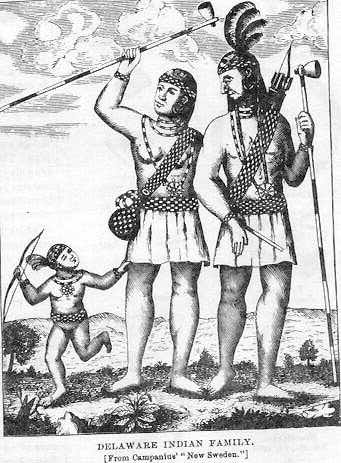
The story appeared in The City section of the NYTimes on Sunday. It was part of an article describing the history of the World Trade Center site. As I read it I felt that its outline seemed very familiar. It described the manipulation of the power of the state for personal gain, but while both the profit and the loss associated with two years of warfare against the Indians in New Netherland was on a much smaller scale than that of the imperial Bush wars, has anything changed much in four centuries?
Jan Jansen Damen, who came from Holland around 1630 to help set up the new colony, was more than just a simple farmer. The first European owner of what would later become part of the World Trade Center site had much greater ambitions.
Like an early Donald Trump, Damen had a thirst for land and wealth. He pushed aggressively to secure commitments from the Dutch West India Company for grants or leases of property located just north of the barricade that was Wall Street. Below this barrier was all of settled New York, the land where the pioneers had built their crude, wooden-roofed homes.
When trouble came in the form of Indian attacks on settlers, the Dutch governor turned to Damen for advice, naming him in 1641 to New York’s first local governing board, known as the Twelve Men.
The board’s chairman, David Pietersen De Vries, urged Gov. Willem Kieft to be patient, as the tiny colony, with little in the form of arms or soldiers, was vulnerable and “the Indians, though cunning enough, would do no harm unless harm were done to them.”
Damen did not agree. His land, at the edge of the settled area, was particularly vulnerable. In February 1643, accounts written at the time say, Damen and two other members of the Twelve Men entertained the governor with conversation and wine and reminded him that the Indians had not complied with his demands to make reparations for recent attacks. “God having now delivered the enemy evidently into our hands, we beseech you to permit us to attack them,” they wrote in Dutch, in a document that survives today.
DeVries tried to calm Governor Kieft: “You go to break the Indians’ heads; it is our nation you are about to destroy.” But the governor disagreed. It was time, he resolved, “to make the savages wipe their chops.”
The assault, which took place about midnight on Feb. 25, 1643, in Jersey City, then called Pavonia, and at Corlears Hook, now part of the Lower East Side, was an extraordinarily gruesome affair. “Infants were torn from their mothers’ breasts and hacked to pieces,” DeVries relates in his journal. Others “came running to us from the country, having their hands cut off; some lost both arms and legs; some were supporting their entrails with their hands, while others were mangled in other horrid ways too horrid to be conceived.” In all, more than 100 were killed.
The region’s Indian tribes united against Governor Kieft and the colonists. Damen was nicknamed “the church warden with blood on his hands,” and expelled from the local governing board. The governor was ultimately recalled by the Dutch. The colony, over two years of retaliatory attacks, sank to a desperate state.
“Almost every place is abandoned,” a group of colonists wrote to authorities in Holland in late 1643. “We, wretched people, must skulk, with wives and children that still survive, in poverty together, in and around the fort at the Manahatas, where we are not safe even for an hour whilst the Indians daily threaten to overwhelm us.”
Damen died about 1650. His heirs sold his property to two men: Oloff Stevensen Van Cortlandt, a brewer and one-time soldier in the Dutch West India militia, and Dirck Dey, a farmer and cattle brander. Their names were ultimately assigned to the streets at the trade center site. Damen’s was lost to history
We won’t be so lucky with Bush’s name.
Note: The native American peoples in Manhattan were of the group, Lenape or Lenni-Lenape, later catagorized by the Europeans as Upper Delaware.
[image from RootsWeb for Montgomery County]
