May Day!

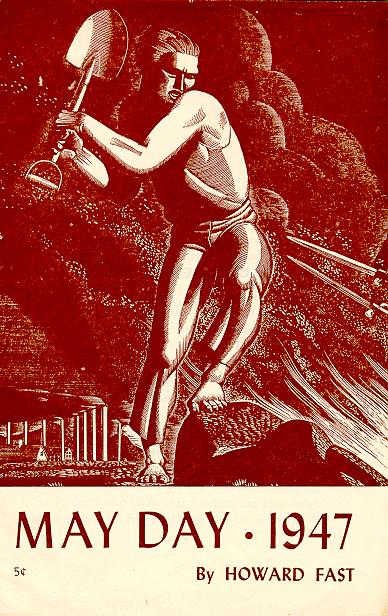
May_Day_Howard_Fast.jpg

What gives them the right?
I heard the news of our latest murderous bombing strike in Somalia on Public Radio this morning, just after the network had reminded me today was May Day. Almost in the same breath which described the massacre of at least eleven people (and perhaps many more) in a home in Dusamareb as a part of the war on terrorism, there was this interesting attachment [quoting here from the BBC story on line]:

In its annual report on terrorism published on Wednesday, the US said al-Shabab militants in Somalia, along with al-Qaeda militants in east Africa, posed “the most serious threat to American and allied interests in the region”.

So which is it? Are we fighting terrorists without portfolios (i.e., non-governmental terrorists) or people who threaten our “interests”? Is it about another Red Scare or another United Fruit?
While I thank the BBC for including this information in their report, I think they might have made more of the difference between the two explanations for our rogue state’s latest atrocity, especially since the dumbed-down American public knows nothing about events which happened the day before yesterday and is notoriously incapable of making simple rational connections between facts and statements without serious outside help.
But even aside from its clear immorality, this American obsession with bombing people and things we don’t understand and in normal circumstances would prefer not to have anything to deal with is ineffective, and much worse. Reasonable people can see it’s not in our true interest, and it accomplishes the opposite of what we intend (or at least what we are being told we intend). How are what the government’s report calls our “interests” being served by these kinds of horrors? Before we try to answer that question maybe our perpetual-war shoot-em-up government should explain to us just what those interests are. I won’t even bring up the question of interests of a million dead Iraqis, but are our own lives, liberties and pursuits of happiness more secure today than they were before we had our armed forces stationed on the soil of most of the nations on earth?
Almost my first thought after hearing about the overnight raid was to put it into a more objective context [very unAmerican, that]. In my mind I decided to deny for a moment my status as a privileged U.S. citizen and I threw out the (temporary) reality of American superiority in conventional arms. The somebodies in charge in Washington think they have the right to bomb people on the other side of the world whenever they decide it’s the appropriate thing to do – to protect our “interests”. What’s to argue against the right of the somebodies in charge somewhere on the other side of the world to bomb us here? We are even more obviously a serious threat to the interests of most of the people in the world than any of them are to ours.
I believe some of them have already told us this, and I expect that bombings in Somalia and a series of aggressive wars initiated in poor countries on the other side of the planet will only persuade them of the truth of their position: That their interests are not those of the mad somebodies who author these atrocities. We can expect they will continue to remind us of this.
In 1787 Benjamin Franklin addressed the Constitutional Convention in Philadelphia in these words which were read to the assembly by a friend:

I agree to this Constitution with all its faults, if they are such; because I think a general Government necessary for us, and there is no form of Government but what may be a blessing to the people if well administered, and believe farther that this is likely to be well administered for a course of years, and can only end in Despotism, as other forms have done before it, when the people shall become so corrupted as to need despotic Government, being incapable of any other.

I had read this passage long ago, but I came upon it again yesterday while reading Gore Vidal’s erudite and extremely entertaining little 2004 volume, “Inventing a Nation: Washington, Adams, Jefferson“. In the next paragraphs Vidal looks ahead, and back, at the government left to us today:

Now, two centuries and sixteen years later, Franklin’s blunt dark prophecy has come true: popular corruption has indeed given birth to that Despotic Government which he foresaw as inevitable at our birth. Unsurprisingly, [the current edition of a popular biography of Franklin] is now on sale with, significantly – inevitably?, Frankin’s somber prediction cut out, thus silencing our only great ancestral voice to predict Enron et seq., not to mention November 2000, and, following that, despotism whose traditional activity, war, now hedges us all around.

Happy May Day.

ADDENDUM: For me one of the most painful parts of the continuing nightmare of our post-2000 world has been the deathly (literally) silence of most of the people of this country. We may repeatedly have been proven powerless, our opinions irrelevant to the conduct of the state, even when polls and balloting have finally revealed clear opposition to what is being done in our names, but how can so many still remain silent?
This bombing raid will go almost totally unnoticed, and unremarked.

[image of Howard Fast’s pamphlet, with Rockwell Kent illustration, from trussel.com]
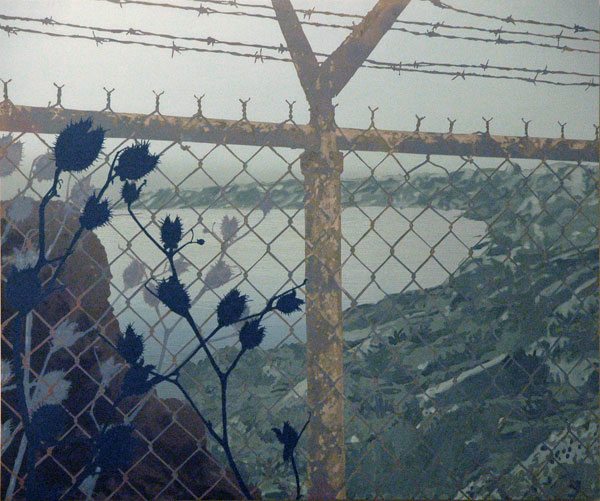
Saul Becker with Sunday L.E.S. at Volta

Saul_Becker_Beginning_Story.jpg
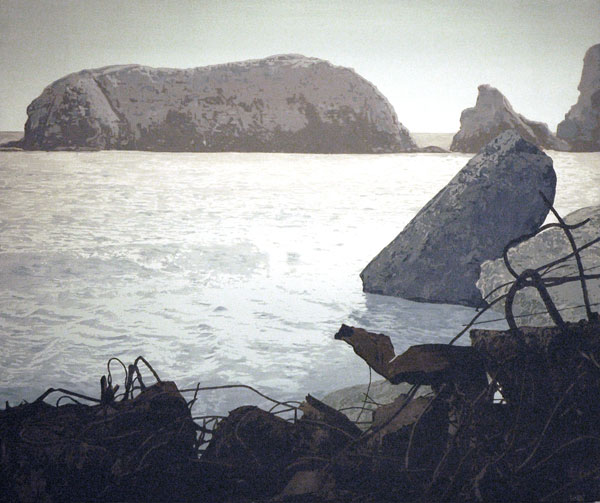
Saul Becker The Beginning of Every Story Seems Ridiculous at First 2008 oil on panel 29″ x 35″

Saul_Becker_Tender.jpg
Saul Becker Tender in Every Joint 2008 oil on linen 29″ x 35″

Although I’m now embarrassed to say I found them a bit underwhelming when I first saw them, the paintings of Saul Becker which Sean Horton showed at Volta very quickly managed to give themselves real presence. Maybe I was suspicious of the subdued earthy colors (my favorites) in these foggy landscapes, but my eyes quickly opened when I started to notice here and there oddly-natural elements of grafitti, industrial fencing and even more heavy-duty detritus. I then learned that the artist, currently represented with a solo show of large-scale ink and gouache drawings at the Lower East Side [L.E.S.] gallery which I have not yet seen, works just somewhat outside en plein air landscape practice. These scenes don’t exist except in Becker’s eye. The show’s press release tells us, as a matter of fact, that the works, “best described as composite landscapes, combine fragments from different places and sources to create new, invented locations.”

Adam Dant with Hales at Volta

Adam_Dant_Liberty.jpg
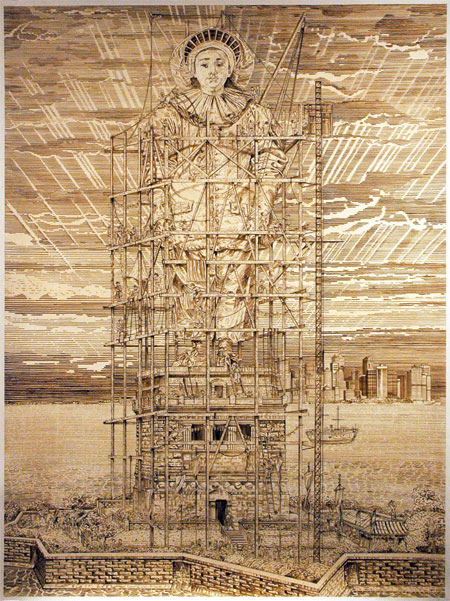
Adam Dant Liberty 2008 ink on paper 95″ x 72″ [installation view, including the entire drawing, but cropped just inside the edges of the folio]
Adam_Dant_Liberty_detail.jpg
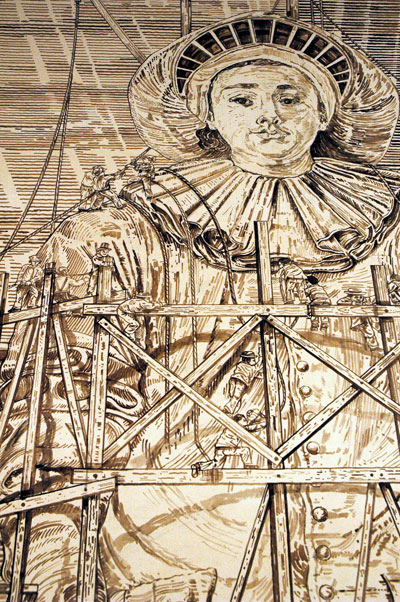
[detail, shot from an angle below]

Adam Dant was the artist London’s Hales Gallery chose to show at Volta last month. Although the artist showed work drawn entirely from iconic sites of New York City, William Hogarth, his home town’s genius hovered over these large ink drawings on paper.
Barry and I also saw a portfolio of a handsome print edition which was a version of this image, but run without including the Watteau Pierrot inside the construction scaffolding, in fact without including any figure. Dant had instead added a different character, in contrasting red ink, as a unique drawing on each print. Every one of them is a distinctly different monument substituting for the familiar “Liberty”, something of an extended commentary on a subject dear to this engaged, lampooning artist.
Dant is perhaps still best known in England as the the creator of “Donald Parsnips’ Daily Journal” [sample], a quirky broadsheet he wrote and drew, photocopied and handed out to fellow Londoners (and Parisians, Berliners, New Yorkers and Cairenes) every day for four years beginning in 1995.

six years of the jimlog

six_99cents_store.jpg
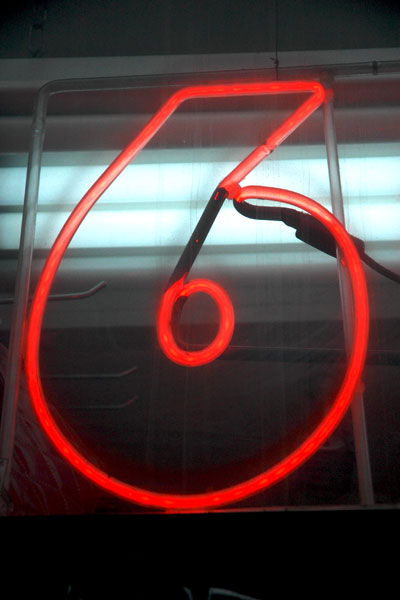
(I have no idea why the 99� store across the street has a second sign reading 69�)

Today marks the anniversary of this blog, begun six years ago. I had conceived it as a modest but public means of expressing my dismay with the incredible folly of this country’s response to the events of September 11. It was to be a more structured form for the series of emails with which I had been plaguing my friends since that date. It would also be broadcast more widely – but also less intrusively, probably a good thing for my friendships.
As I sit here today I confess that six years ago, even in the extreme distress produced by the mindless, seemingly universal jingoism of the moment, I could not have imagined the horrors we have brought upon ourselves and the world in the years which were to follow.
Due at least to lack of interest, except among those entrenched in power, I don’t expect much will change after this November (I believe our republic is beyond restoration). So, for my own mental health and for the day-to-day survival of this blog, I’m grateful that I’m still crazy about a few other things that can be written about in public: The concerns of “the jimlog” will always include the arts, queerdom, history, New York and the world.
I observe another anniversary on April 27, one infinitely more important than the launch of this modest little outlet: I met Barry, my perfect partner and Wunderkind webmaster, seventeen years ago today.

Vincent Gagliostro with Margaret Thatcher at Pulse

Gagliostro_Reagan.jpg
Gagliostro_youth_window_2.jpg
Gagliostro_torso_BW.jpg
Gagliostro_youth.jpg
Gagliostro_chat_room.jpg
Gagliostro_crane.jpg
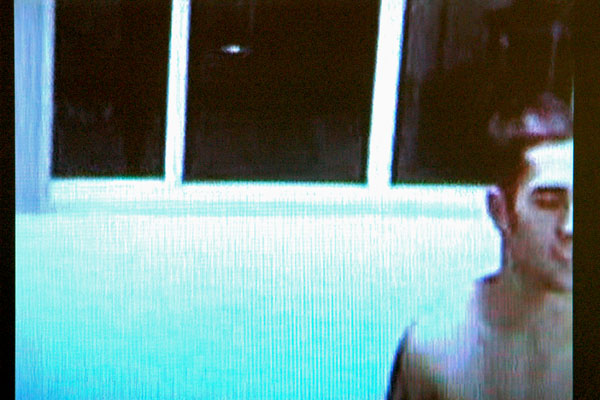
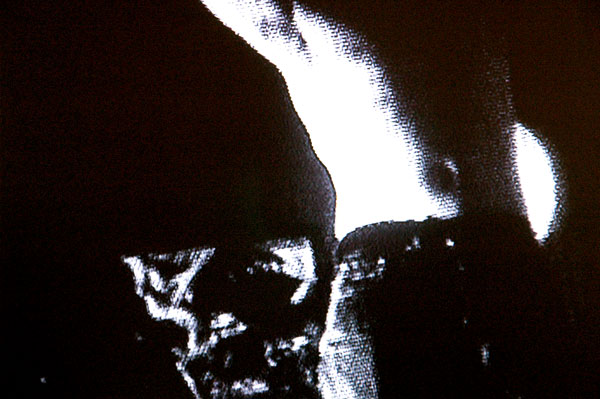
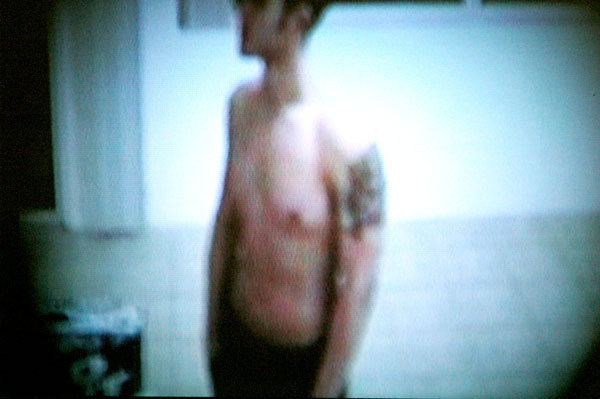
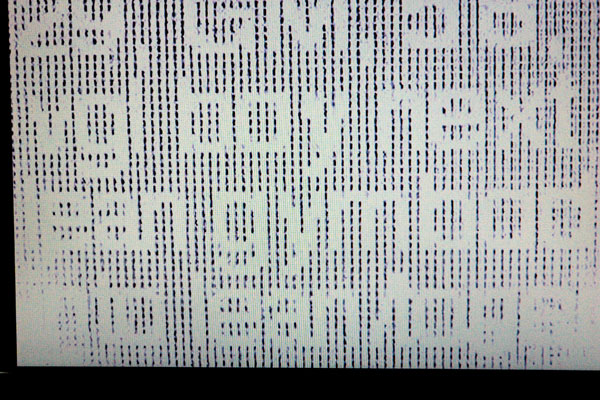
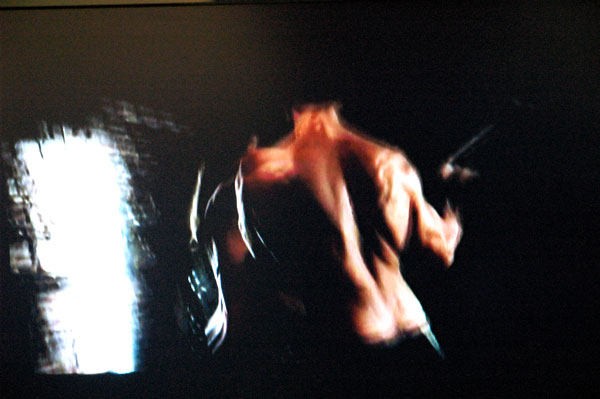
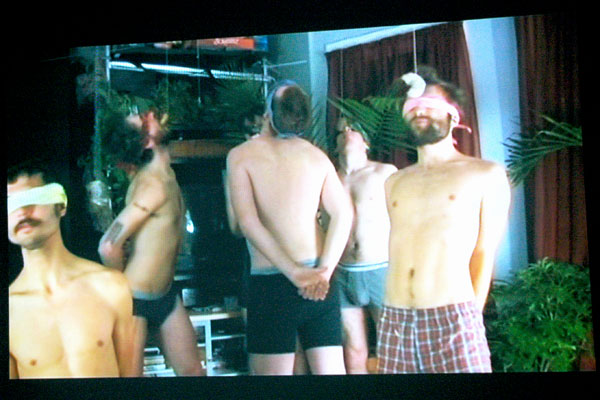
Vincent Gagliostro After Louie, an excerpt video [stills, and large details of stills, from installation]

Margaret Thatcher showed a video by Vincent Gagliostro at Pulse. I’d like to describe it as an art trailer for a full-length film not yet produced, but even in its current form it’s certainly a complete work of art. There’s not a single ugly or unnecessary frame in this piece. I snapped only five images while standing in front of the video screen last month; five images appear here.
Gagliostro describes the work as:

. . . a political love story set against the backdrop of a time when the gay movement mattered, when lovers were not looking for their rights within mainstream structures and when activism existed in its rightful home: the streets.

The artist is a friend and an activist colleague of mine.
Although I’m also no stranger to the world which inspired Gagliostro in creating this film, I prefer to let the gallery press release set the scene with the help of the director’s own input:

“After Louie” hits you like a time bomb . . . was there really ever a New York like that where adventure and discovery and sexual tension were still palpable and possible on the skinny island of Manhattan? Was there a meatpacking district before Pastis? When you watch Gagliostro’s video, you actually remember, for a moment, the streets and the clubs and the boys with nice abs.
In the visual and audio collage of Gagliostro’s piece you recall that New York City from the not-so-distant end of the last century like it was yesterday. You remember it all not with nostalgia, but, quoting Gagliostro, “with relief that this New York actually existed and actually happened before it was too late; that despite the tragedy and loss and pain of that era there was still the nourishment of real off-line experience and the comforts of heart and sex and art and strangers and bodies and life, and soul growth before everything was already discovered, developed, trained, tracked, exploited, done, over.”

There’s a clip of the video here, on the artist’s very beautiful site.

PSJM with Espacio Líquido at Pulse

PSJM_video.jpg
the advertising video
PSJM_shop.jpg
the shop corner

I was delighted with the quality of the installations at Pulse of Espacio Líquido, a new Spanish gallery located in Gijón on the central Asturian coast. They look like they’ll be worth watching.
The images above can’t begin to describe the project of just one element of the gallery’s presence in New York last month. My few words can’t do much more but I can say that PSJM is a Madrid-based collaborative formed by Pablo San José and Cynthia Viera. Tricked out as a shiny, sexy commercial brand itself, PSJM offers a critique of both global capitalism and market-based art. “Made by Slaves for Free People” – so went the title of the pair’s show at London’s Riflemaker earlier this year.

Sean M. Johnson curated by Arning at Pulse

Sean_M_Johnson_Donut_Eating.jpg
Paul M. Johnson Donut Eating Contest 2008 video [still from installation]

Video takes time, and frankly Barry and I didn’t have much left when we finally found the video room at Pulse, “Sameness, Difference and Desire”, curated by Bill Arning. I have to admit this work by Sean M. Johnson was the only one we managed to see while we there, but on the basis of Arning’s track record over the years and the merits of this piece alone, I’d have vouched for every other one in the lineup. Those included videos by Ann Carlson and Mary Ellen Strom, Maria Friberg, Allen Grubesic, Danny Hobart and Gabriel Martinez.

Cordy Ryman with DCKT at Pulse

Cordy_Ryman_Silent_Echo.jpg
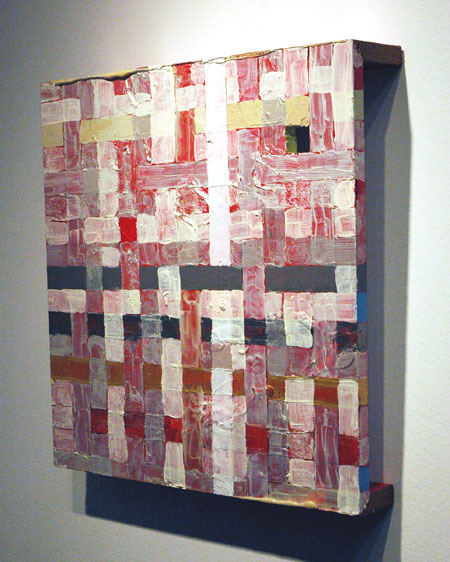
Cordy Ryman Silent Echo 2008 mixed media on wood 18″ x 15.5″ x 3.5″ [installation view]

Cordy_Ryman_Octopus_2.jpg
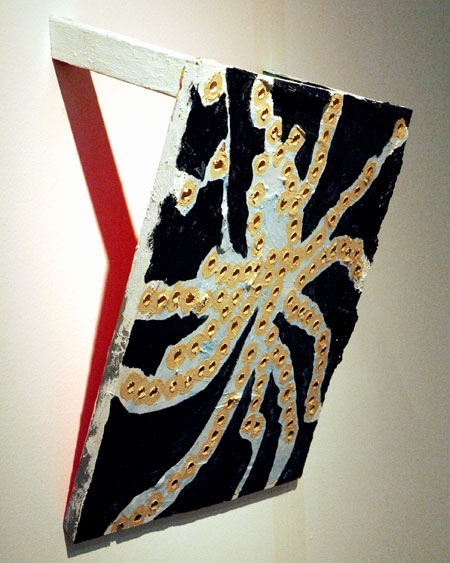
Cordy Ryman Octopus 2008 mixed media on wood 18″ x 15.5″ x 7.25″ [installation view]

DCKT showed work by Cordy Ryman at Pulse. The color and surface magic of the first piece in particular was dazzling. I’m looking forward to the artist’s first show with the gallery.
Trying to find a link just now I realized, to my shame and surprise, that I’ve never posted images of Ryman’s work before, and this after tracking, enjoying and photographing his smartly-whimsical sculptures for years. There are more images here on the west coast.