“NeoIntegrity” at Derek Eller

Sullivan_Billy_Christian_3.jpg
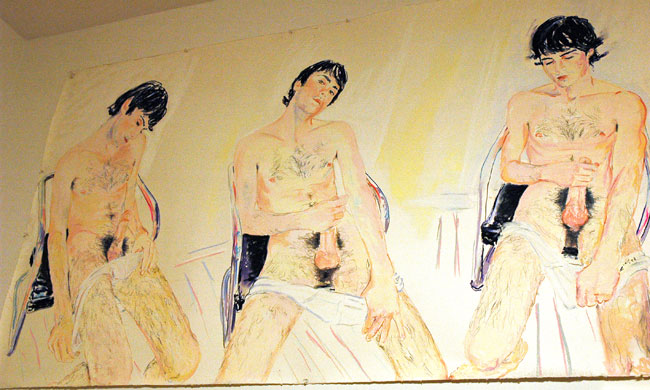
Billy Sullivan Christian 3 2004 pastel on paper 45″ x 78″ [large detail of installation]
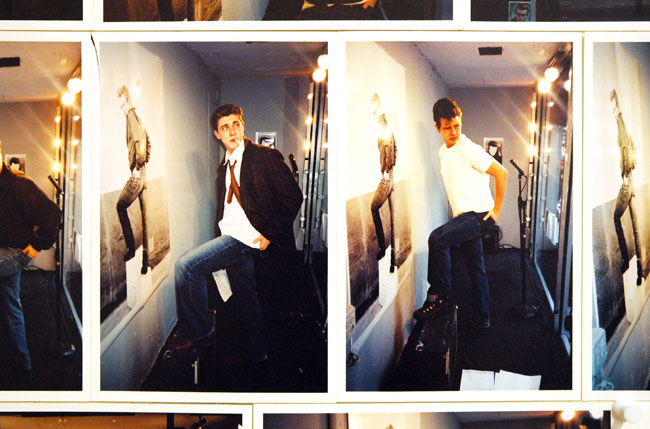
Steiner_A.-_L._Swift_Path.jpg
A.L. Steiner Swift Path to Glory (James Dean auditions) 2003, 25 4″ x 6″ prints [detail of installation]
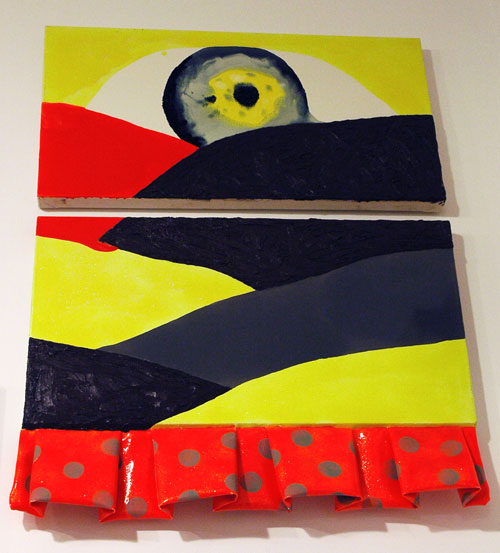
Maku_Sakura.jpg
Sakura Maku Akira [no date] oil on canvas in 2 parts 39.5″ x 30″ (installed) [installation view]
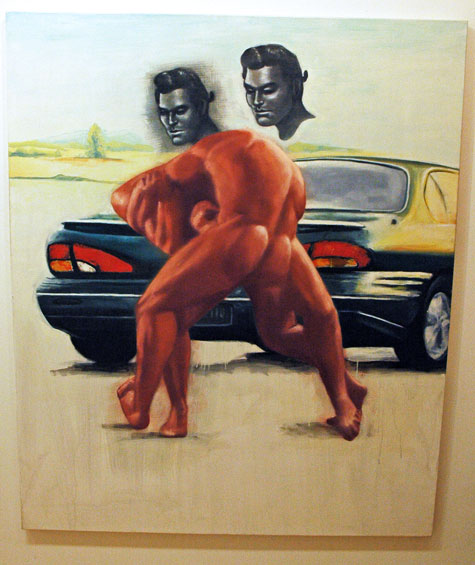
Humphrey_David_Wrestlers.jpg
David Humphrey Wrestlers 1997 oil on canvas 72″ x 60″ [installation view]

Melyn_Sean_Pruning.jpg
Sean Mellyn Pruning 2006 ink on paper 21″ x 25.5″ [large detail of installation]
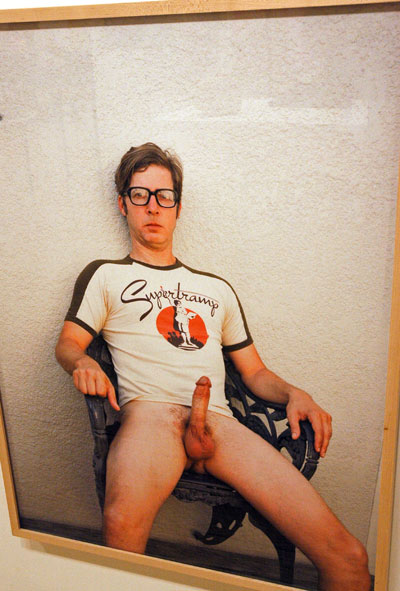
Boadwee_Keith_Breakfast.jpg
Keith Boadwee Breakfast in America 2007 digital inkjet print 30″ x 40″ [large detail of installation]
Marshall_Robert_Silly_Rabbit.jpg
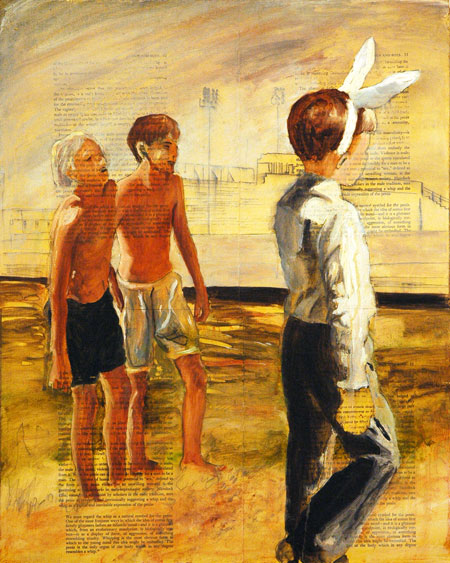
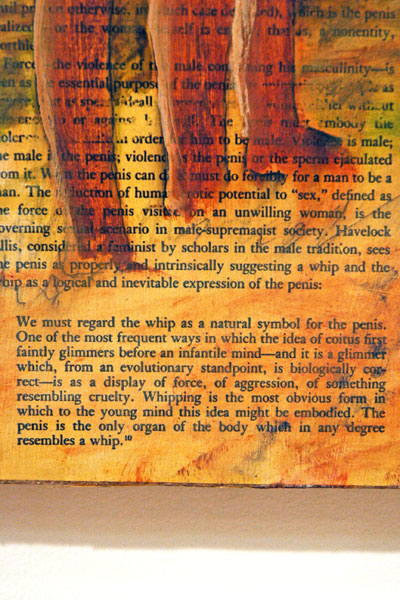
Robert Marshall Silly Rabbit #3 1993 oil on paper on masonite 20″ x 16″ [installation view]
Marshall_Robert_Silly_Rabbit_detail.jpg
[detail]

With “NeoIntegrity“, curated by gallery artist Keith Mayerson, Derek Eller must come close to setting a record for the number of people represented in a single group show. In this case the salon-hung catalog comes in at just under 200, but the works really do share a connection, an adherence to “The NeoIntegrity Manifesto”, as expressed in a remarkably percipient checklist which accompanies the exhibition:

1. Art should be reflective of the artist who made it, and the culture in which it is produced.
2. Art is aesthetic, and whether ugly, beautiful, or sublime, it should be interesting to look at and/or think about.
3. Art is not necessarily commodity, and commodity is not the reason to produce or appreciate art.
4. Art is about ideas, the progression of ideas, the agency of the artist to have ideas, the communication by the artist to the world of their ideas because agency and ideas are important and what art is.
5. Art communicates via its own internal language, and by the language the viewer brings to a work of art. But this language is not entirely textually based, and being an aesthetic object (or image[s], idea[s], comic, or happening[s]), the work communicates in such a way to be transcendent beyond language, and traditional constructs of textually based ideology. Therefore the work of art remains a deep communication between artist and viewer, and withholds the possibility of the sublime.
6. Art is rather than tells, it is about itself; it shows itself to be about what it is rather than being an illustration of what it isn’t.
7. Art is important because it reminds us that we are human, and ultimately, that is its function.
8. Art can be, and should be sublime, in that it is able to produce images directly from the mind and imagination of the artist, producing tangible realities from the fertile imaginings of the conscious and unconscious of the artist, triggering responses from the same in the viewer via form and light and color, that transcends language and received ways of looking at things, that, while ideological, comes closest to directly communicating from one animal to another in the most broad, base, but considered aesthetic language possible.
9. Art should be alive, have a life of its own, transgress intended meaning or hand or wit of the artist in that it arranges, via form, light, color, and space, other worlds that are optical and transmit cognitive reactions in the mind of the viewer that cause an ineffable schism between belief and reality that cause the work as to appear to be breathing life.
10. Art can indeed be windows onto other worlds, windows into the soul, able to capture dream space/time unlike any other medium because they are produced by the mind, gesture, hand and intellect of the artist, who consciously or unconsciously cannot hope to ultimately control the meaning, interpretation, or event described by the hand and mind of the unconscious.
11. Art should be experienced: a good work of art cannot be successfully reproduced or explained, indeed, that is ultimately the only reason art is important in the age of corporate commodity culture: it has an aura that cannot be contained-it is a result of a peculiar man-made alchemy that comes closest to recreating the soul.

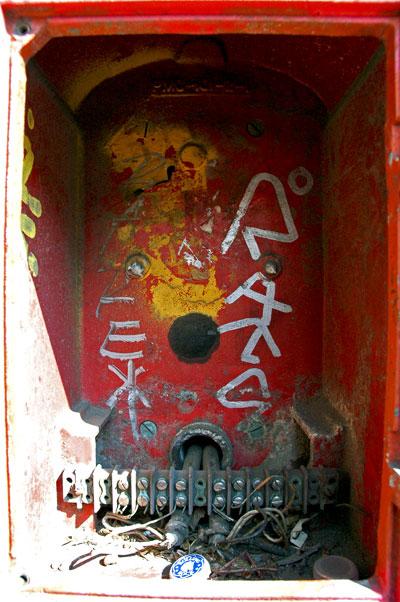
I’ve shown at the top a few of the striking images among so many, many others in this show, and I’ve taken the liberty of including with them some of the more outrageous of the lot – because I can, but also because outrageousness seems, properly, to set a good part of the tone for the whole exhibition.
The installation continues on West 27th Street through this Friday.

two Greenpoint survivors

Greenpoint_Federal.jpg
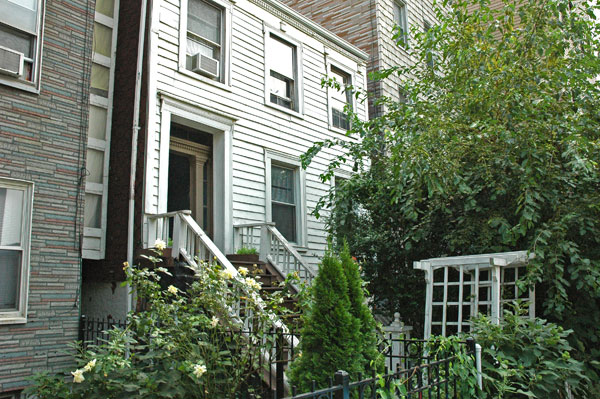
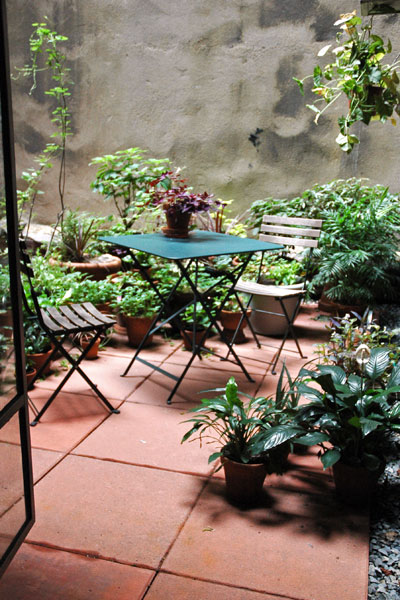
Its neighbor’s roses and its own arbor gate standing at the edge of the sidewalk are homey touches for this unreconstructed wooden Federal house on Green Street in Greenpoint. The house is built in exactly the same form as the typical urban row house but in fact, apart from late excrescences on either side, it’s actually free-standing. It’s probably a relic from the second quarter of the nineteenth century.

Greenpont_Greek_Revival.jpg
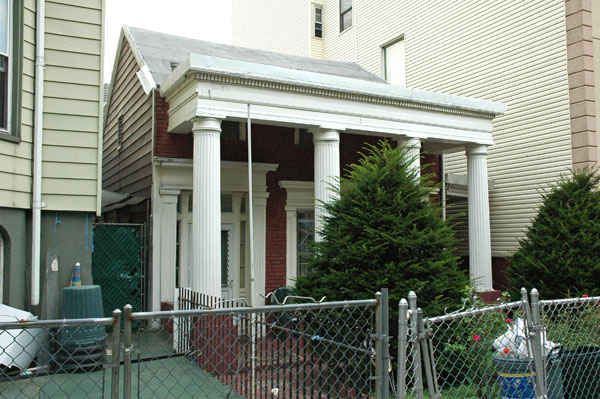
The almost-hidden eyebrow windows, the heavy flat moldings around the door and windows and the elegant porch columns express the period of this small Greek Revival house on Huron Street, one block south of the house shown above. I wonder however about the absence of a pediment, and the fluting on those Tuscan columns is a rather peculiar touch for the era. The house may in fact be older than its 1830’s or 1840’s fancy dress; I don’t know how to explain the fluting.
Both of these survivors are located only a short distance from the original eastern shoreline of the East River, with Midtown Manhattan on the other side. In the nineteenth century this waterfront was an important site for shipbuilding and its related trades.

TEAR IT DOWN

guantanamo_amnesty_2.GIF

Guantanamo. Again.
But this time I’m encouraged by the appearance of a new site devoted specifically to the subject. Amnesty International has just gone public with a new site, tearitdown.org, dedicated to solely shutting down permanently the most notorious of the U.S. concentration camps.
TEARITDOWN.jpg
I had purchased the domain they’re using sometime last year with the intention of devoting it to a totally different form of protest, one which would not have addressed such fundamental issues of humanity. When Barry and I were approached by Amnesty’s people I was happy to see it depart for higher purpose.
Bon voyage!

[all images from Amnesty]

of one-party governments, war crimes, collective guilt

Tom_Tomorrow_story.jpg

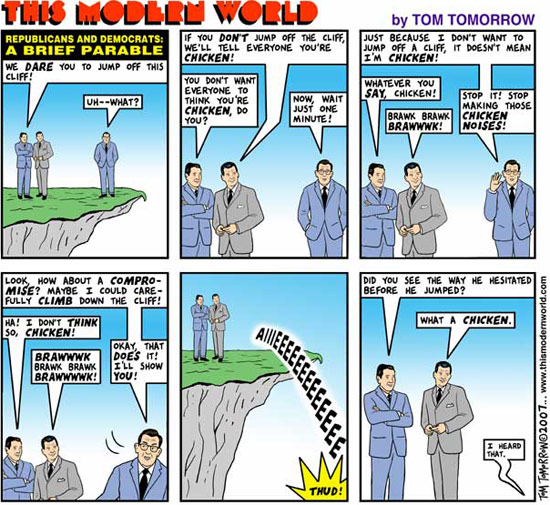
Bloggy explains why he and so many of us have abandoned American electoral politics. My own take on it: A people which liked to describe its system as “democratic” has finally been occupied by what our last real “republican” President called “the military-industrial complex”.
After a graceful segue into the subject of war crimes and collective guilt, Bloggy reminds us why these things matter as much today as they did in 1945.

[Tom Tomorrow image from Salon]

U.S. stinginess begins at home

stinginess_Breugel_P.gif

Keeping America out of the red (commie/pinko/welfare-state red) may bury us all.
I’m not much of a statistics guy, and I don’t often trumpet NYTimes editorials, but there’s some very simple numbers inside a short item in this morning’s paper, and it deserves broader notice than it’s likely to get.
Okay, the lead editorial with the sardonic headline, “Amateur Hour on Iran“, is also worth a look, but here’s an excerpt from the one I first spotted, “The Less-Than-Generous State“:

The United States has long had one of the most meager tax takes in the industrial world. America’s social spending — on programs ranging from Medicare and Social Security to food stamps — is almost the stingiest among industrial nations. Among the 30 industrialized countries grouped in the Organization for Economic Cooperation and Development, only four — Turkey, Mexico, South Korea and Ireland — spend less on social programs as a share of their economy.
Long a moral outrage, this tightfisted approach to public needs is becoming an economic handicap. Shortchanging public health impairs America’s competitiveness. If the United States is to reap the rewards of globalization, the government must provide a much more robust safety net — to ensure public support for an open economy and protect vulnerable workers.

Note that the four nations whose public systems are listed as even more selfish than our own are all known for the strength of their family structures – no adequate substitute for a less exclusive approach to conscience, and also not an attribute which individualistic Americans are known for sharing these days.
Hmmm. The richest country on earth, but with diddly-squat for the needy, ditto for the infrastructure, for the arts, for public health, for low-income housing, for public parks, for public transportation, for the elderly, for child care, for adequate public education or any number of the other functions which define a modern civil society; into whose pockets has our great wealth been flowing?

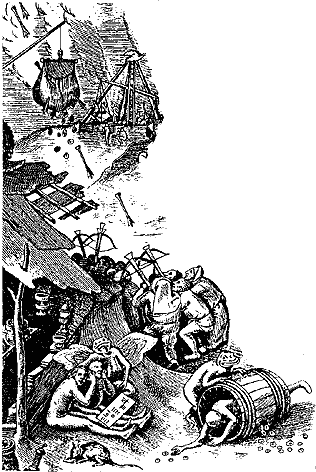
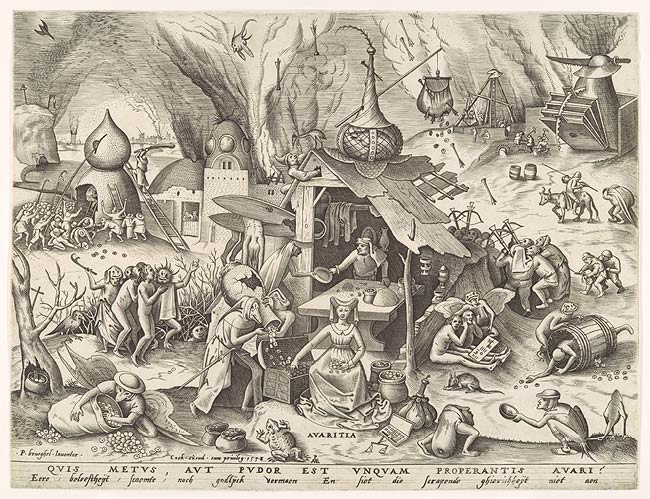
UPDATE: At the time I did this post I was unable to locate a complete image of Breugel’s “Avarita”, and I had to be content with the detail seen at the top. Today I found what I had been looking for, serendipitously. Tom Schreiber was visiting us and he had brought along a copy of Dover Publication’s “Graphic Worlds of Peter Bruegel the Elder“, and there it was. And here it is:
Breugel_Avarice.jpg
Pieter van der Heyden [after a drawing by Pieter Bruegel the Elder] Avaritia (Greed) 1558 engraving 9″ x 11.5″

[1556 image (“Stinginess”) by Pieter Bruegel the Elder from, and in an attribution by, cartage; second, full image from Metropolitan Museum]

“Late Liberties” at John Connelly

Hesidence_Daniel.jpg
Daniel Hesidence Untitled (1 7 7 9 /pedestrians) oil on canvas 96″ x 84″

Kwartler_Alex.jpg
Alex Kwartler Untitled (Still Life) 2007 oil on canvas 24″ x 21″

Moyer_Carrie_Dark_Tonic.jpg
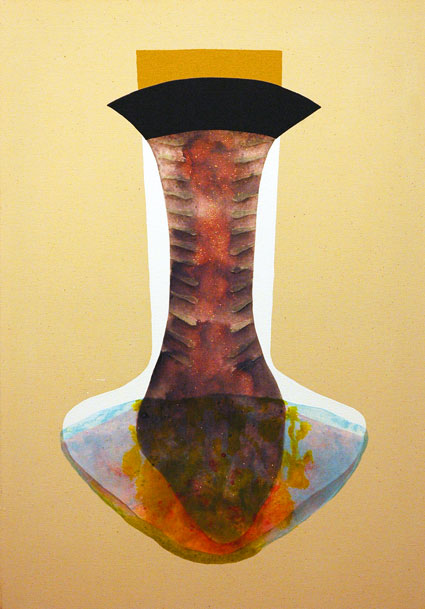
Carrie Moyer Dark Tonic 2007 acrylic, glitter on canvas 40″ x 28″

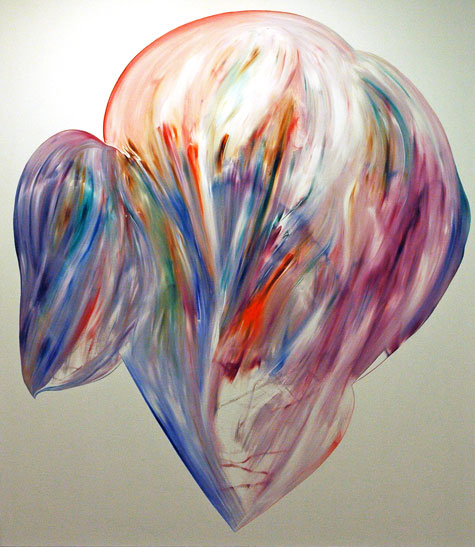
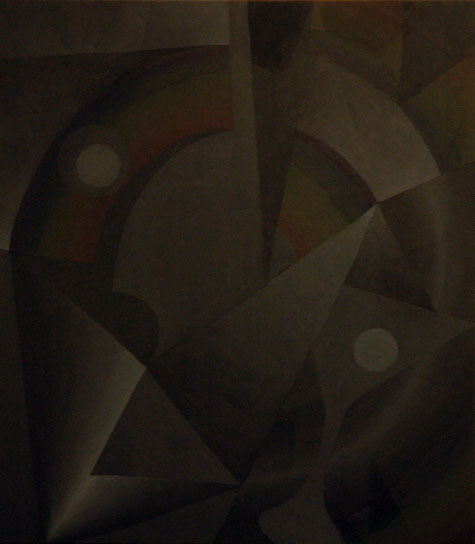
John Connelly Presents some “late Liberties” this summer, a show of recent abstractions organized by artist and curator Augusto Arbizo in collaboration with Connelly himself. It’s worth a trip, but this gallery always is. Again, only two days left. I don’t have time to do more than put up a few images here, but I thought, better a picture or two than a late report with some words.
CORRECTION [of earlier correction]: the gallery will not be open this Saturday after all

“Laying Bricks” at Wallspace

Wilkinson_Konitz.jpg
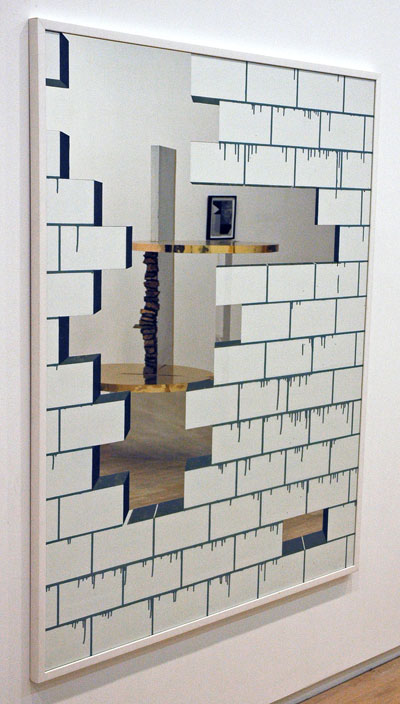
Michael Wilkinson Wall 2005 acrylic on mirror, frame 59.25″ x 49.25″ [installation view, with Alice Könitz’s “Double Take” and Nathan Hylden’s “6.22.07” in the reflection]

Konitz_Alice_Banana_Peel.jpg
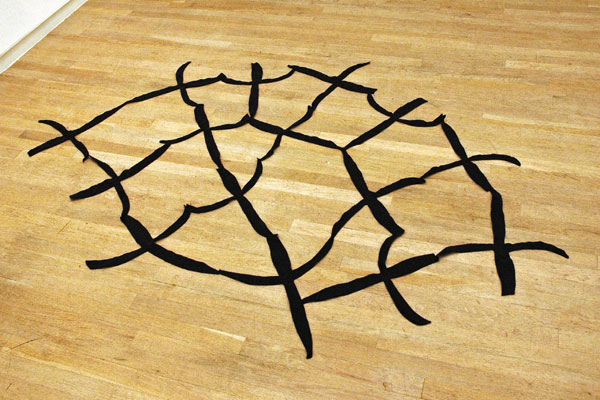
Alice Könitz Banana-Peel-Rug 2007 acrylic felt 81″ x 56″ [installation view]

I was already a fan of the work of Richard Aldrich and Alice Könitz, but based on what I saw last Friday I’m now just as enthusiastic about Los Angeles-based Nathan Hylden and Glaswegian Michael WIlkinson, the other two artists in the elegant current installation at Wallspace, “Laying Bricks“. Writer and critic Michael Ned Holte is the curator.
The show is a beauty, but it will be there for just two more days.