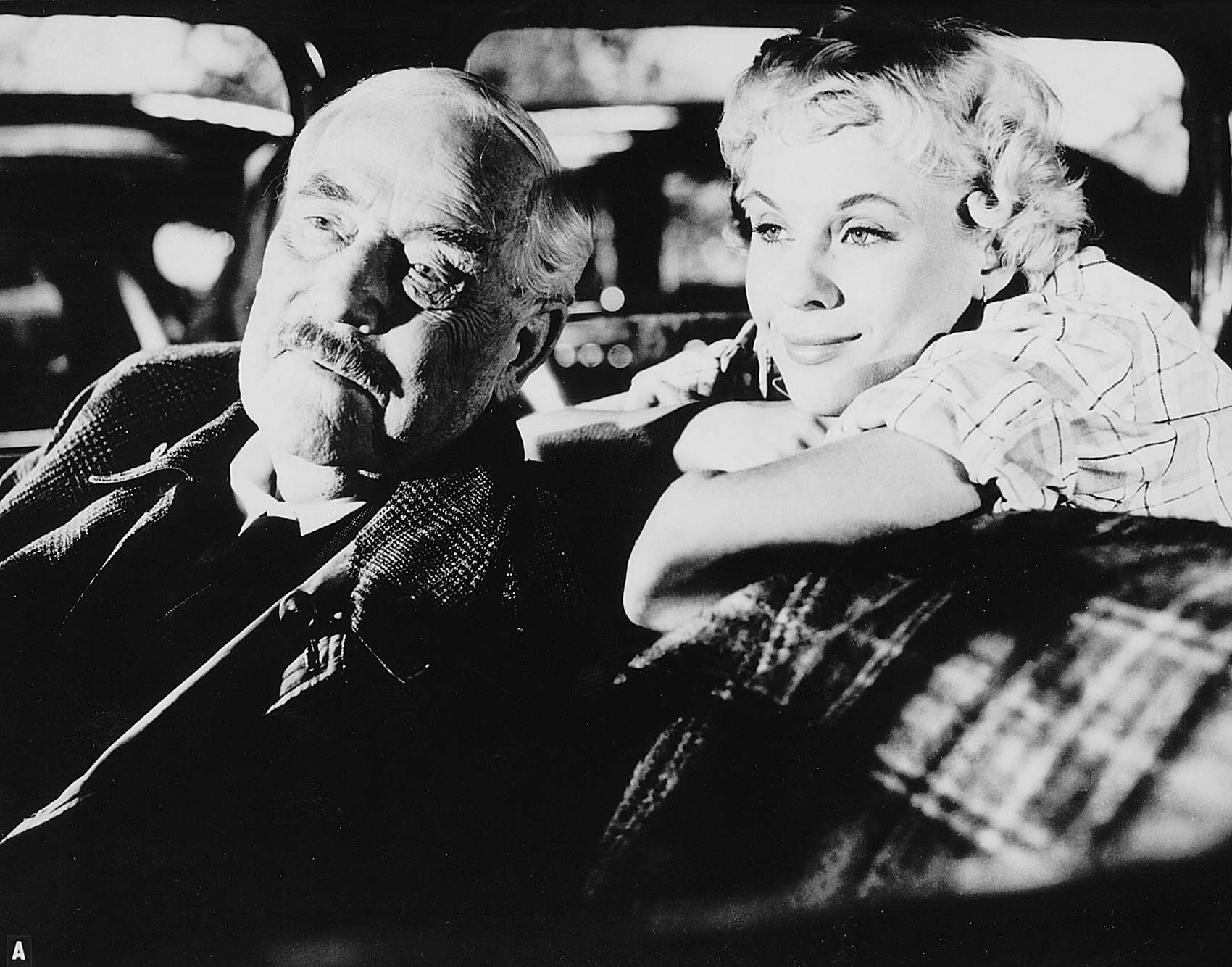
Ingmar Bergman 1918-2007

Bergman_Wilderdbeeren.jpg
Victor Sj�str�m and Bibi Andersson in a still from Ingmar Bergman’s 1957 film, “Smultronst�llet” [Wild Strawberries]

Well, of course it is. Everything is like a scene from a Bergman film.

Wow. Maybe this is not a balanced judgment, since I’ve been greedily devouring Ingmar Bergman’s work for 50 years, but I think this piece by The Reeler‘s Stu VanAirsdale may be the most extraordinarily beautiful memorial to an artist that I’ve ever read.

[image from luebeck]

a visit to Brooklyn Museum

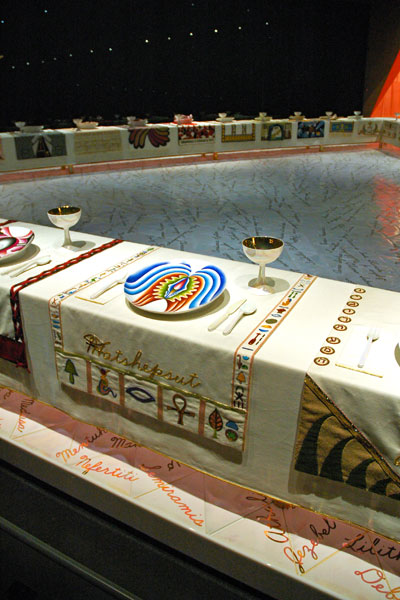
Chicago_Judy_Dinner_Party.jpg
Judy Chicago The Dinner Party 1974–1979 ceramic, porcelain and textiles [installation view]


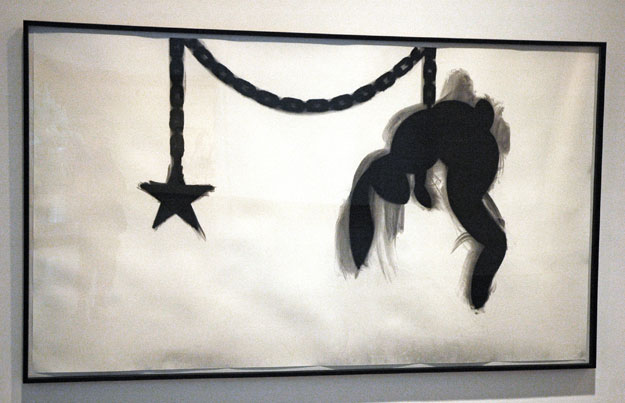
Blake_Nayland_untitled_bunny_hung.jpg
Nayland Blake Untitled 2002 charcoal on paper [installation view]

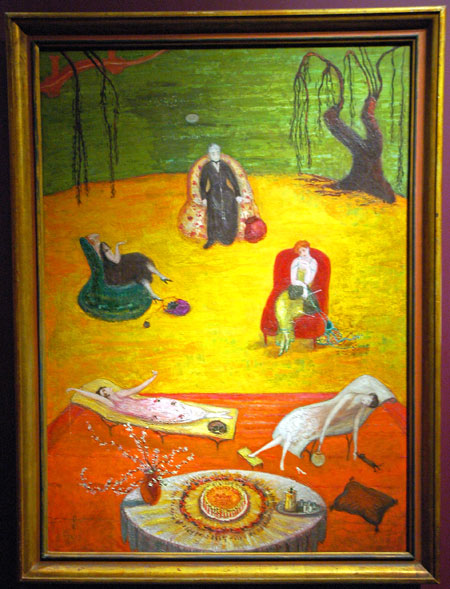
Stettheimer_Florine_Heat.jpg
Florine Stettheimer Heat 1919 [installation view]
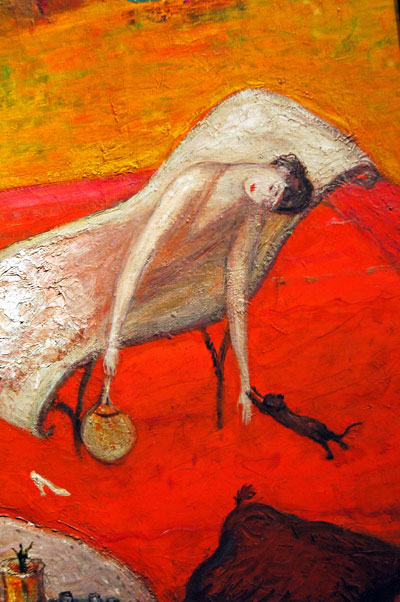
Stettheimer_Florine_Heat_detail.jpg
[detail]

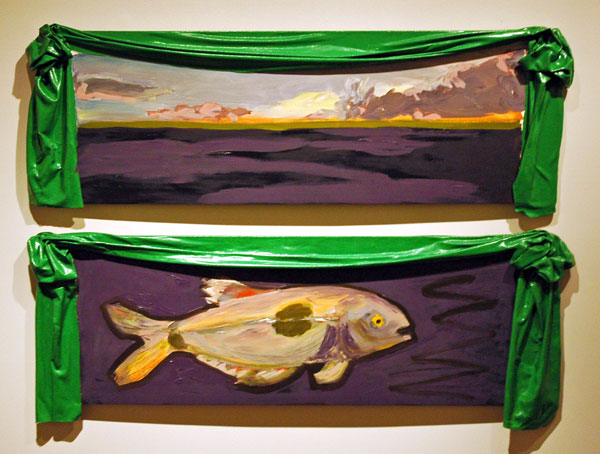
Morton_Ree_Regional_Work_%232.jpg
Ree Morton Regional Work #2 1976 oil on wood with Celastic [installation view]

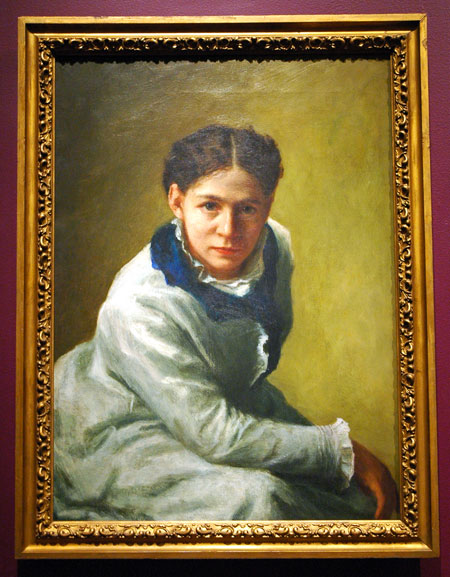
Bartlett_Jane_E_Sarah_Cowell.jpg
Jane E. Bartlett Sarah Cowell (later Sarah Cowell Lemoyne) 1877 oil on canvas

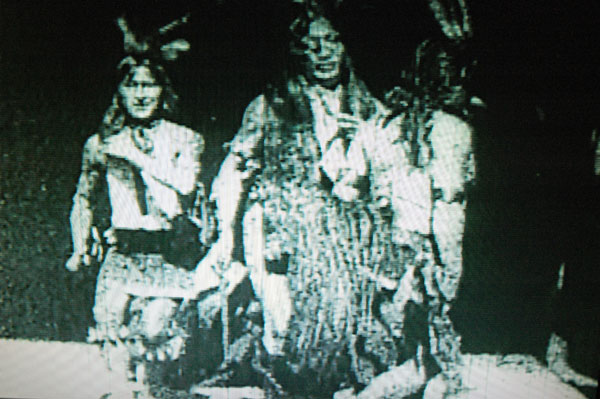
Edison_Thomas_A_Buffalo_Dance.jpg
Thomas A. Edison Inc., William Kennedy-Laurie Dickson, producer Buffalo Dance 1894 video from original 35mm silent B&W film [still from installation]

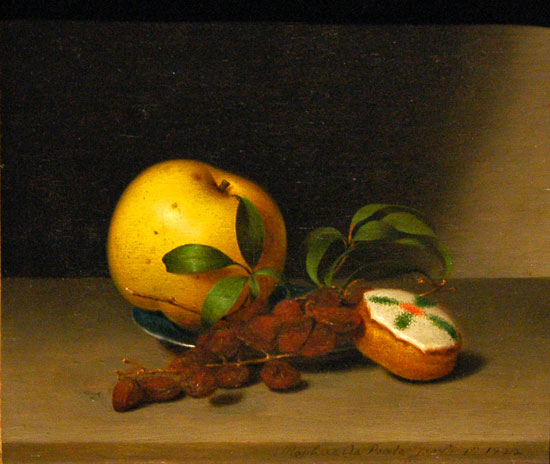
Peale_Raphaelle_Still_Life_with_Cake.jpg
Raphaelle Peale Still Life with Cake 1822 oil on panel [installation view]


Barry and I really did have a terrific time at Brooklyn Museum yesterday, and we’ve decided to visit its permanent and temporary exhibits much more frequently than we have in the past. It’s an easy subway run from Chelsea (or most anywhere else in Manhattan at least) and the installations are really smart. I was very impressed by the conception and execution of “American Identities” a long-term exhibition in the Luce Center of American Art which occupies much of the fifth floor. We didn’t have time to get into the so-called “visible storage” galleries of the Center, but I’m going to be heading back very soon.
This cultural treasure sits on the edge of the Brooklyn Botanical Gardens and Prospect Park. It’s both a great museum in Brooklyn and a great museum for Brooklyn. There’s much of Brooklyn in it, although the rare broadcast of that fact is pretty subtle and a very soft sell: Because I was looking for it, because I love my fabulous neighbor borough (and erstwhile great independent city), and because and I know much about its history and its culture, I think I may have been more aware of Brooklyn references than most visitors would be, including natives of burg themselves.
The crowds are smaller than those in the large Manhattan museums, but they just might be a little more enthusiastic, and it’s a delight for me to see their delight. The collection isn’t the least bit provincial, but somehow it seems like a museum you can warm up to. I have.
I’ve uploaded images of just a few things that excited me yesterday. Some of them made it partly because of information provided by documentation on the museum walls I can’t include here, but it’s clearly a very odd company, spontaneously assembled on the spot. Except for the first work, they were all part of “American Identities”, a collection of hundreds of objects from the Museum’s collection of art from all the Americas, including the decorative arts, from the colonial era to the present. Judy Chicago’s heroic and very elegant piece, “The Dinner Party“, is in its [almost?] permanent home on the 4th floor (a separate triangular gallery inside the Elizabeth Sackler Center for Feminist Art), but all of the other works I show are part of the “American Identities” exhibition one flight up.
It was still being installed when we were there, but I’m really looking forward to visiting the Museum’s upcoming special exhibition, “Global Feminisms Remix“, which opens on Friday right on the other side of the wall from “The Dinner Party”.

Marsden Hartley subs for Asher Durand at Brooklyn Museum

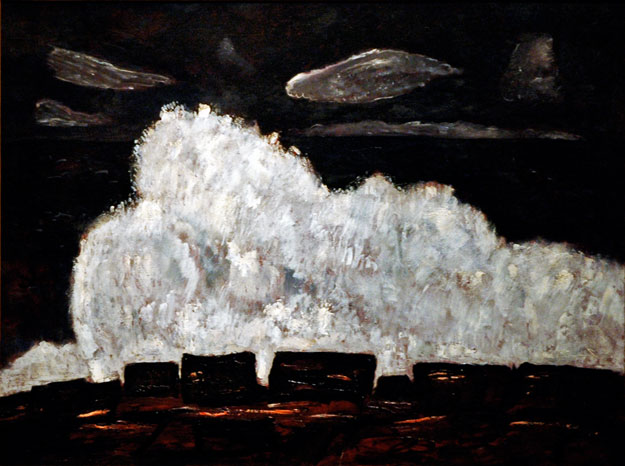
Hartley_Marsden_wave_unframed.jpg
Marsden Hartley Evening Storm, Schoodic, Maine No. 2 1942 oil on board 30″ x 40.5″
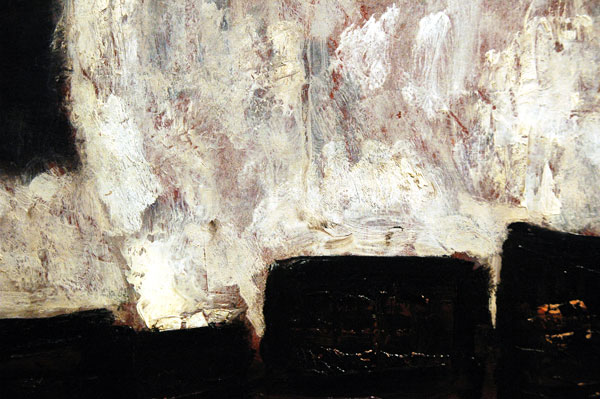
Hartley_Marsden_wave_detail.jpg
[detail]

We crossed Brooklyn ferry this afternoon (by subway, of course), on the last day of the Asher Durand show at Brooklyn Museum. I wasn’t permitted to photograph the Durand paintings, because they were not part of the museum’s own collection, but my camera wasn’t idle when we walked through the other galleries on the 5th floor.
This evening, still on the subject of the natural beauty of the Northeast, I can’t think of a better image to stand in for the pioneering Durand landscapes than this magnificent painting by Marsden Hartley. It may be my favorite thing of the day.

Daniel Reich in the Chelsea Hotel

Tranchell_Jeffrey_Gold_Bar.jpg
Jeffrey Tranchell Gold Bar 2007 enamel on wood 3.25″ x 32″ [installation view]

Smith_Mike_canvas_white.jpg
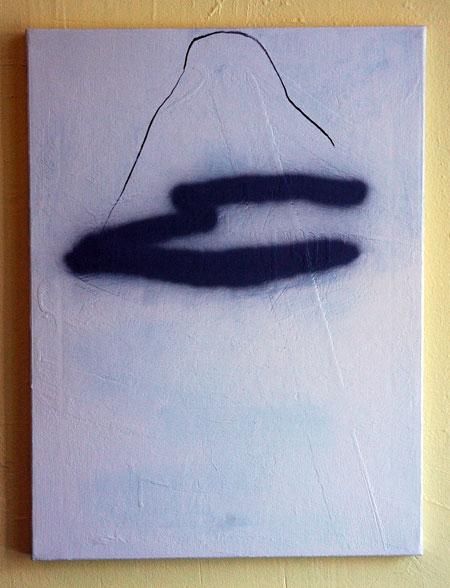
Mike Smith untitled 2007 latex, ink and enamel on canvas 24″ x 18″ [installation view]

Smith_Mike_canvas_gold.jpg
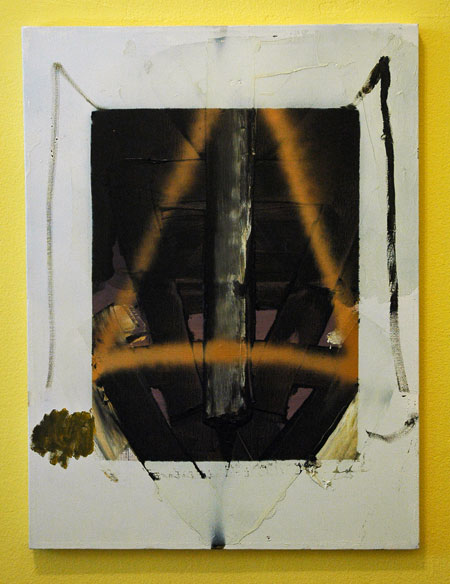
Mike Smith untitled 2007 latex, ink and enamel on canvas 20″ x 16″ [installation view]

I wanted to do this post over a month ago, as soon as I left “Darjeeling“, the enigmatic title of only the latest informal show installed by the Daniel Reich Gallery in one of the rooms of the Chelsea Hotel. At first I guess a lot of other things got in the way, and when the exhibition with the enigmatic title, shared by the artists Mike Smith and Jeffrey Tranchell, eventually closed writing about it seemed less, what, useful? Well, I haven’t been able to forget it. I continually see that room and its quirky installation in my head, regretting not sharing it here and half promising myself to do a belated entry.
So this is it, but for my tardiness I now feel I can’t leave without going into a bit of history:
Barry and I have been fans of the wonderfully unconventional Daniel Reich and his aesthetic choices from the beginning of his own gallery visibility, when (well before his first foray west of 10th Avenue) he was running a space in his micro-apartment on the ground floor of a building on West 21st Street. Before that we knew him as an assistant in Pat Hearn’s gallery and later the director. Earlier still we had met him when he was one of a number of young earnests attracted to the eccentric court sheltered by Bill Bartman‘s Art Resources Transfer [A.R.T.] gallery, publishing and bookstore space on West 22nd Street.
I’d like to imagine that it’s partly because of Daniel’s own career narrative that these two artists were given the opportunity of mounting this interesting small show.
We like his own shows and we like the Chelsea Hotel, our neighbor. I’ve always regretted that this magnificent building with a legendary, even mythical past, wasn’t the full-time venue for more galleries, but then it is fundamentally a residential pile, and I was always pretty fond of the commercial occupancies which did manage to get leases there, like a tackle shop, a guitar store, a tattoo parlor, a tiny tailor shop, an acupuncture salon. The hotel is under new management today, and even these interesting tenants are now going or already gone from the scene, probably to be replaced with one or more national chains to which none of its present residents or neighbors will ever be able to warm up.
I hope this isn’t one of the Chelsea Hotel’s last adventurous visual arts events, but it and Daniel Reich are certain to remain part of the legend.

NY Union Square First Amendment rally July 27, 2007

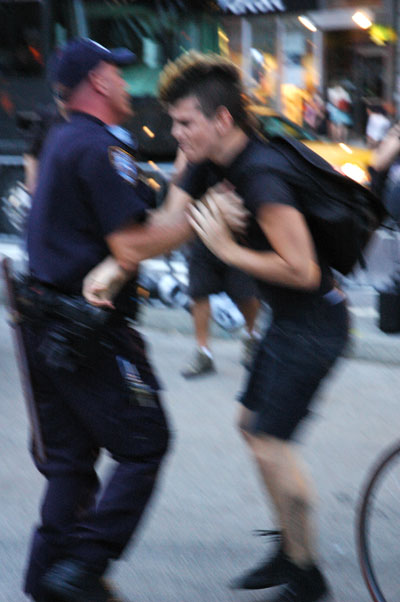
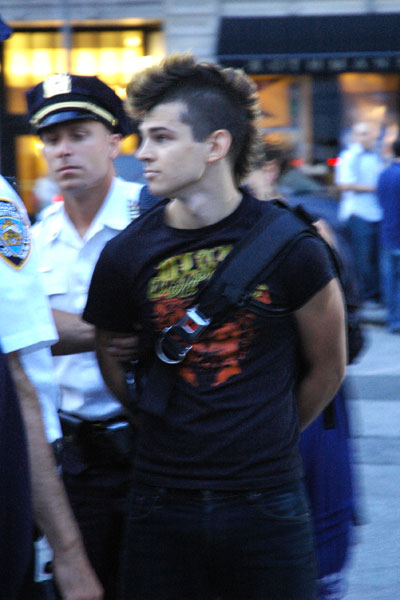
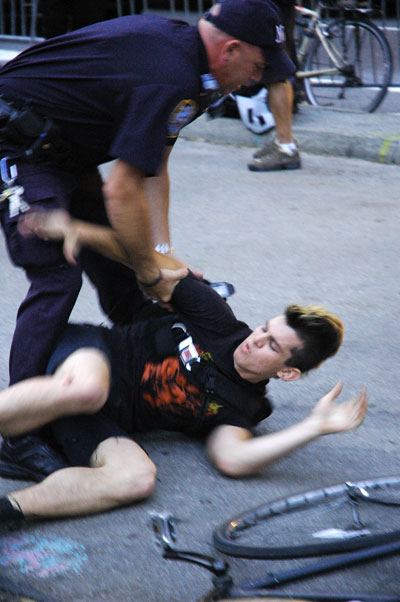
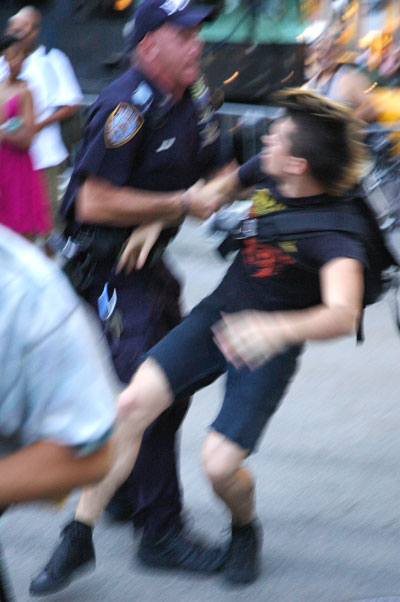
BICYCLIST DOWNED BY THUG COP, ARRESTED, THEN UN-ARRESTED
Joe_down_2.jpg
Joe_pulled_up_2.jpg
Joe_up_2.jpg
Joe_handcuffed_2.jpg

How much do you have to piss off a New York cop (unknowingly, in fact) before he assaults and arrests you?

When Joe Nerolla rode his bike over a large piece of fabric constructed to replicate an American flag (it was deliberately made as a rather casual, almost replica, with disorderly stars), an NYPD officer called to him to come over where he was. In the midst of the cacophony of a very animated and musical First Amendment rally last night the young bicyclist didn’t hear the summons. Much later, when someone pointed out that Nerolla was a musician, the youth agreed that his hearing might no longer be what it once was.
I had been standing at the north end of Union Square since 6:30 and I had seen no uniformed police anywhere on the plaza throughout the events of the rally until about this moment, although we knew there were many in plainclothes (think New Jersey or Staten Island casual) and there would certainly be at least scores of cops hiding in various locations just outside the park.
Instead I saw scores of those notorious massed, unpermitted New York bicycles and a huge gathering of people numbering well over the maximum number (49) legally permitted to assemble without securing a permit. Hundreds of these people joined together in using still and video cameras in a public space for longer than 30 minutes (soon to become a violation of the law as well) and finally there was no cabaret license anywhere in sight but there was a lot of exuberant dancing.
At precisely 8:05 some of the bicyclists passed by where my artist friend Marisa Olson and I were talking. They seemed to be gathering over on the northeast corner. At that moment, thinking about what appeared to be an initial assembly of Critical Mass cyclists (this was the evening of their regular monthly run, and the police have been harassing them for years), I mentioned to Marisa that I hadn’t actually seen any uniformed police yet. She turned around and pointed to two officers who were walking behind us just then. A moment later I saw another, but this one was running past us chasing after a bicyclist who it appeared might not have realized he was being pursued.
The cop caught up with the guy (who couldn’t have been moving very fast), and threw him violently onto the asphalt. Other police immediately appeared as if from nowhere and their shaken and slightly-bleeding quarry was hustled over to the steel barricades which ring the north side of the park. He was then handcuffed and a phalanx of officers in both blue and (executive) white shirts hustled him over towards the shiniest and biggest black SUV I’ve ever seen, parked exactly where Greenmarket tomatoes and herbs had been arrayed until little more than an hour before. Everybody stopped just short of the truck however, while several legal observers spoke to the police. The crowd pressed around, almost everyone armed with a camera of some sort. Word had quickly circulated that the victim had been scooped up for riding his bike over an American flag.
Remarkably, after a few minutes of this limbo, tensions lowered somewhat as it became known that the arrestee had been un-arrested. The precise terminology, I believe, is “voided”; the arrest was voided. The two legal observers on the scene, Joel Kupferman and Antonia Cedrone, had done a superb job.
Later I learned that while under arrest the bicyclist, Nerolla, had been told by the police, “we’re going to charge you with not addressing an officer“. Yeah, sure. Instead however, it seems that at some point an unspecified “bicycle infraction”, rather than a (non-existent) riding-your-bicycle-on-a-semblance-of-the-American-flag statute violation was substituted as the reason for Nerolla attracting the attention of the cop in the first place.
Whatever the original trigger for the arrest, apparently this time reason and the suasion of a large savvy crowd with cameras won out over one cop’s overzealous flag-worship or an imagined wound to his prerogative. His superior officers (there were plenty on the scene) must have seen the senselessness of this particular arrest, but in the end it was more likely that Nerolla was released because “it was too much”, in one legal observer’s words, describing the circumstances (a very interested public) of the post-arrest environment.
In fact, in a move even the legal advisers seemed to find unorthodox or even weird, at the same time the police released their prisoner, they were concerned enough about the mood of the people assembled to ask the legal observers to address and calm the crowd. They declined; the crowd was capable of taking its own counsel.
All hail to the tekkie gods for both the internet and the camera!
The incident itself was a painfully-dramatic illustration of the importance of resisting rules which give the police arbitrary power. The problem is that an underpaid, undertrained and undisciplined police force will use it, arbitrarily – and prejudicially – not with a consideration of genuine threats to public safety, not with equity, not with any sense of proportion. Rules restricting assembly and speech will always be used against “the other”.
The full force of the [law enforcers] will be used against protesters and those who look different from “the mainstream” as it is understood by the officer on the scene. The target of the police last night, that is, both the individual officer and the force dispatched, was not criminal conduct or even the notion of public order; the target was a bicyclist, an all-black costume, and a mohawk haircut.
Near 9 o’clock, when all of the excitement was over, and most of the bicyclists had left to group elsewhere, I started to walk out of the square, taking note of the numbers of police leaning on their two and three-wheel scooters lined along the curb on 17th Street. I could also see a line of idle police vans stretching up Broadway all the way to 18th Street. I passed a dozen or so skateboarders near the corner. They had returned to reclaim the area, and were seemingly oblivious to all of this, and to the First Amendment issues which had played out in the hours before, without a general resolution, on their familiar asphalt “turf”.

Go to the galleries at SmugMug for over forty images of Joe Nerolla’s arrest/un-arrest, and tons more of the First Amendment rally itself. Except for one image which was cropped, none has been adjusted, and they are all in the sequence in which they were taken.
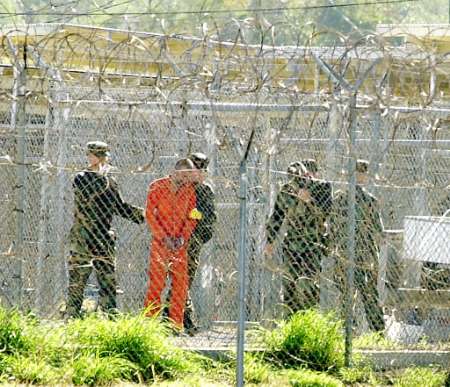
Guantanamo still screams at the world – and at all of us

Guantanamo15.JPG

Even if it were shut down today (and that ain’t happening), Guantanamo will remain our shame forever.
[this post is part of a series of reminders begun on May 21, 2007, which will continue until the concentration camp at Guantanamo Bay is razed]

[image, otherwise unattributed, via salvationinc]

tell Kelly, Quinn and Bloomberg we are still a free people

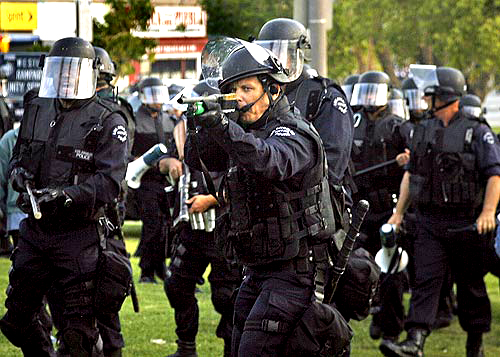
lapdmayday07.jpg
LA police un-permitting a march in MacArthur Park, May 1, 2007, demonstrating that more and more everything which is not permitted by law is forbidden

Tomorrow evening, July 27, folks who want to fight for our right to assemble and speak as a free people will be joined in Union Square by those who oppose the latest repressive maneuver by Police Chief Kelly, City Council Speaker Quinn and Mayor Bloomberg to restrict everybody else’s rights, in this case the right to use cameras and video equipment in public.
Just before Memorial Day weekend Bloomberg’s Office of Film, Theater, and Broadcasting introduced draconian regulations regarding the taking of still and moving images anywhere in the City of New York. The rules, which will go into effect in August, will severely impede the ability of even casual photographers and filmmakers to operate in the city. A group of two or more people who want to use a camera in a single public location for more than a half hour (including setup and breakdown time) will be required to secure $1 million liability insurance coverage and to apply for (and hope to be granted) a permit from the city before any picture could be taken. Perhaps most insidiously of all, any regulation like this becomes an arbitrary device for law enforcement, and we already know the sort of people who will end up feeling its impact.
As usual the police will be free to implement or ignore the law at their own discretion. The new rules have nothing to do with easing the movement of vehicular or pedestrian traffic, as the City would have us believe. It has everything to do with controlling expression. The NY Civil Liberties Union has of course informed the Mayor’s office of the obvious, that “these regulations violate the First Amendment right to photograph in public places, and open the door to selective and discriminatory enforcement.” [just when did I first feel I was more militant than the Civil Liberties Union?]
Tomorrow is also the last Friday of the month, Critical Mass day, and both bikes and supporters are certain to be part of the crowd in Union Square.
By the way, just before all this comes together on Broadway below 17th Street Cindy Sheehan returns to Union Square and will be joined by many other outraged citizens will just above 14th Street where Sheehan will host a press conference at 5 pm. It will be followed an hour later by a rally and procession, “Declare It Now“. This event is expected to address the crimes of the Bush regime and to launch the color orange (assigned to those the regime has detained and tortured with no due process) as the symbol of the movement to end that outrage – and remove its devisers from office. That group is expected to end up with Critical Mass and the demonstration at the north end of the park, where Reverend Billy and the Stop Shopping Gospel Choir, the Rude Mechanical Orchestra, and Picture New York (a new coalition of concerned filmmakers and photographers) will be gathering “for a festive and un-permitted celebration of the First Amendment”.
This all has the makings of being far more interesting as a total event than even the sum of its parts might otherwise promise. Maybe it will become a monthly vigil. I wouldn’t miss it tomorrow for anything.
Bloomberg, Quinn, Commissioner Kelly and a lot of other people who don’t trust you want you to stay home tomorrow night, but if you are a patriot and if you’re within shouting distance of New York you’re probably going to want to come to the North Side of Union Square around 6:30.

[image from thefirstamendment.org]

“to squeeze the cars, first primp the public ride”

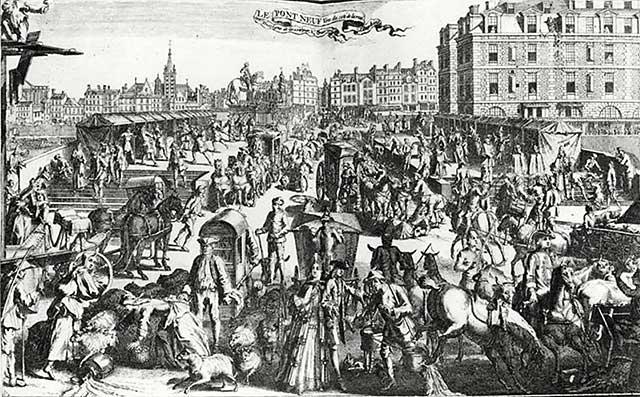
Paris_congestion_Guerard.jpeg
(of course it’s never been easy getting downtown) a view of central Paris some years before the current mayor’s congestion campaign, in a print by Nicolas Guérard, “Les Embarras pour la circulation, au Pont Neuf à Paris” (early eighteenth century)

In a terrific “Editorial Observer” piece at the bottom of the NYTimes editorial page this morning, American-in-Paris Serge Schmemann delivers the best prescription I’ve seen yet for making New York safe for human beings. Excerpts follow:

I live near the Boulevard St. Michel, and two years ago the city laid down a granite divider between the bus-only lane and the cars, squeezing private cars from three lanes to two. Taxis and bicycles may use the bus lane.
At the same time, every bus stop was newly equipped with a screen that told you how long the wait was for the bus. During rush hour, when the cars stand still along Boul’ Mich, there’s nothing better than zooming past them in a bus.
Bus routes reach the most obscure corners of Paris. There’s also the Metro — and especially the great Line No. 1, which runs on tires under the Champs-Élysées and beyond. Then there’s a nifty new tramway that runs along the southern rim of the city and several suburban train lines that can be used for rapid transport within the city.
In short, public transportation will take you where you want to go, and you can use it all you want on an electronic card that can be paid by the week or by the month (about $70 these days). Taxis, of course, can also be summoned anywhere by phone.
The lesson for big-city mayors: If you’re going to squeeze the cars, first primp the public ride. [the italics are mine]

And now the city has turned to bicycles:

Last week, more than 10,000 stolid, gray-painted bicycles (no Tour de France speedsters) became available for rent at 750 self-service locations across Paris. The cost is modest, less than $1.50 for a one-day pass, about $7.50 for a week and about $43.50 for a year — and the bikes can be dropped off at any docking station. The number of bikes is supposed to double by the end of the year.

And finally, Schmemann has a word about cars:

Parisians overwhelmingly buy small cars. And it’s not because people are petite, but because fuel is drop-dead expensive. Gasoline costs more than twice as much in Paris as in New York.
But the price of diesel fuel is deliberately set far lower. That’s because diesel-powered cars produce about 30 percent less greenhouse gas pollution than equivalent gasoline-powered engines. So car-buyers in Paris get small, diesel cars not because the French are virtuous (a separate topic), but because it makes economic good sense.
Many of these small cars have ample room for full-size people and have no trouble maintaining (or seriously exceeding) the 130 kilometers-per-hour (about 80 m.p.h.) limit on the national highways and are as clean and almost as quiet as gasoline engines.
The lesson for the next U.S. president: raise the taxes on fuel. A lot.

Look at these incredible mpg figures and this typical, brilliant, small European sedan. Not excited yet? Check this engineering miracle for more excitement, and charm, than any of us really deserves. Since I’ve strayed toward the subject of cars, I feel obliged to say that Americans get junk, or tired designs at best, even if they don’t choose an SUV or pickup, and it’s mostly our own damn fault – and no surprise. We have wretched taste and apparently equivalent engineering: Look at what passes for public transportation in this country, and compare it to that enjoyed by the rest of the industrial world.

[image from kunstfueralle]

Wall Street Journal touts ArtCal

artcal_logo.png

I guess none of our fans read the Wall Street Journal (I suppose that’s quite possible), because no one told us until today about this item by Lauren A. E. Schuker from last Saturday’s edition. It’s all about telling readers where they might find the next art bargains, and among a number of other ideas are the writer’s suggestions for checking out the web.

Art blogs can also be a good source of information about emerging artists. Popular sites include artcal.net, artnet.com, edwardwinkleman.blogspot.com, galleryhopper.org and artsjournal.com/man.

I can’t help noticing that ArtCal was placed before artnet, and this isn’t an alphabetical list.
Maybe WSJ fans will now be tuning in regularly. In any event, the Schuker’s piece seems like a good thing for everybody. It doesn’t seem it would hurt if our money moguls got more culture and it would definitely help underknown artists and galleries if people with money stopped tripping over each other chasing down the safest art-world stars.
Meanwhile, an inside tip from bloggy and jameswagner: ArtCal will be launching a totally new design in the next week or two. The trim and stylish new logo appears at the top of this post.