Obama really gets ‘religious’ – but we’ll pay for it

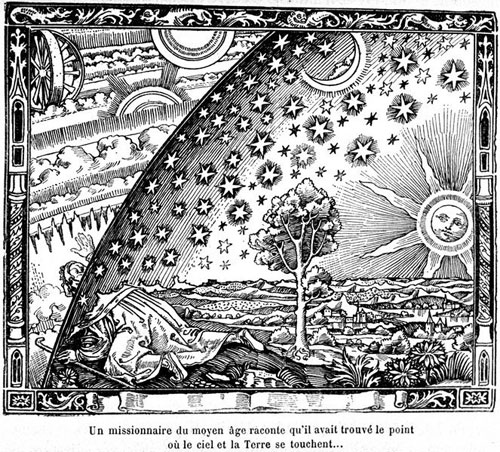
cult_moyen_age.jpg

Barack Obama plans to expand Bush’s “faith-based” initiative.
That just about does it for me. The flag pin he decided to add to his lapel should have been a warning, but I really found myself distanced from the man after enduring his “adjustments” on fundamental issues like gun control, government surveillance, trade policy, and getting us out of Iraq. Now I’m also supposed to go along with his call for escalating the government’s financial support (my taxes included) for the most powerful institutions of superstition, obscurantism, prejudice and hate in the nation.
Haven’t we and the world already paid far too much for the mistake of giving religion the free pass it enjoys now (and I’m not referring only to its tax-free status)? If organized religion were capable of benignly and impartially ministering to the welfare of everyone we wouldn’t have had to invent government. And if religion could possibly be described as fundamentally caring and nonpartisan, there’d be only one of them out there.
Obama still has four months to continue turning off many of his most enthusiastic supporters. Does he think the big money he will attract by doing so will smell better than the mites coming from those with little to spare? Does he actually believe in the junk positions he’s assuming, or does he do it because he has to do in order to get elected? Either way, I wouldn’t hold my breath waiting for any president to move to the left once she or he slithers into the Oval Office. The creditors wouldn’t stand for it.
I should pay more attention to what I’ve already written: We really do have only one political party.
George Carlin was right.

ADDENDUM: This excerpt is from a post by Huffington Post blogger Barry W. Lynn, an ordained minister and Executive Director of Americans United for Separation of Church and State:

The problem with the faith-based initiative is that it’s a euphemism. We used to call such things “taxpayer-supported religion.” Of course, no one would support it if it were called that. After all, the idea of taxing people to pay for religion is scary. It’s what got folks so riled up back in the colonial period. No one wanted to pay taxes to support some other person’s religion.
No one wants to pay them today, either. Yet increasingly we are being asked to do so. Eager to appear faith friendly, candidates in both parties are increasingly upping the ante for how much they plan to dole out to religion if elected.

[image from Steve Kemple]
back in the world

As Barry reported here on Sunday during a quick foray out of the affected area with his laptop, our larger neighborhood was without any internet connection all weekend. Our contact with the outside world was restored late on Monday, but circumstances conspired to prevent my return to blogging until today.
I found the experience fairly excruciating even though I don’t have a livelihood dependent upon the net. I didn’t have my little silver friend for three whole days; I had no little speakers podium or picture outlet, and no way to reach those published by anyone else; no incoming or outgoing mail; maybe most important for someone as curious and information-hungry as me, no instant reference sources; and of course no news. The news blackout in particular made it feel like the arrival of a new dark age, especially since neither radio nor television is a part of my own or Barry’s life. I will say however that living with only a blank screen this past weekend was not without a silver lining: We were spared the obscenity of the all-pope/all-the-time broadcast media coverage (Barry peeked every so often and it seems Ratzinger had bought NY1) with which entertainment news smothered the city, and apparently much of the nation as well.
Before starting anything new I’m going to be dutiful and finish up my series of short posts on art spotted at the New York fairs late last month; I’ll be looking back at Pulse, Volta, Bridge and Disarmory.

to hell and back with Ratzinger

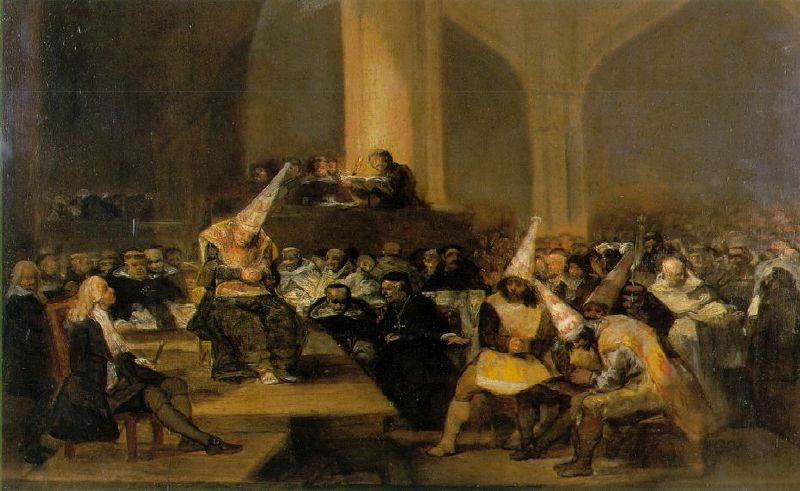
goya_inquisition.jpg
Goya Inquisition Scene (1816) oil on panel 18″ x 28.75″ [three notes: beginning in the Middle Ages the Church had prescribed the conical hat, generally yellow, as a distinguishing mark for Jews; Jewish conversos were the principal concern of the Spanish Inquisition; from 1981 until 2005 Josef Ratzinger was head of the Vatican department formerly known as the Inquisition]

I just did a search from this site, and I see that there are already two pages listing my various posts on Josef Ratzinger. I was hoping he’d be dead before I’d have to do another or, even better, irretrievably compromised by some spectacular scandal. I really didn’t want to have to think about this man again, and I certainly wasn’t going to display another picture of that freaky face*. Virtually everything he stands for disgusts me.
Okay, except maybe the part about “peace”, but I know he doesn’t actually mean it and, like the Dalai Lama, he’s certainly not going to embarrass our own “infernal” warrior king while he’s over here. By the way, I also don’t anyone believe a word he says about freedom or democracy. I was raised a Catholic, educated by Augustinians and Jesuits and studied history as an undergraduate and graduate student for ten years. I can assure you that the Church establishment has never cared what form governments assume so long as church interests aren’t compromised. [cf. Eugenio Pacelli and Reichskonkordat]
Also this week, don’t expect any homilies on capital punishment from Ratzinger, who we are repeatedly reminded has a boundless respect for life. Might hurt the sensibilities of the former “Texecutionor”.
But the holy fiend is coming to New York again, and although both he and his office are increasingly irrelevant, apparently even to most Catholics, I just can’t maintain my blackout on the latest Ratzinger developments. I was struck by something I saw in the joint statement he and his D.C. host just issued. George Bush. Now there’s another pathetic excuse for an appointed ruler (so who’s using whom on this visit?). It seems they both wanted us to know how much they respect human rights and diversity. I’m used to these lies from the White House but I just couldn’t ignore it coming from our sanctimonious short-term visitor, since he’s never ignored me or many of my friends, or anyone else whose integrity and rights he regularly impugns. I’m talking about all queers and all women, just for starters, but you can certainly add anyone not of the strictest, doctrinally-acceptable religious persuasion (that is, his own).
There is one incident in particular in Ratzinger’s past, one which I cannot forget, one which was never disavowed. It’s a statment which continues to reflect this narrow, clueless disciplinarian’s real approach to the diversity of mankind rather than the “respect for his vast pluralistic society”, he affected yesterday in Washington. In 1992, during a period of particularly virulent antigay violence in the U.S., he authorized a Vatican proclamation which said that that when lesbians and gay men demand civil rights, “neither the Church nor society should be surprised when … irrational and violent reactions increase”.
Perfectly consistent with the Church’s traditional mode of addressing its own evils: Blame the victim.
Still we bleed, queers of every gender and our straight sisters as well, not least because of his vile ministry.
Josef Ratzinger arrives in New York on Friday. I’m sincerely hoping that at least some New Yorkers will know how to receive him properly.

*
although I’m not the first to notice that, on the other hand, his devoted personal secretary is pretty damn hot, even if this is way off subject (maybe)

[image from marxist.com]

ADDENDUM: [in the form of an appendix] For the complete text of a document describing queers as a “troubling moral and social phenomenon” and denying them a status from which they might argue for their rights, see the letter, “Considerations Regarding Proposals to Give Legal Recognition to Unions Between Homosexual Persons” on this Vatican site. This is a document which Ratzinger had authored, as head of Roman curia office once known as the Holy Inquisition. It was published by his old boss Karol Wojtyła in 2003.

but we do celebrate Valentine’s Day . . .

. . . and would like everyone else to be able to do the same

Justin_Marshall_Valentine_apron.jpeg
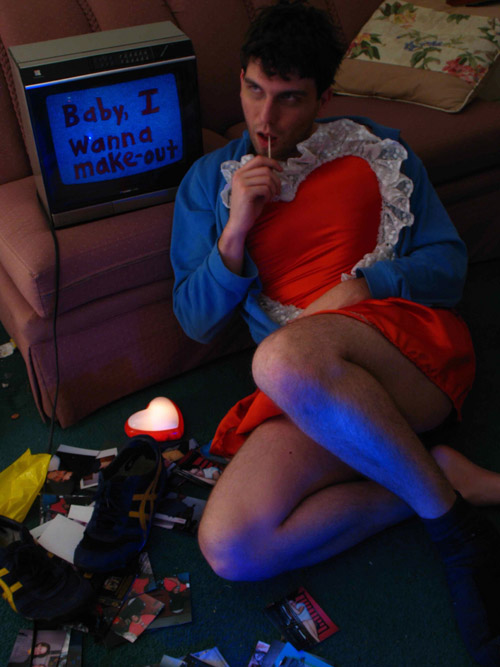
Justin Marshall Baby, I wanna make-out 2006 C-print

This was one of the works in the artist’s show in Chicago’s excellent Thomas Robertello Gallery last fall. Barry came across a different image by the artist from the same series, and had shown it to me. I looked at some of its mates and found this one, which managed to charm both of us on this special day.
An artist friend who is also an academic recently referred to our own collection as being at least partly “whimsical” in character. Whatever did she mean?

the obscenity of organized hate under cover of religion

girl_wounded_in_Iraq.jpg
A girl, who was wounded in a bomb attack, receives treatment in a hospital in Baquba, 65 km (40 miles) northeast of Baghdad, December 25, 2007. U.S. forces killed two gunmen and detained four others in operation near Baquba, the U.S. military said. Hours later, a suicide bomber killed four people and wounded 21 at the funeral of the two men who were killed by the Americans, police said.

I’m not feeling good about religion today, any religion, but nothing new there.
I’m listening to a magnificent recording of Handel’s “Messiah” (the music, the music). I’d just read the CD liner notes which refer to Handel’s beneficences to the children’s home, London’s Foundling Hospital, which has been associated with his oratorio since 1750. Then I opened my computer to the news stories on my home page. The lead item from Reuters cried out with the image and caption at the top of this post.
There are no words for this obscenity.

[image and caption from an unidentified stringer working with Reuters]

Dame Ethel Smyth’s “The Wreckers”

Smyth_Dame_Ethel_Sargent.jpg
John Singer Sargent Ethel Smyth 1901 pastel

If this hundred-year-old opera had always enjoyed the success it deserves today I’d probably be whining about the endless parade of productions of La Boheme, Aida, La Traviata, Carmen and The Wreckers. As it turned out, for reasons I now find inexplicable, the last of the works I just named never made it. Dame Ethel Smyth‘s wonderful opera had in fact never been performed anywhere in the Western Hemisphere until last Sunday afternoon.
Barry and I are huge fans of Leon Botstein’s programs with the American Symphony Orchestra. For us it’s about “new music”, but surprise! Here the pleasures of unfamiliar musical genius arrive via a well-prepared trip backward in time. The Orchestra’s mission under Botstein’s direction is more usually described as the resurrection of large-scale symphonic or operatic works from the previous two centuries, music which has been neglected, presumably unjustly. The audience may not always agree, but it’s never left without help in mustering its response: In advance of each concert the music director supplies absolutely vital and articulate notes on the works themselves, as well as the context of their original creation and subsequent neglect.
All of this explains why I’ve been a subscriber since 1991, when Botstein began his current tenure as music director and principal conductor. So we would have been in Avery Fisher Hall on Sunday regardless of what the program was, but this one promised to be a particular treat.
“The Wreckers” was composed by a privileged and educated fierce Victorian English lesbian suffragette who was once imprisoned for her activism but otherwise lived and worked in friendship with some of the European cultural giants of her age. The opera’s theme, perhaps more topical in 2007 than at the time of its composition (1903-04), is the horrors of which a provincial, fanatically-religious, self-regarding community is capable. Botstein’s essay in the program notes suggested that it’s the first worthy opera written by a Brit in almost two hundred years. Of course I was interested.
Reviewing the afternoon’s performance and the opera itself for the NYTimes Bernard Holland seems to have been almost as enthusiastic as I was, about both the performance and the opera itself, and he appears to agree its oblivion was a big mistake:

“The Wreckers” gets your attention. It charges at the audience with all guns blazing, and tramples the weak and the hesitant in its path with a story of pillaged ships and triangular loves.
Smyth (1858-1944) was determined to fill as big a physical and emotional space as eight singers and a big chorus and orchestra could manage. Everyone onstage seemed to rage with Ethel Smyth fever, pouring out nonstop fervor in one relentless fortissimo after another.
. . . .
“The Wreckers” is not aimless cannon fire; Smyth knew what she was doing. Her orchestra makes winds whistle, waves roll and crash, and fog creep over the rocks in dark minor chords. From the land we hear hornpipes and sea chanteys in the distance. All the elements of a complete oceanography are present and rationally arranged.

But while I thought the work was a real keeper, and I’m dying to see it fully-staged, Holland, apparently viewing it only from the vantage of the succeeding one hundred years (a considerable advantage over poor Smyth) ends a very enthusiastic review of the merits of the piece itself with a bizarre non sequitur:

Does “The Wreckers” get a third chance? At some point, I am sure. It is not a deathless work, and too much exposure might do it more harm than good. Too much value is put on permanence anyway. “Disposable” is not a dirty word. People got their money’s worth on Sunday and should perhaps let “The Wreckers” go back to sleep.

Only in the American world of opera world is the word “deathless” always confined to the teeny list which begins with La Boheme, Aida, La Traviata and Carmen.

For more information about Smyth and her opera, see the American Symphony Orchestra’s site, and click onto links for the two essays at the bottom, under “Dialogues & Extensions”.
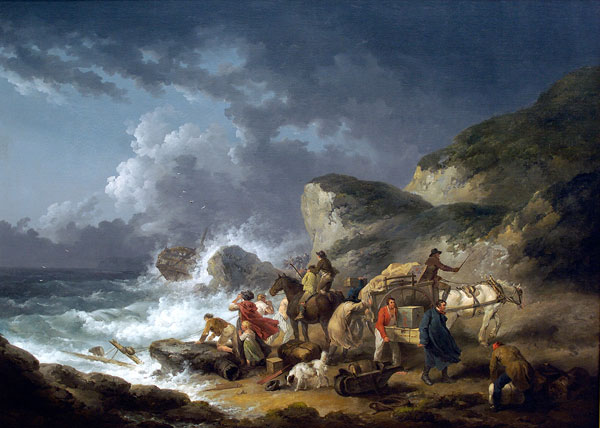
The image below, a late-eighteenth-century painting by George Morland, describes a somewhat brighter version of the dark setting of Smyth’s opera.
Morland_George_Wreckers.jpg
George Morland The Wreckers 1790-1799

[first image from de.wikipedia; second image from the National Gallery of Canada via sandstead]

fuck Mother Teresa!

Mother_Teresa_Keating.gif
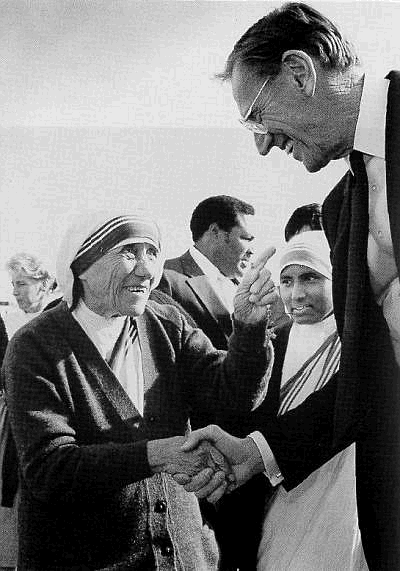
a very rewarding friendship (Blessed Teresa greeting friend Charles Keating)

On this tenth anniversary of the demise of Mother Teresa, the acclaimed world-champion of suffering and death [whose lifer inmates were refused even aspirin, but who died only after availing herself of the very finest and most expensive medical treatment available in the West], I can no longer stay silent.
I’ve written at some length about the mutha before, and I was going to ignore the outrageous outpouring of memorials which have attended this happy date until just now, when I came upon an editorial in today’s NYTimes with the oddly-equivocal headline, “A Saint of Darkness”. This is ostensibly a secular journal, but it’s a sappy paean and it ends with an extraordinary reference to the grotesque Catholic cult figure’s supposed struggles against religious disbelief. These gilded lines would almost certainly embarrass even the National Catholic Reporter:

Mother Teresa, sick with longing for a sense of the divine, kept faith with the sick of Calcutta. And now, dead for 10 years, she is poised to reach those who can at last recognize, in her, something of their own doubting, conflicted selves.

And now, as we’re told by the Church, her agent, she herself belongs to the gods.
But not so fast. There is another, less fictive take on this wretched creature than that so successfully hyped around the Western world. The Times editorial board itself may be of more than one mind on the subject of the “just-say-no-to-drugs-and-yes-to-Jesus nunnery fund-raiser and baptism zealot. On this same holy day, on the opposite page from the editorial they also publish an OP-ED piece by Chitrita Banerji, “Poor Calcutta”, which delivers a very different slant on the story of the woman with the current Vatican title, “Blessed Teresa of Calcutta”. Banerji is speaking first for the dignity of her hometown Calcutta [I share her love for that magnificent city], which she argues the scary nun and her fanatical acolytes have savaged in the public mind, but her defense requires some bluntness about the fundamental error of the campaign. Here are two excerpts:

[The worldwide condemnation of Calcutta over other cities] was an instance of spin in which the news media colluded — voluntarily or not — with a religious figure who was as shrewd as any fund-raising politician, as is evident from the global expansion of her organization. For Calcutta natives like me, however, Mother Teresa’s charity also evoked the colonial past — she felt she knew what was best for the third world masses, whether it was condemning abortion or offering to convert those who were on the verge of death.
. . . .
[Banerji writes that she had hoped that after the nun’s death the balance of perception might be restored to her beloved city] Ten years and one beatification later, however, the relentless hagiography of the Catholic Church and the peculiar tunnel vision of the news media continue to equate Calcutta with the twinned entities of destitution and succor publicized by Mother Teresa. With cultish fervor, her organization, the Missionaries of Charity, promotes her as an icon of mercy. Meanwhile, countless unheralded local organizations work for the needy without the glamour of a Nobel Prize or of impending sainthood.

Once again, on the true nature of Mother Superior Teresa and her Missionaries of Charity: No medical care was given to any of the people to whom members of her oder “ministered”; the Mother had a creepy lust for suffering; even by its founder’s own admission she was only interested in racking up the maximum numbers of “souls” for the next life; to that end any friendship, any kind of transaction was appropriate; and finally, the earthly Church she represented was not the compassionate institution imagined by many of her patrons, but rather one whose elements would be unrecognizable to even the most conservative of Catholics.
This sounds like they would want to create hell everywhere on earth; it would hardly seem to be a good advertisement for their regime in heaven, but what do I know about the attraction of marketing, fads, bandwagons or cults?

[image from zatma.org]

John Waters’s Valentine heart

chickenheart.jpg

I brought us home a big bunch of beautiful off-red tulips tonight. I really admire more creative responses to the ancient Valentinus challenge, but one story totally intimidates me. John Waters has lately been talking about his own special valentine tradition: “I used to always send boys a little chicken heart . . . that I’d get at the butcher. I thought that was a nice way of telling them that I had a crush . . . .”
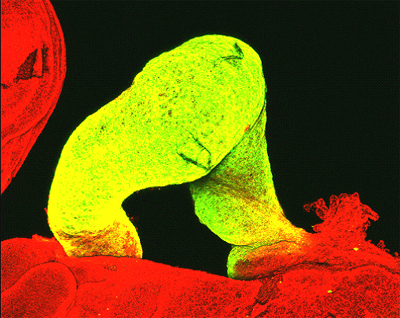
I wasn’t surprised that I couldn’t find a pretty picture of a chicken heart, so I went for this dramatic abstraction I found on an Amsterdam medical site where the image is described without any elaboration as an “embryonal stage of a chicken heart”.

[image from academisch medisch centrum]

censorship, a goddamned slippery slope

kellymichaelgdbush.png
Michael Kelly that goddamned george bush 2006 computer drawing

Just spotted this tiny item in this morning’s Newsday:

BLEEPS ON A PLANE. So much for God and country, at least during some in-flight showings of the Oscar-nominated movie “The Queen.” All mentions of God are bleeped out of a version of the film distributed to Delta and some other airlines, The Associated Press reports. Jeff Klein, president of Jaguar Distribution, the Studio City, Calif., company that supplied the movie to the airlines earlier this month, said it was a mistake, committed by an overzealous and inexperienced employee who had been told to edit out all profanities and blasphemies. Jaguar has been sending out unedited copies to the airlines.

[image from openstudio, spotted while searching for an image for “goddamned”,]