Antti Laitinen with Nettie Horn at Scope

Antti_Laitinen_island.jpg
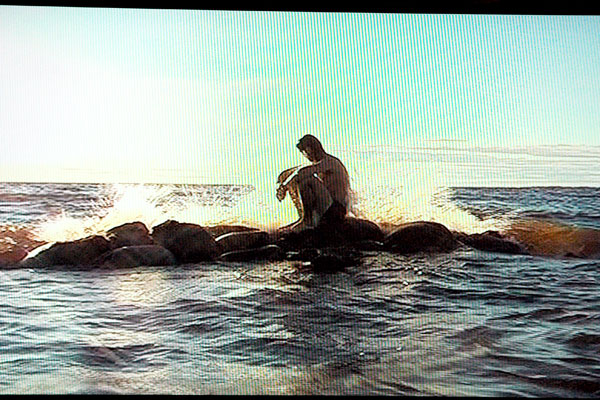
Antti Laitinen It’s My Island 2007 video [large detail of still from installation]
Antti_Laitinen_Horn.jpg
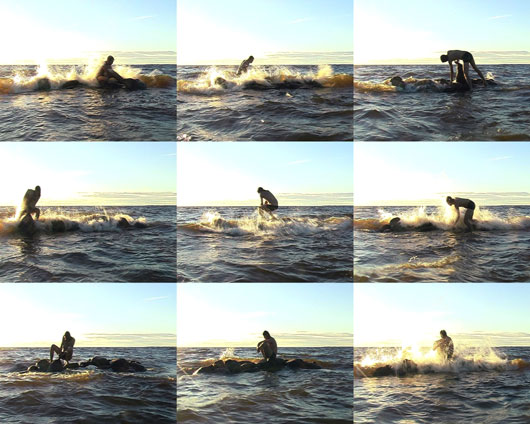
[edited sequence of video stills from the gallery site]

On the other side of the cultural Finland we know (or perhaps that of almost any other modern nation) there may be just a guy and his wilderness.
Over a period of three months Antti Laitinen filled and dragged one sandbag after another into the sea to make his own little island – and then he dragged them back. “It’s My Island”, the documentation of the 2007 construction project, was displayed at Scope by the London gallery Nettie Horn and shown in three video monitors, each actuated at a different moment.
The gallery describes the source of the artist’s remarkably engaging creativity

Antti Laitinen’s work shares some of the absurd seriousness of [the 1957 “Manila Rope” by the Finnish novelist Veijo Meri, a literary performance of body art]. Just as in Meri’s story, so in Laitinen’s works incongruity between an individual’s performance and circumstances grow into a cultural metaphor. Many of Antti Laitinen’s work [sic] deal directly with fundamental issues of Finnish identity and cultural imagery, they are pictures of masculinity set in a context of nature and culture.

As I watched the video and later searched for more of this work and its contexts, I was reminded of the Sisyphean works of Brooklyn artist Dexter Buell.

[second, thumbnail image from nettiehorn.com]
Marcel Gähler with Römerapotheke at Scope

Marcel_Gaehler_house.jpg
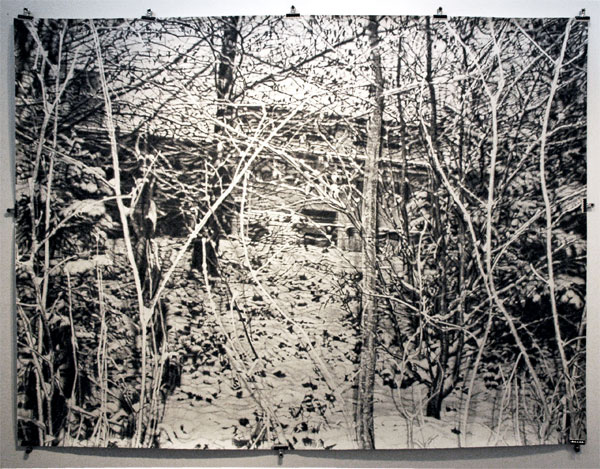
Marcel Gähler untitled 2008 watercolor on paper 60″ x 80.25″ [installation view]

Marcel_Gaehler_snow.jpg
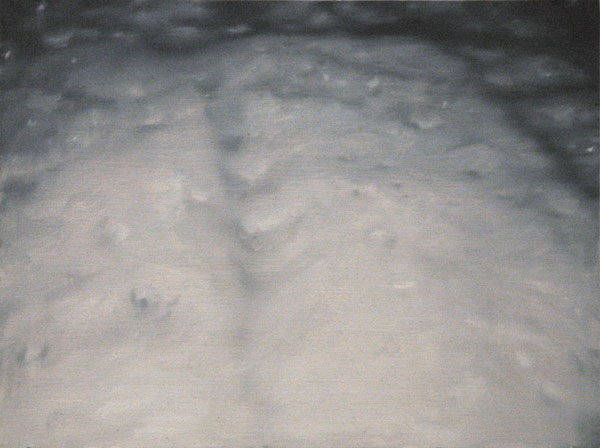
Marcel Gähler untitled 2003 oil on wood 8″ x 10.25″

Marcel_Gaehler_group2.jpg
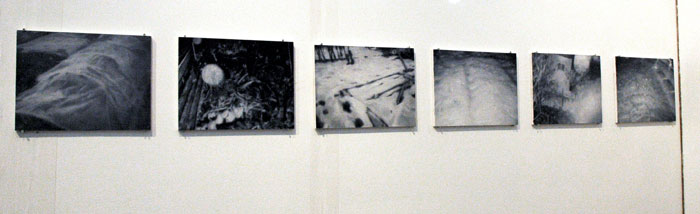
[installation view of six small oils]

Zurich’s Römerapotheke showed these and other paintings and drawings by Marcel Gähler inside its camp at Scope. They were among the most beautiful and terrifying things I say among all the paintings I encountered that week.
This excellent gallery‘s own text includes the note:

His painting drives us towards the limits of our perception. It makes it disconcertingly clear that seeing nothing does not imply that nothing is there.

Jared Lindsay Clark with ADA at Scope

Jared_Lindsay_Clark_Casper.jpg
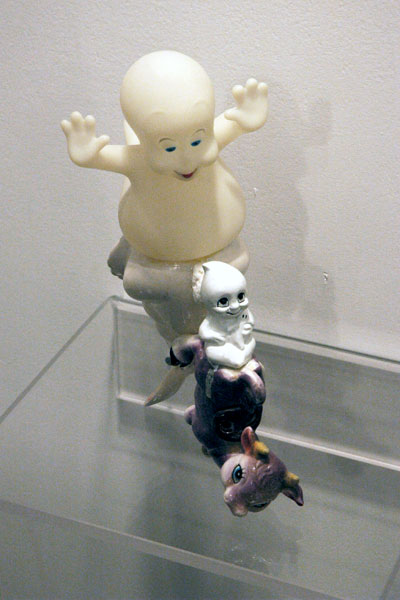
Jared Lindsay Clark Nursery Rhyme Proposal ceramic cow, easterbunny, ghosts, plastic Casper, epoxies

Jared_Lindsay_Clark_ducks.jpg
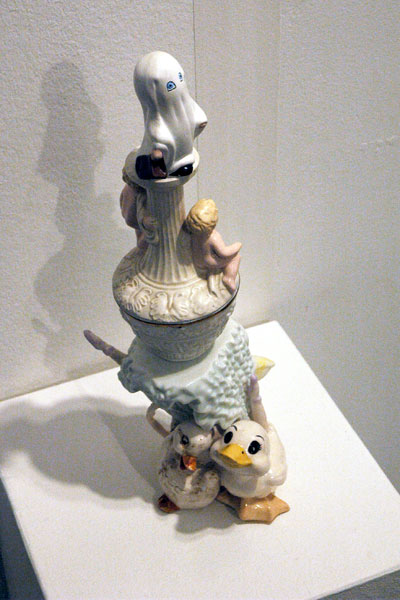
Jared Lindsay Clark Ballerina ceramic ballerina, ducks, pelican, trick-or-treater ghost, cupids, epoxies

I love these little pieces. Jared Lindsay Clark’s small ceramic collage sculptures were a very special part of the booth of Richmond’s ADA Gallery at Scope. I can’t say enough however, no, literally, since the artist’s site uses flash and the gallery’s link to Clark just isn’t working. But I did find this blog which seems to belong to Clark. It has some more views of these pieces, images of more work from this series, and a lot more stuff from the artist and his friends.
I love Richmond. I haven’t been there in ages, but it’s getting harder to stay away.

Ernesto Burgos with Cynthia Broan at Scope

Ernesto_Burgos_Another_Heart.jpg
Ernesto Burgos Another Heart is Torn 2007 mixed media on paper 30″ x 22″

Ernesto_Burgos_CrossEyed1.jpg
Ernesto Burgos Cross Eyed 2007 mixed media on paper 30″ x 22″

I somehow missed the show of work by Ernesto Burgos which Cynthia Broan showed in the project room this winter. Fortunately I was able to see a few drawings at Broan’s booth at Scope, but their quality only underscores my lost opportunity.
The three shows which ended January 19th were the last in her current, New York space. I already miss it.

[images from CynthiaBroan]

Vinogradov and Dubossarsky with Deitch at Armory

Vinogradov_Dubossarsky.boyjpg
Alexander Vinogradov and Vladimir Dubossarsky Summer 1 2001 oil on canvas 57.75″ x 77.5″ [photo taken of installation, evincing uneven ambient lighting]

Now that I’ve checked out the artists, and know something about what they’re up to, my on-sight seduction at the Armory by this cutesy, sexy, pretty, porny, realisty, fairie and quite funny painting by Russians Alexander Vinogradov and Vladimir Dubossarsky makes better sense to me. I love the fat flying penguins and the quite-thick-around-the-middle youth with the four rosy cheeks. Deitch Projects showed the painting.
I also noticed the title, and the date of the painting’s completion. Was it before or after that beautiful summer day “when our world changed forever”?

John Finneran with Rivington Arms at Armory

John_Finneran_Trash_Cans.jpg
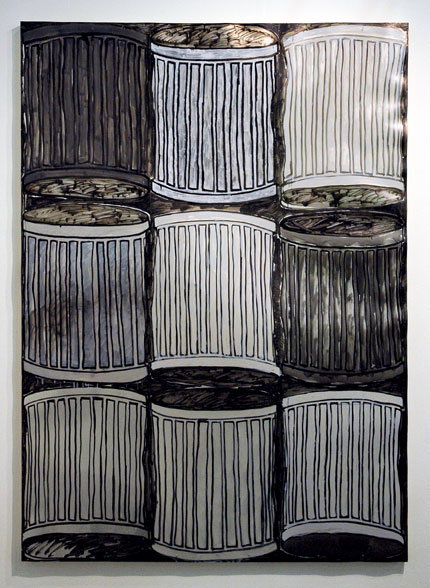
John Finneran 9 Trash Cans 2007 oil on aluminum, rivets 57″ x 40″ [installation view]

John_Finneran_Mouths.jpg
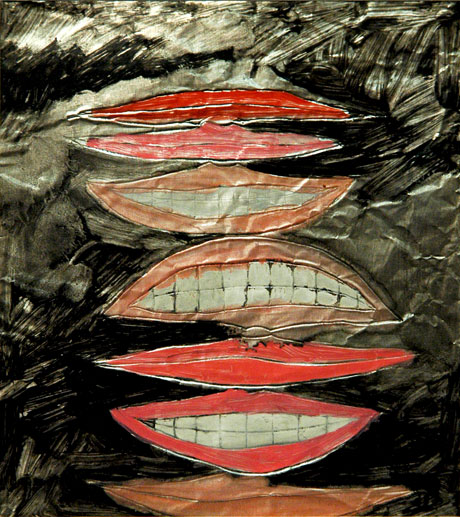
John Finneran 7 Mouths 2008 oil and pen on aluminum 7″ x 5.5″ [cut showing full image found in installation, where it was surrounded by a mat and frame]

I now realize I’m loving everything [scroll down] I see by this artist, even as I’m also realizing how diverse John Finneran’s work really is. Two weeks ago I came across two more works on aluminum in the Rivington Arms booth at Armory.

Cathy Wilkes with The Modern Institute at Armory

Cathy_Wilkes_Alone.jpg
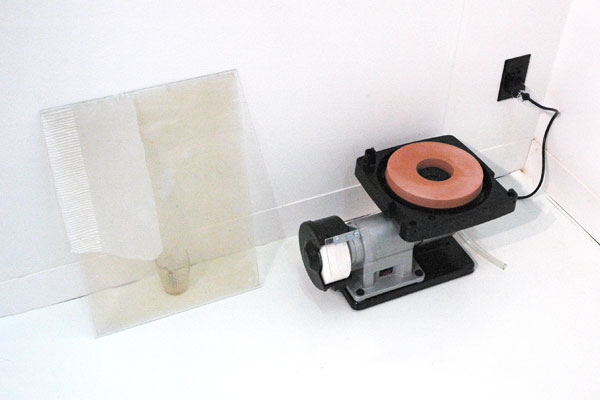
Cathy Wilkes Alone 2004 broken glass, glass pane, battery, grinding machine, dimensions variable [installation view]

I was stopped in my tracks by this piece at the Armory stand occupied by Glasgow’s The Modern Institute and I haven’t been able to forget it. It looked like someone might have been casually pitched these things into the corner after some emergency repair, and I’m not sure that the rather casual installation of the work wasn’t totally appropriate to the artist’s purpose.
That artist is Cathy Wilkes.
I regret not asking about it at the time and I’ve found nothing about “Alone” on line, but I did find a copy of a 2004 Sunday Herald review by Jack Mottram of a Cathy Wilkes show, mounted in a “decaying Dennistoun hairdresser’s [salon]”, from which I’ve excerpted this:

Her prosaic collection of unremarkable items, matched with made objects that don’t exactly dazzle in isolation, are combined and placed in such a way that the relationships between them seems almost tangible, as if you could reach out and twang taut wires connecting each component part of the installation to its neighbour, and the surrounding space. This evocation of a tensile physical connection goes further still, seeming to engender a dumb complicity between inanimate objects and the space in which they find themselves.

I still don’t know enough, but I know I wish I had been there, especially now as I remember how I excited I was by the awesome show installed in a similar environment in Brooklyn by Jonathan VanDyke last June.