[I’m not sure if or when I’ll be able to do a general post on this week’s art fairs, separately or together, so between our continuing visits to these vast spaces I’ve decided to squeeze in some short entries showing some of the images I’ve gathered already]
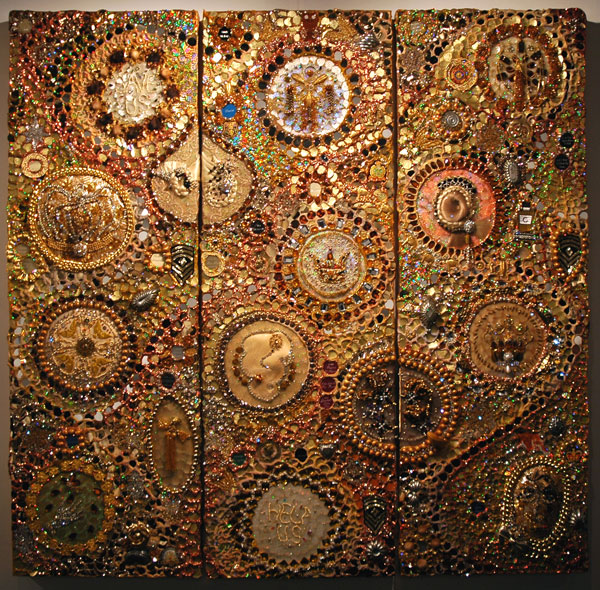
Chris Tanner For My Father 2007 mixed-media on wood 60″ x 60″ [installation view]
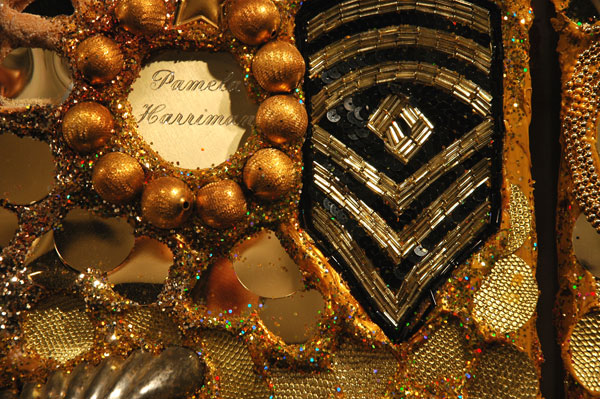
[detail]
Pavel Zoubok showed some terrific work by Chris Tanner and other gallery artists in a shiny, sparkling booth which had the presence of a quite wonderful curated show itself.
Category: Culture
Michael Williams at CANADA, and a Chelsea adoption
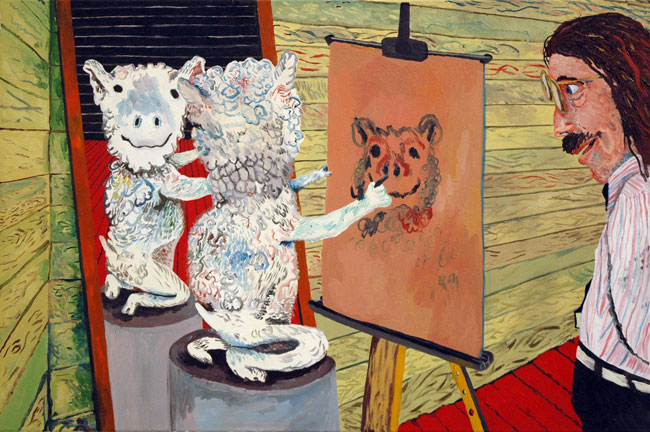
Michael Williams At Mr. McCook’s 2006 oil on canvas 24″ x 36″ [installation view]
I think we surprised ourselves today by actually buying something we’d seen in the oh-so-fabled Armory Show. It doesn’t mean we had money to burn, but it does mean we decided we couldn’t live without parting with cash we would only end up spending on something much less satisfying.
It may sound weird, but when we told ourselves we wanted this piece we knew almost nothing about the artist except that he seemed to have the confidence (the imprimatur?) of a gallery we really think a lot of. When we saw this work at CANADA yesterday we were both strictly in blogger mode, having been given access to the press and VIP preview as members of, yes, the press. Neither of us was thinking in terms of acquisitions and we had no idea what it might cost. We’d also slowed our buying activity almost to a halt, for a number of reasons, but last night I just couldn’t get this one painting out of my head and today I called the gallery to see if we could afford to adopt “At Mr. McCook’s”. All I will say is that for a while we’re going to have to eat at home more often, now joined by Mr. McCook, and that’s fine with us.
Barry and I have gained the joy of living with a wonderful painting, and one of our favorite galleries and one of their newest artist friends gets some help with the rent, and not incidentally a bit of the means for giving others joy.
ADAA in the Park Avenue Armory
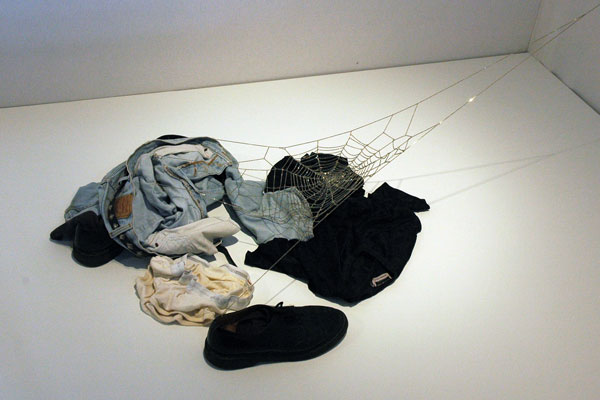
Jim Hodges what’s left 1992 white brass chain with clothing, dimensions variable [large detail of installation]
The Art Show of the Art Dealers’s of America Association [ADAA] hosted a press reception early this afternoon in the Park Avenue Armory. I hadn’t personally expected it to be the most exciting of the eight or more shows being held in Manhattan this week, if only because its concentration was definitely not on emerging art, but as it turned out, I was pretty impressed with the quality of the (mostly twentieth-century American) work displayed. Although it was all available for purchase by enthusiasts with deep pockets, for us lesser mortals it was like a good trip to a good museum, or perhaps 70 museums. I didn’t even mind that because it’s a collection of separate (and disparate) individual shops there isn’t a hint of the kind of organization which would be expected in a museum or even a regular gallery show. This “armory show” has more than a little bit of the charm of a very good flea market, and I mean that in a good way.
Most of the exhibitors looked like they were just showing off their stuff rather than their curatorial restraint, but a few should be congratuated for presenting a concept rather than a catalog, and some should be praised for refusing to hold back on more edgy work just because of the spiffy profile of the event.
CRG Gallery gets laurels for its intelligence and courage on both scores. The Chelsea gallery showed only one artist, Jim Hodges, and a very limited number of his works, and each of them related to a form of vigorous, transgressive sexuality which is still able to frighten the horses.
Of the other booths, some of my favorites, in a quick run-through and in no particular order, were those of Knoedler & Company (New York), Rhona Hoffman Gallery (Chicago), Peter Freeman (New York), Matthew Marks (New York), Adler & Conkright Fine Art (New York), Brooke Alexander (New York), Barbara Krakow (Boston), and Andrea Rosen Gallery (New York).
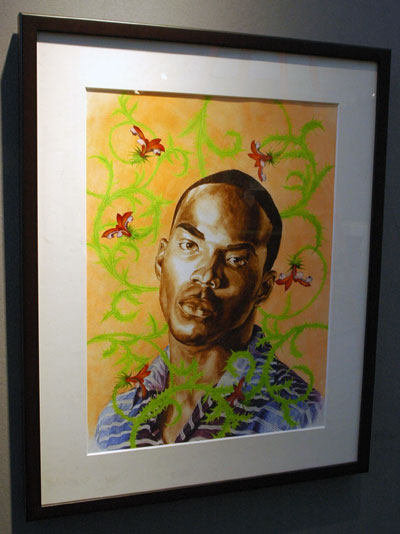
Kehinde Wiley Keyon II (study) 2002 oil wash on paper 30″ x 23″ paper size [installation view] {Rhona Hoffman}
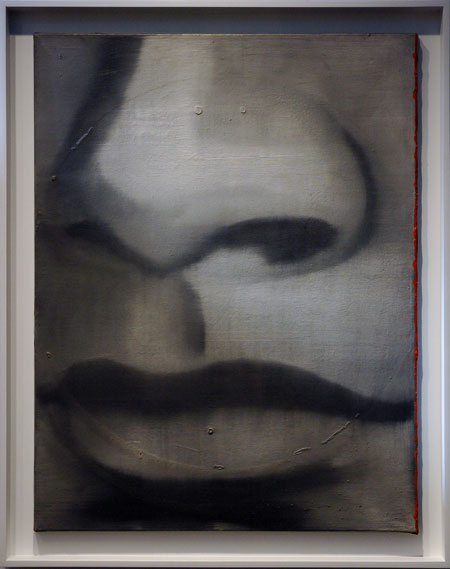
Gerhard Richter Nase [Nose] 1962 oil on canvas 30.75″ x 23.5″ {Peter Freeman}
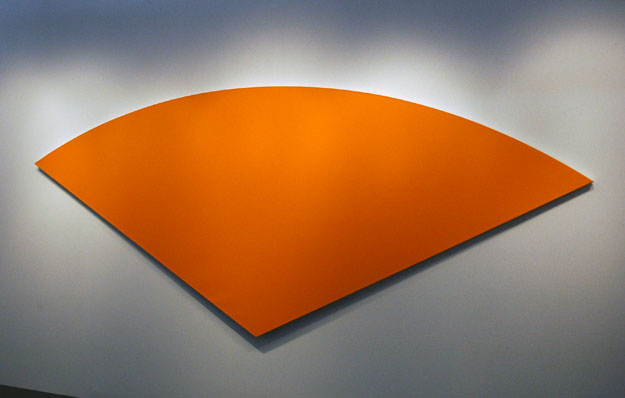
Ellsworth Kelly Orange Curve I 1982 64″ x 150″ [installation view] {Matthew Marks}
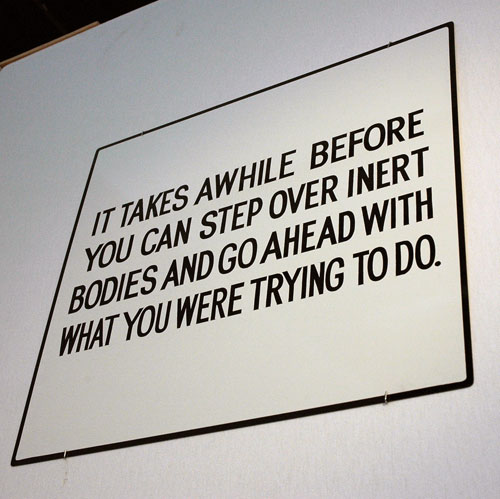
Jenny Holzer FROM THE LIVING SERIES: IT TAKES AWHILE 1981-1982 enamel on metal 21″ x 23″ [installation view] {Barbara Krakow}
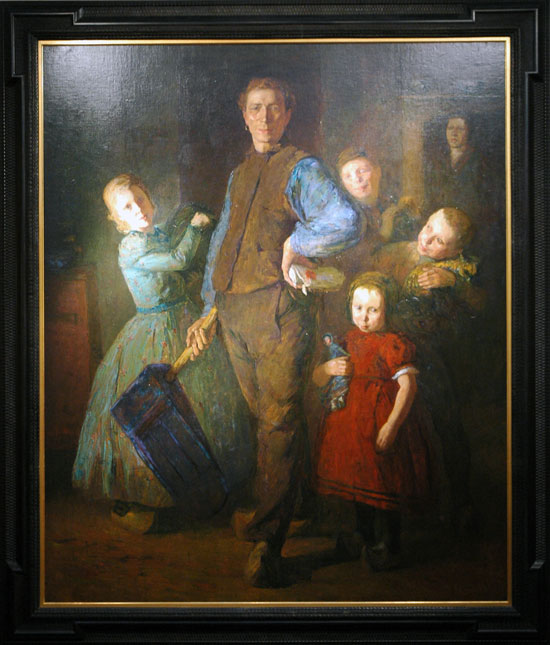
Joseph Raphael The Town Crier and his Family 1905 78″ x 66″ {Montgomery Gallery (San Francisco)}
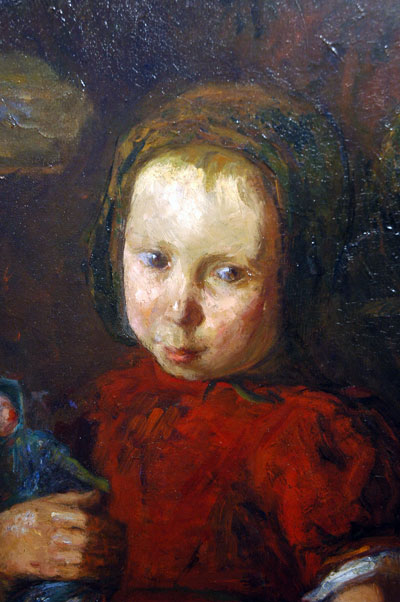
[detail]
See Bloggy for more.
Brock Enright at Perry Rubenstein
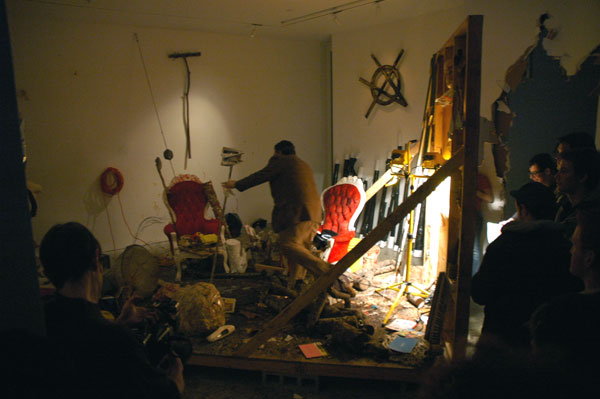
[I dunno either]
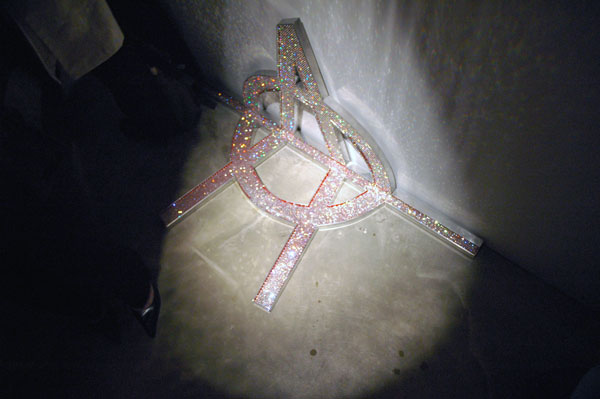
But I’ll look into it, and I definitely want to do more on this later. For now I just want to get up this picture preview of Brock Enright‘s new show. It opened to a huge crowd at Perry Rubenstein tonight.
Oh yeah, this has to be a clue:
Jonah Koppel at Klaus von Nichtsagend
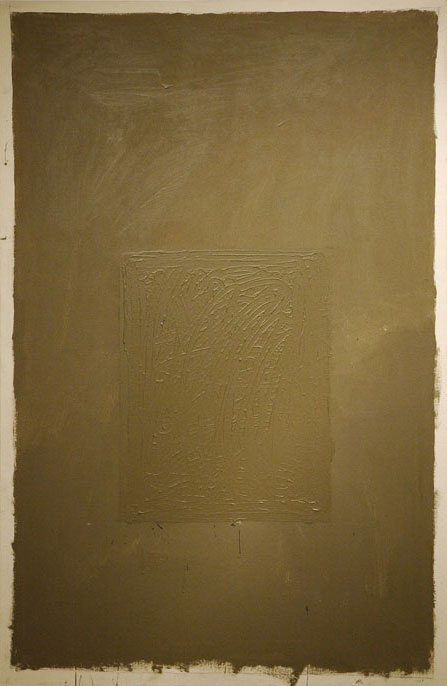
Jonah Koppel Guernsey 2007 synthetic polymer on canvas 61″ x 40″
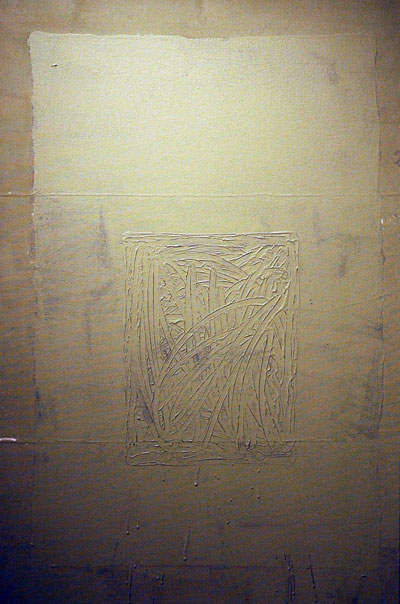
Jonah Koppel East 2007 synthetic polymer on canvas 48″ x 32″
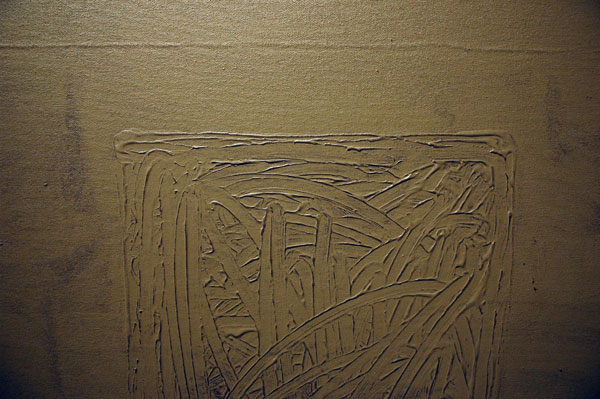
[detail]
These paintings appear as magnificent, breathing monoliths inside the modest white box on Union Avenue. Jonah Koppel’s four canvases hang, with their molded, elegant cartouches one alone on each wall of the Klaus von Nichtsagend‘s exhibition space, and they absolutely will not leave the viewer alone. A look at the description of his working method* is a part of the experience of the art, but the finished work commands respect without any knowledge of Koppel’s process.
Caveat: The subtleties of these paintings’ textures and color, and the difficulty of recording anything in a mixture of the gallery’s natural twilight and electric lighting may have frustrated my attempt to do justice to the subtle tones of these two works.
Disclosure: I am very fond of a crisp Josef Albers silkscreen print (from the “Homage to the Square” series) we’ve had on our wall for fifteen years; it includes something very similar to these same four tones. I like it even more than that artist’s paintings, so I may be predisposed to favor Koppel’s chosen colors. But the Albers print has no texture whatsoever, and that is a very different thing.
*
From the press release:
“In my process of abstract painting there are ultimately two approaches that I believe impact my work the most significantly. One is to stretch canvas and begin to paint. The other is to pin the canvas to the wall, paint and then stretch the painting.”
Using these two approaches, Koppel allows his process to play a prominant role. If the surface is stretched, he determines that the painting will exist only on the front of the canvas, a process that inclines him to end the painting before he reaches the extremities of the canvas. If the painting begins on an unstretched surface it will potentially transform with unpredictable consequences when it is ultimately put on stretchers.
In the center of each painting exists a finger-painted square. This forms the abstracted image element of the otherwise methodologically driven painting. The finger marks represent a gesture that records the physical movement of the artist’s finger through wet paint, yet it lacks composition and is inevitably monochromatic. It thus forces the “image” to be discerned only by its surface, which might be understood to be the crux of Koppel’s inquiry.
Stefan Saffer at Pavel Zoubok
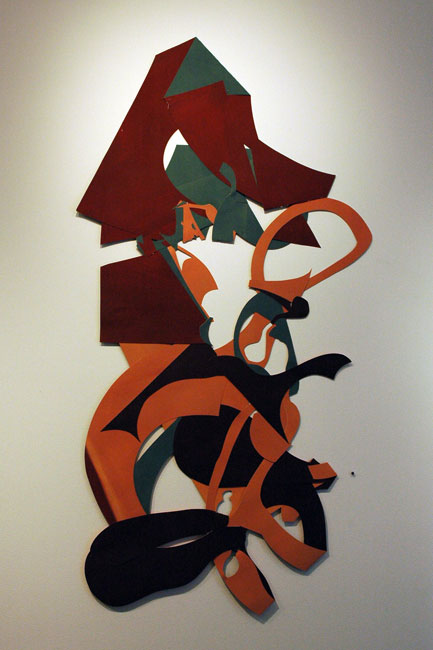
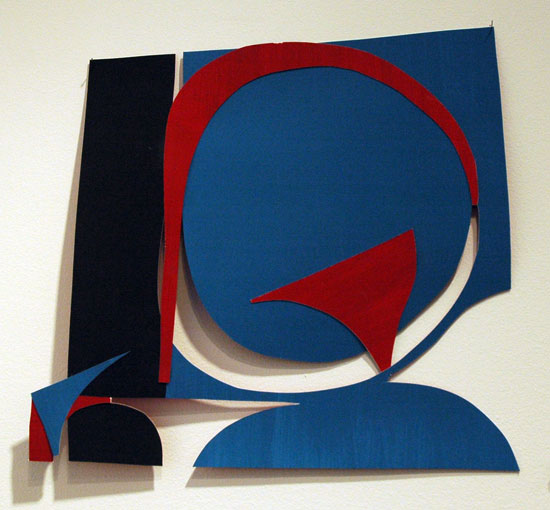
Stefan Saffer Brazil 2007 gouache on cut and folded paper 60″ x 32″ [installation view]
Stefan Saffer Tilt 2007 gouache on cut and folded paper 12″ x 13″ [installation view]
Stefan Saffer has a solo exhibition at Pavel Zoubok displaying compositions which continue to develop with the beauty and intelligence of the forms we first encountered in his work on paper three years ago.
Each of these newest works began as a sheet of paper which has been painted on both sides. They were then cut, but not into completely separate pieces, and the cut-out shapes have been folded into themselves and sparingly glued so they might remain relatively flat. Although their assembly is not likely to be undone in practice, theoretically (and in the head of a visitor inclined to do so) each composition could be unfolded and returned to its original square or rectangular plane.
But the original plain white paper now flashes a rich color, a subtle third dimension and any number of dramatic internal spaces, none of which were there before. There is also inside each of these pieces much of the history of twentieth-century art. The hand and the eye of this twenty-first-century artist is there as well, but equally important, Saffer insists, is the creative collaboration of the observer.
Three of the pieces in the show have been constructed of “found” museum or gallery exhibition posters, provoking still another dialog, one engaged between his own art and the icons marketed in these vintage images. Interestingly, these are the only works shown framed and behind plexiglas.
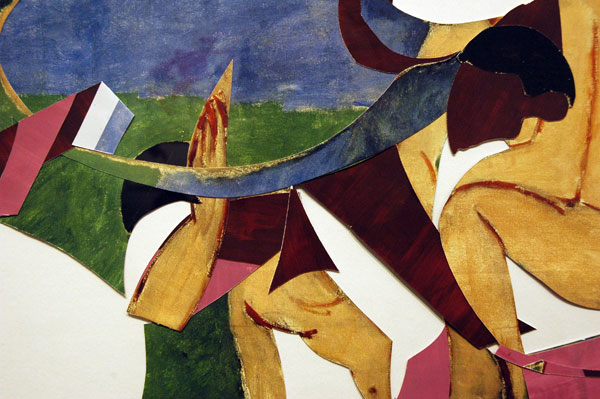
Stefan Saffer Matisse 2007 gouache on cut and folded poster 23″ x 32″ [detail of installation]
Ian Davis at Leslie Tonkonow
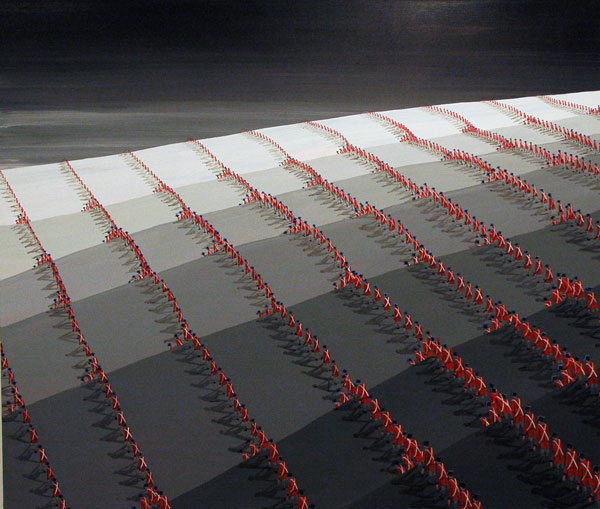
Ian Davis Strategy 2006 acrylica on canvas 60.25″ x 70.25″
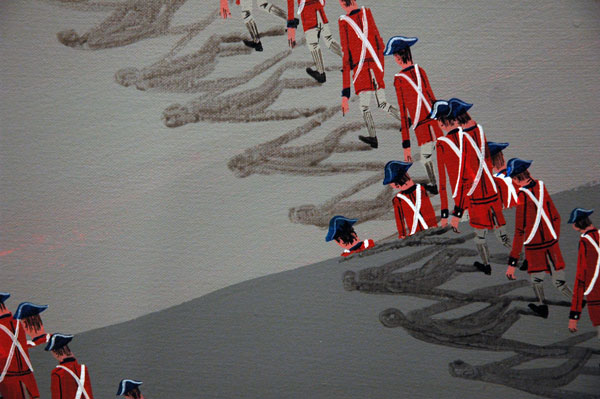
[detail]
Ian Davis must definitely be enjoying his first one-person show at Leslie Tonkonow this month. I know I did, even if a visit to this intense exhibition of oddly faux-naive painting reveals work as extraordinarily beautiful in its mantric minimalism as it is disturbingly chilling for its “uniform” intensity. But for Davis, the thing is, he’s already sold every painting there, in a show which still has three more weeks to run. It’s a brilliant debut.
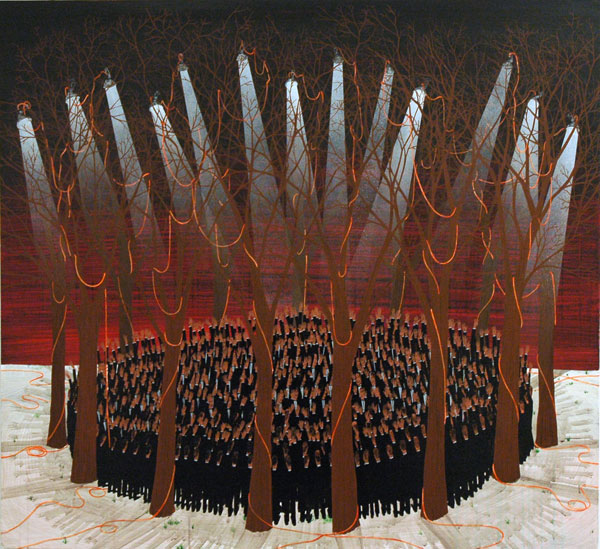
Ian Davis Contract 2006 acrylic and spray paint on linen 46″ x 50″
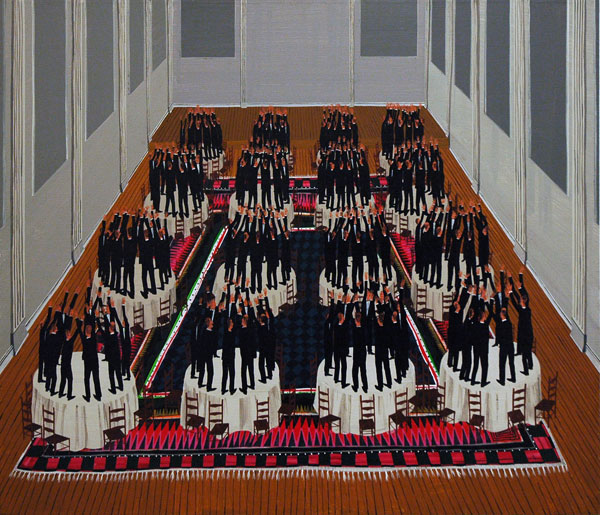
Ian Davis Banquet 2006 acrylic on linen 36″ x 42″
“Let Everything Be Temporary” at apexart
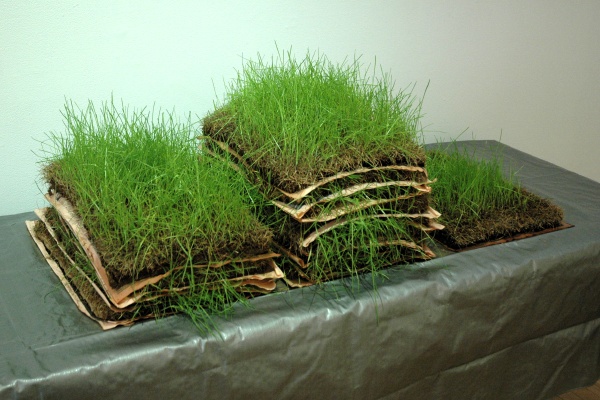
Gabriel Kuri Diário Econômico 2004/2007 newspaper, sod, tarp, dimensions variable [large detail of installation]
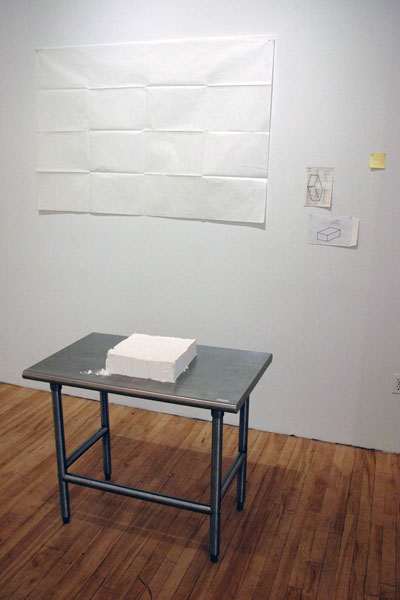
Joëlle Tuerlinckx Ça là (That’s There) 2003 flour, drawings, dimensions variable [installation view]
In spite of any suspicions which might be aroused by the name of the show (the full title is “Let Everything Be Temporary, or When is the Exhibition?“), there is a lot going on in this apexart installation, curated by Elena Filipovic. There is also much to actually “see”.
Like all gallery shows it will eventually close (in this case at the end of the week), but unlike most, this show is designed to fundmentally challenge the idea of permanence even when applied to individual works of art. While the conceit is certainly no longer a revelation, this beautiful group show of fairly-recent “pieces” (of which the oldest is dated 1991, although the artist specified that its physical form be continually renewed) bears new, simple and excellent witness to both the humor and the power of the idea of unstable art, expressed here in almost every medium, including two consisting of none at all.
An excerpt from the exhibition catalog describing the piece by Joëlle Tuerlinckx shown above gives one example of the precarious state of every one of the works represented in the show.
Ça là [That there] (1994) shuffles between original and copy, form and formless. As a perfect, rectangular cube of ordinary baker’s flour, it sits monument-like on a table at the start of the exhibition. Held together by nothing except the invisible tension that allows the flours temporary and improbable replication of the mold that it was once in, Ça là could at any moment give way to being a collapsed heap of the minute and disparate particles of flour that compose it. A sketch of the model on which the piece was based hangs nearby, suggesting the necessary gap between the original and the three-dimensional form that it never manages to equal or permanently reproduce.
The work of Gabriel Kuri arises form a very different impulse, and is more closely tied to the very gradual passage of time. The catalog provides few clues about the piece shown above, which by the way is installed on the top of a very conventional institutional folding table:
Waiting, that banal quotidian act that perhaps better than any other reminds one of the inexorable passage of time, is a recurrent motif in Gabriel Kuriswork. Tied to it is a complex relationship between leisure and production, expenditure and speculation, which finds expression in the prosaic items that populate Kuris oeuvre: cash register receipts, waiting stubs, daily newspapers, disposable shopping bags, and fruit labels, to name but a few.
Gigantic ArtSpace [GAS] ends with “[silence]” in Tribeca
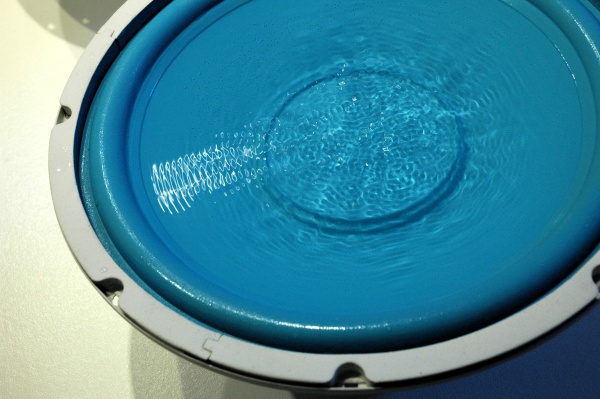
Douglas Henderson Untitled 2006 loudspeakers, wood, water, low frequency sound wave (CD, CD player, amplifier) 60″ x 18″ x 36″ [detail of installation]
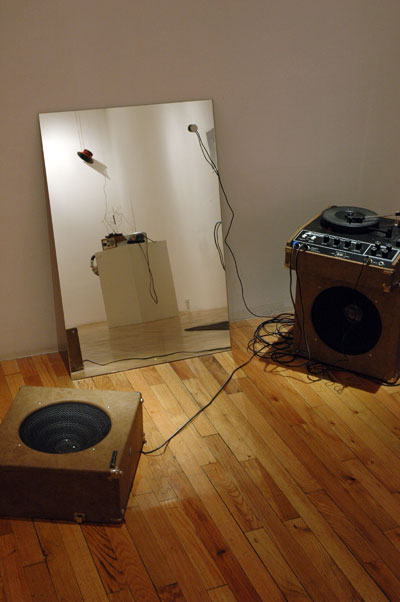
Christoph Dahlhausen and Michael Graeve Dialog 1.2.2 2007 mirror, contact microphone, record player, amplifier, loudspeaker, cables, dimensions variable [large detail of installation, the mirror reflecting details of works by Matthew Burtner and Stephen Vitiello]
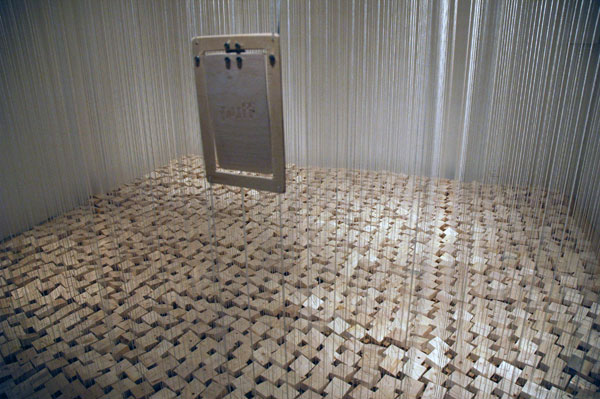
Douglas Irving Repetto puff bang reverb 2005 site specific installation: wood, string, motoers, wire, electronics, dimensions variable [large detail of installation]
Tribeca’s Gigantic ArtSpace [GAS] is shutting down after three very interesting years. Whether just coincidental or with some deliberate, sad irony, the concept and title of the last show in this adventurous, not-so-gigantic gallery is “[Silence]“. Anyone more than casually interested in the more radical but subtle visual and aural forms music can assume should make the pilgrimage to Franklin Street before February 24.
From the press release:
Gigantic ArtSpace [GAS] and free103point9 present [silence], an exhibition focused on artists’ uses of and responses to silence – as manifested in sculpture, in installation, in composition, in works on paper, and in time-based practices. The works on view address the futility of the chase, the beauty of absence, and the rich potential of an empty signal. Works from: Matthew Burtner, Jeroen Diepenmaat, Michael Graeve & Christoph Dahlhausen, Pablo Helguera, < strong> Douglas Henderson, Pierre Huyghe, Tarikh Korula & Tianna Kennedy, David La Spina, LoVid, Juan Matos Capote, Lee Ranaldo, Douglas Repetto, Michelle Rosenberg, Stephen Vitiello, and James Woodfill. Curated by Dylan J. Gauthier and Galen Joseph-Hunter.
Noah Lyon at home
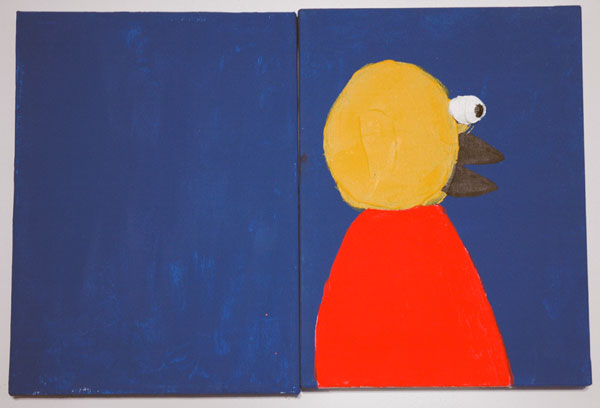
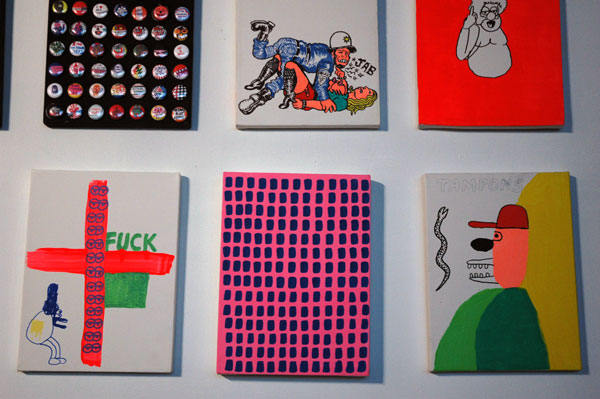
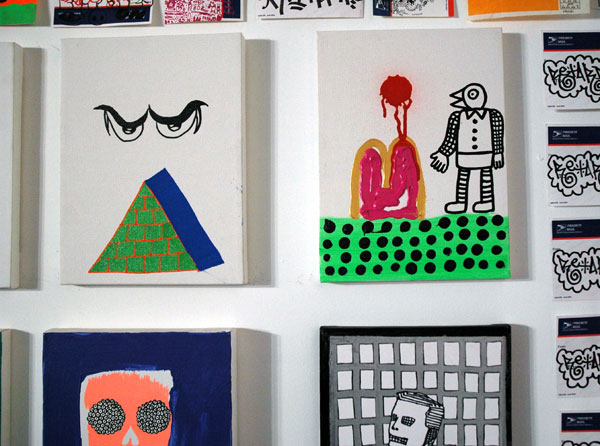
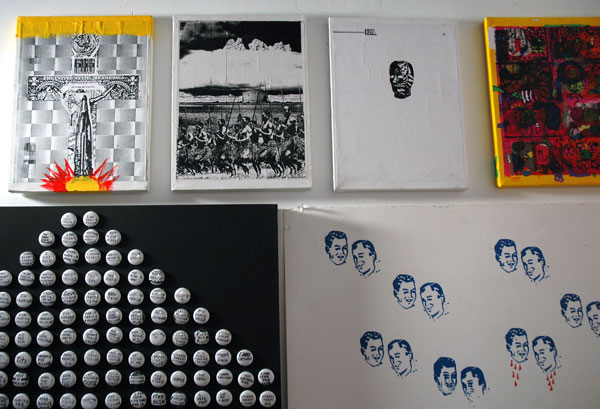
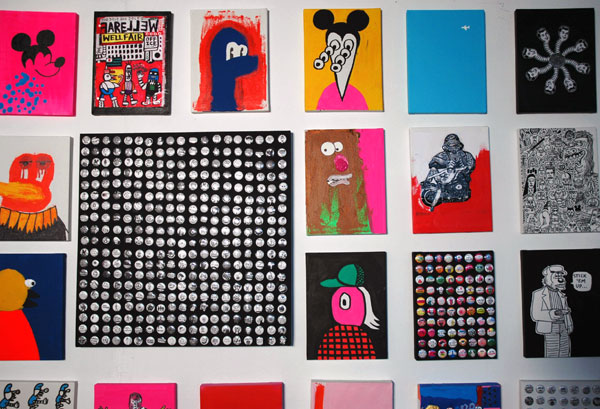
Noah Lyon’s art (Retard Riot) has always been surprising, and that’s no easy feat after more than a hundred years of modernism doing cartwheels and somersaults for our attention. Lyon has always worked differently from anyone else around, and the results were never predictable even within his own process. His art has also always been very much of the artist’s own world, that is, very much alive and screaming inside the larger, dry and dysfunctional authoritarian husk which encloses all of our worlds; it remains what people who maintain they can compartmentalize their experience call “political”, or “too political”.
Lyon’s latest work retains all of this good stuff, but two interesting new elements have been added: First, although he has begun to execute some very handsome prints after years of producing drawings and paintings, much of the recent, non-editioned work seems impatient with its confinement to only two dimensions (even examples from his continuing and almost ubiquitous button series are now often combined by Lyon as sculptures). Secondly, the art looks more beautiful than ever, even independent of the impact of what seems to be a keener interest in color and a more sophisticated treatment of it. Happily these development have only increased the volume of the raw intensity found in earlier work.
Barry and I paid a visit to Lyon’s studio very recently and the images uploaded here suggest only a small section of two inside walls of his “workshop”. They also fail to include anything from the box inside the box, a sort of magical, very densely-hung, animated “bear cave” the artist had constructed on an inside corner of his loft. I have no idea why I passed up the chance to record images of that space, but fortunately Slava did not.
For more information, and more images, go to “artists” on the site of Lyon’s Stockholm gallery, Brändström & Stene.