Dana Sperry, and a lot more, at Dam, Stuhltrager

SperryDana.jpg
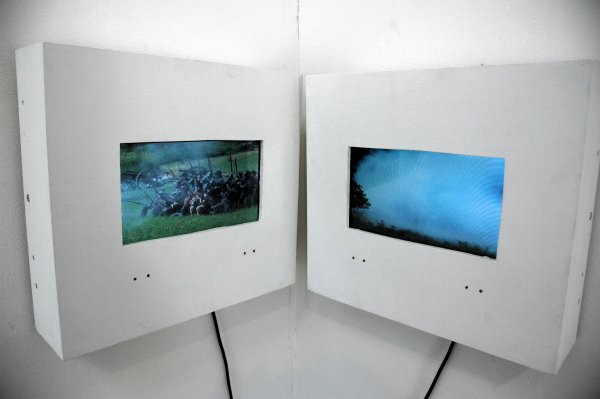
Dana Sperry Humpty Dumpty: the Battle for the Corner Rages On 2005 DVD video recording on LCD monitors and custom wood case, dimensions variable [view of installation]

Dam, Stuhltrager has arranged one of those perfectly-cool summer shows, a group exhibition curated by Aileen Tat and Rachel Pascua called “Stolen Time”. This art will be welcoming, and quite fresh, to almost any visitor in the gallery, but fortunately it isn’t simple light fare; even when it gets really hot out there art nuts have to have something of substance to get through the day.
The fourteen artists included in the show were selected on the basis of work submitted to the gallery over the previous year and the pieces are described by the curators as representing the distinctive reactions of contemporary artists to a contemporary world which increasingly compartmentalizes and accelerates ordinary experience, the “stolen time” of the show’s title.
On Sunday Barry and I hung about inside the gallery and in the sculpture garden in the rear for much of an hour talking to Leah Stuhltrager and other visitors, and during this time I allowed myself to be totally seduced by Dana Sperry’s piece. I was drawn to it as much for the sound design as the odd behavior of the images on the screen and the neat installation. Have you ever heard the repeated crackle of a company of muskets played backwards on small speakers?
The Nacogdoches, Texas-based artist describes his work:

Using footage from Civil War re-enactments played in reverse, the video piece explores the romantic notions attached to the spectacles of warfare. Installed in a corner and titled after a nursery rhyme originally written to celebrate a victory in the English Civil War, the work attempts to question the childish atttraction humans have towards destruction.

The other artists in the show are Conrad Carlson, Paul Davies, Sara Dierck, Gianluca Fratantonio, Tamar Hirschl, Scott Listfield, Anthony Murray, Ben Pranger, Ryan Sullivan, Jeff Thompson, Arno Tijnagel, Heeseop Yoon & Lance Wakeling.
DaviesPaul.jpg
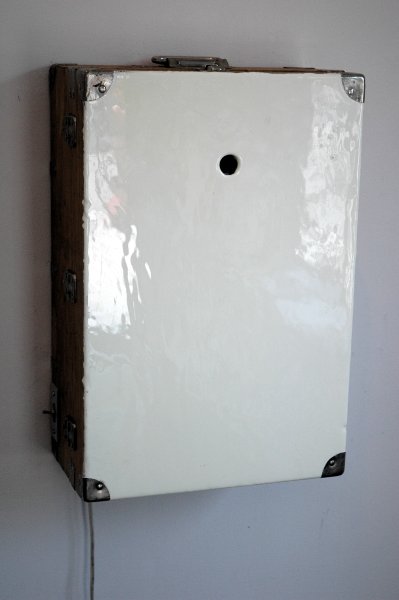
Paul Davies Epilogue (The First War of the New Millenium) 2001 epoxy resin on wooden toolbox with custom electronics and mechanicals 25″ x 15″ x 8″ [installation view, not including adjacent label: “Directions: Insert finger fully into opening until a click is heard. Finger will be stamped with a serial number”]
YoonHeeseop.jpg
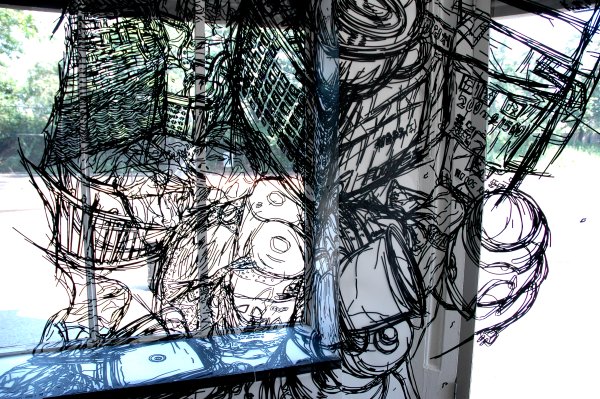
Heeseop Yoon Closet 2006 black tape on mylar and gallery space, dimensions variable [large detail of installation]
“Data Mining” at Wallspace

GarciaDoraStories.jpg
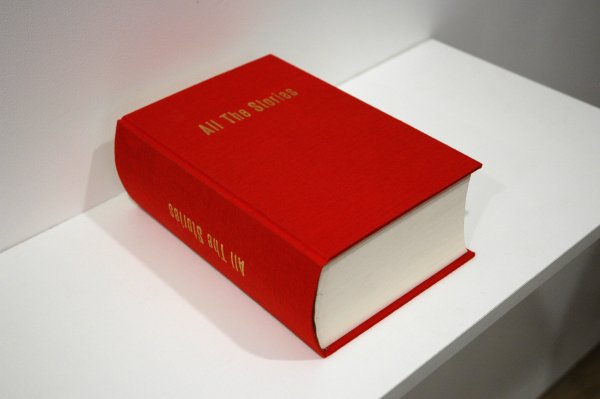
Dora Garcia All the Stories 2005 book (sample) 9″ x 6″ x 3″ [installation view]

WoolfordDonelle.jpg
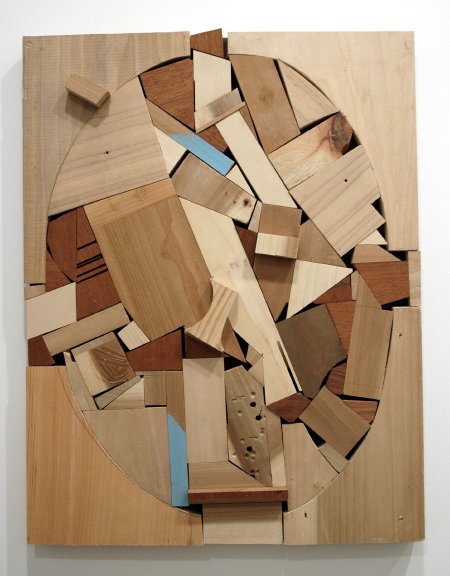
Donelle Woolford Number 1 Painting 2006 wood, screws, glue, latex paint 27″ x 21″ [installation view]

BakkerRichter.jpg
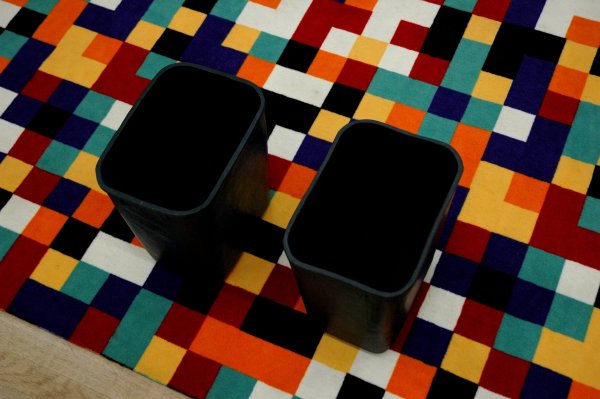
Conrad Bakker Untitled Project: Trash oil on [single blocks of] carved wood 12.25″ x 8″ x 10.75″ (each), resting on Gerhard Richter wall-to-wall carpet designed for Vorwerk & Co. Teppichewerke GmbH & Co. KG 1991 polyester, polypropylene 52.5″ x 149″ [view of installation]

ReimerKarenChiTrib2.jpg
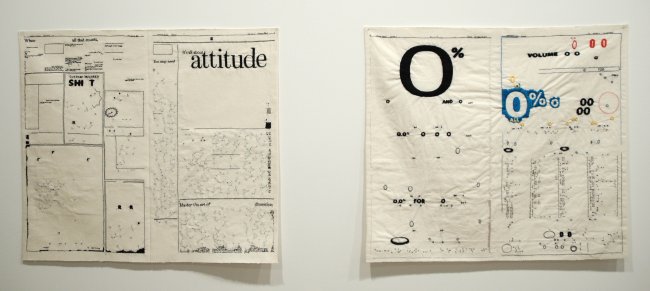
Karen Reimer Chicago Tribune January 20, 2002 (Custom Tailored Shit) 2003 embroidery 22″ x 24″ on the left, and Chicago Tribune September 29, 2002 (0%) 2003 embroidery 22″ x 24″ on the right [installation view]
ReimerKarencorner.jpg
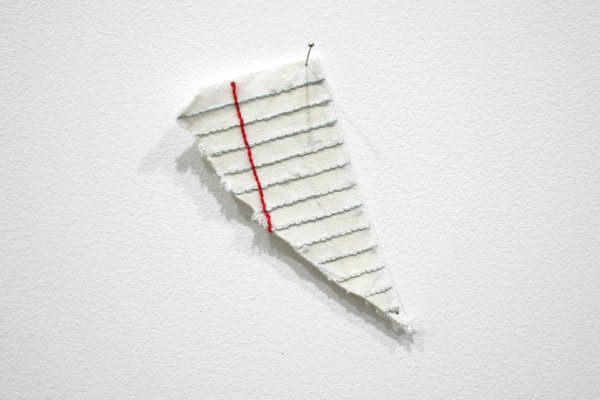
Karen Reimer Untitled [notebook page corner] 1999 embroidery 3.5″ x 2″ [installation view]

Because of recent dramatic developments related to his work which are [more or less] outside of the exhibition itself I’ve done a separate post on one of the artists, Chris Moukarbel [see below], but there’s no way I wasn’t going to show some of the other excellent works in the current Wallspace group show, “Data Mining”, which was curated by the artist Joe Scanlan.
“Data mining”, as it has developed in sophistication into the first decade of the twenty-first century is described in the gallery’s press release as an information gathering system which has become “one of the most pervasive, efficient and profitable ways for powerful entities to track and maintain their hold on things”. We are reminded that the system operates largely by finding and measuring conformity and repetition and ignoring or discarding anomalies or abhorrent behaviors – precisely the territory of the artist.
The press notes continue with the observation that not all artists are interested in addressing this extraordinary and increasing concentration of power at the top, and that still others are simply not aware of the potential their own artistic creation may have for influencing what happens on the mountain – and in the valleys, where most of us live.

Luckily some artists believe their actions still matter, and think that a little research and a lot of leeway (and vice versa) can get noticed, maybe even be effective. Data Mining presents work by eight artists who take matters into their own hands by reframing aesthetics and retelling stories—in general, asserting their power as aberrant individuals inhabiting a conformist technology. Because their works draw stark contrasts between political content and modest creative means, all of the artists in Data Mining might be characterized as “folk politicians” or, if you will, “craft activists.” Whether armed with video cameras or embroidery needles, glue guns or pocket knives, the artists in Data Mining aestheticize politics and politicize aesthetics.

It’s an extremely smart show, gently provocative and beautifully installed.
The two artists represented in the show whose subversive contributions I have not been able to include in an image here or on the previous post are Jay Chung and [the voice of] Robert Smithson.

Chris Moukarbel at Wallspace

MoukarbelWTC.jpg
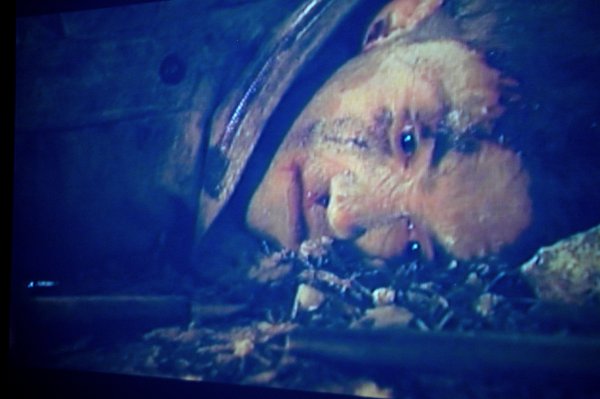
Chris Moukarbel Untitled 2006 DVD projection [still from installation]

Who owns 9/11? Even the question is scary, but most of us would answer in disgust, “George Bush”. Nevertheless we would have to admit that this quick response ignores the other part of the power/money equation which dominates our public and, increasingly, private lives. Chris Moukarbel’s audacious new work, together with the restraining order it has provoked, dramatizes the pervasiveness of corporate and governmental control over all information – and ultimately its disastrous impact on our ability to respond to any challenge, including but not limited to those posed by terroism.
The artist’s “Untitled” appears in a group show called “Data Mining” curated by Joe Scanlan and installed at Wallspace in Chelsea.
Moukarbel’s reference is Oliver Stone’s $60 milliion about-to-be-released film, “World Trade Center”. The artist [in this context I think the noun’s reference is clear] originally filmed a 12-minute video, “World TradeCenter 2006”, based on a bootleg copy of Stone’s script, but Paramount Pictures was able to persuade a court to issue a restraining order on the piece. What is being shown in the gallery this month is a work created from footage shot in the process of making the proscribed video. We see and hear two actors in position [trapped in debris beneath one of the towers] for their roles and conversing in character or addressing the director who remains off-camera.
Moukarbel speaks in an article which appears in today’s NYTimes:

“I’m interested in memorial and the way Hollywood represents historical events,” Mr. Moukarbel said in an interview yesterday, the day after his new video was shown as part of the group exhibition “Data Mining” at Wallspace, a Manhattan gallery. “Through their access and budget they’re able to affect a lot of people’s ideas about an event and also affect policy. I was deliberately using their script and pre-empting their release to make a statement about power.”
“My film was offered free on the Internet,” he said of “World Trade Center 2006.” “It cost $1,000 to produce. We’re at a place now where technology allows the democratization of storytelling.”

It’s a terrific piece with an awesome pedigree conveniently provided by the agents of power it addresses. At the opening two nights ago the gallery provided, in addition to the informational plaque attached to the wall outside the darkened viewing room, the complete text of the first video and a copy of the restraining order itself.

Aaron Krach at DCKT

KradchAaronEnough1.jpg
Aaron Krach Enough #1 2006 R-print 8.75″ x 13.25″ [view of installation]

KrachAaronYouCan.jpg
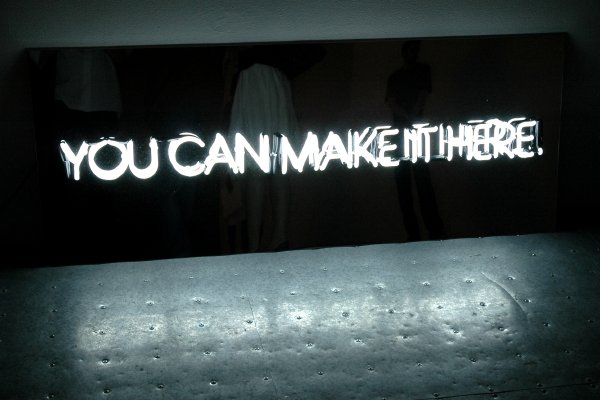
Aaron Krach You Can Make It Here 2006 neon on Plexiglas mirror 24″ x 61.25″ [view of installation, with reflected viewers]

KrachAaronUnitedNationsGift.jpg
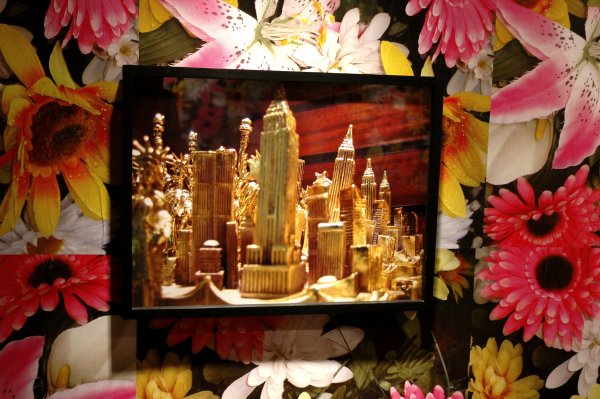
Aaron Krach United Nations Gift Shop 2006 digital C-print mounted on Plexiglas 14.25″ x 19.25″ [detail view of installation]

KrachAaronPerformance1.jpg
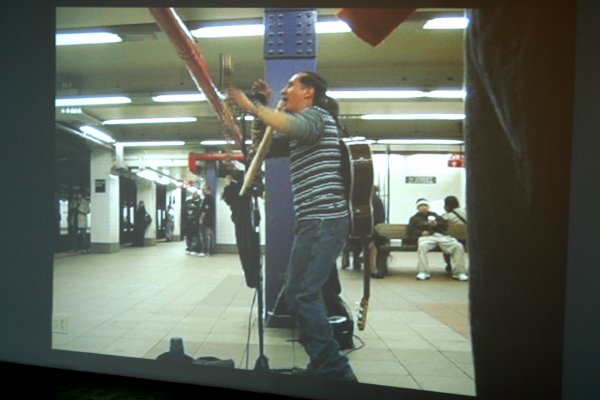
Aaron Krach Performance #1 2006 DVD [still from video installation]

How much longer will we be able to [heart] NY?
What does New York mean to young artists today? Many of us who love the rich and raw exuberance of the creativity which brought us or kept us here are now very concerned about the future of [all of] the arts in a city which seems increasingly unable to accomodate those who don’t already have, well . . . money.
But maybe all most of us can do is continue to wonder at the things that still make us [heart] NY.
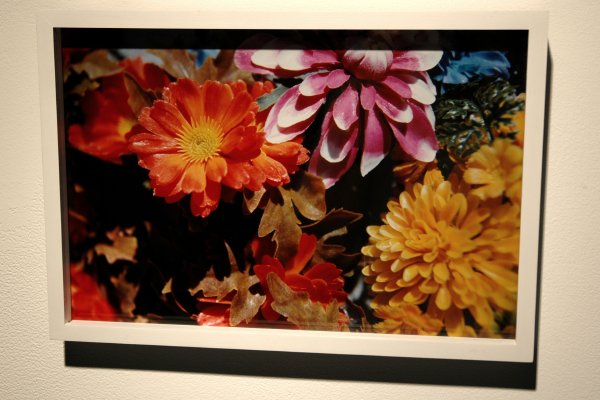
Aaron Krach‘s beautiful exhibition in multiple media at DCKT Contemporary isn’t ordered to address the real estate problem directly, but it does remind us, with sensitivity and great beauty, of some of the ordinary delights and extraordinary serendipities which have always inspired the neighbors we would miss the most if Luxurycondoland proves triumphant in the end.
From the gallery press release:

Aaron Krach stakes a claim to a piece of the rich and varied history of artists inspired by New York City. “My new work fits somewhere between late, jazzy Piet Mondrian and early, East Village Madonna,” says Krach. “It’s a genuine but perhaps futile attempt to capture the beauty of Manhattan streets and the sex appeal of pure, unadulterated pop culture.”
Works in the exhibition include photographs of new and discarded consumer goods as well as the artist’s own sculptures comprised of commercially manufactured objects. The raw materials of Krach’s art are the overlooked and underappreciated parts of the cityscape-wheat-pasted advertising, steam that billows up from under the streets, and discarded kitsch.

Watch for larger or smaller bits of Krach’s posters featuring bunches of fake flowers on billboards all around the city, starting with the outside west wall of the gallery building itself.
Scroll down inside this Bloggy post, and inside my own posts here and here for more of Krach.

Oppenheimer would not be surprised

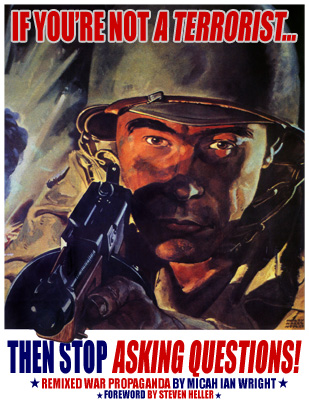
terroistnoMicahWright.jpg

In the last hours these two stories have appeared in the NYTimes:
“Cheney Assails Press on Report on Bank Data” and:
“Court Bars Info Request on NSA Wiretapping”
So, the engineer behind the systematic destruction of our liberties is outraged that the media might inform us of the fact, and in a related case our courts have once again ruled on the side of the rogue executive. Even the third branch of our government is paralyzed to resist these authoritarian depredations, fearing the accusation of being soft on terrorism (the new McCarthyism) while ignoring the terrorism at the top.

Wednesday evening we were privileged to attend a magnificent performance of Heinar Kipphardt’s 1968 play, “In the Matter of J. Robert Oppenheimer” at the Connelly Theatre in the East Village. In the drama, which is based on actual transcripts from a 1954 hearing, Oppenhiemer has been summoned before a committee of the Atomic Energy Commission charged with determining whether his security clearance will be reinstated. In the first act he responds to one of the lawyers arguing against his case,

“There are people who are willing to protect freedom until there is nothing left of it”.

Can anyone say the phrase, “police state”? Or are we going to wait until we are totally forbidden to do so?

[image from Micah Wright]

Reed Anderson at Pierogi 2000

AndersonReedmanholecover.jpg
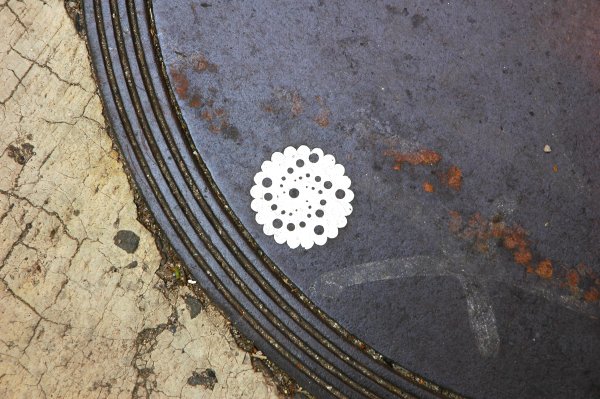
painting on manhole cover, most likely that of Reed Anderson [view of site-specific installation]

I didn’t manage to get to Reed Anderson’s show at Pierogi until this past weekend, so as much as I would like to I can’t send anyone over to Brooklyn to see it now.
Especially since my own photographs came out very yellow, there’s at least a small consolation in the fact that the gallery itself has a number of good images of the work shown [odd as it may seem, even now that’s not always a given].
Judging from past experience, there should still be at least one of Anderson’s works visible somewhere in the office area if you do stop by, but there is almost certainly one piece remaining outside. It’s lying on the top of a manhole cover located just below and west of the building’s stoop. When I descended the steps this past Saturday and spotted the tiny work I pointed out the silver medallion to several people sitting or standing around. It seemed to be a complete surprise to everyone, including at least one person connected with the gallery. It certainly looks like something Anderson would enjoy carrying off without announcing it to anybody.

UPDATE on Brooklyn College MFA suit

[Somehow this announcement got lost in my email one week ago while I was distracted at home, but it’s still worthy of a post, since we haven’t heard the end of this story yet.]

innocence.jpg
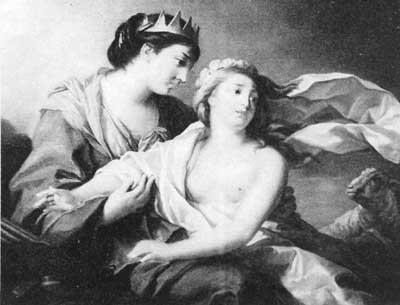
Elizabeth Louise Vigée Le Brun Innocence seeking refuge in the Arms of Justice 1779

The eighteen students whose Master of Fine Arts thesis show was summarily shut down on May 4th by a parks official, with the work removed and damaged by their school shortly thereafter, filed suit this month against the City of New York, the NYC Parks Department and Brooklyn College, citing First Amendment violations and property damages.
I would expect this case to be a no-brainer for any court, but I no longer have the naive confidence in American justice with which I was brought up.
For details on the suit, see the PLAN C(ENSORED) site.

[this image from Bat Guano may be a bit melodramatic, but I love Le Brun as I love Justice; besides, we should give her some slack (if not a cheer), since she was still working here under the ancien regime]

“Gay Art Now” at Paul Kasmin

McDonaldDanielJesus.jpg
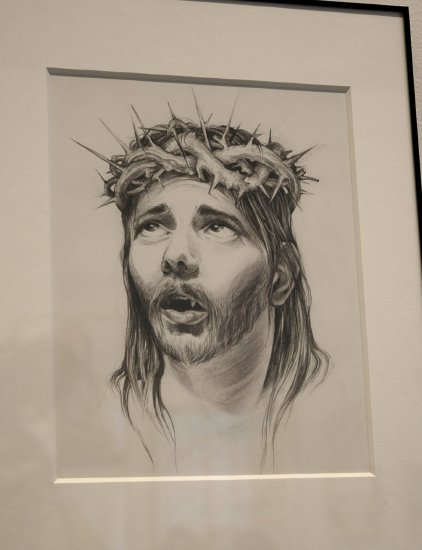
Daniel McDonald Jesus Christ, Vampire 2006 pencil drawing 14.25″ x 11.25″ framed [installation view]

FraserAndreaUmMonumonto.jpg
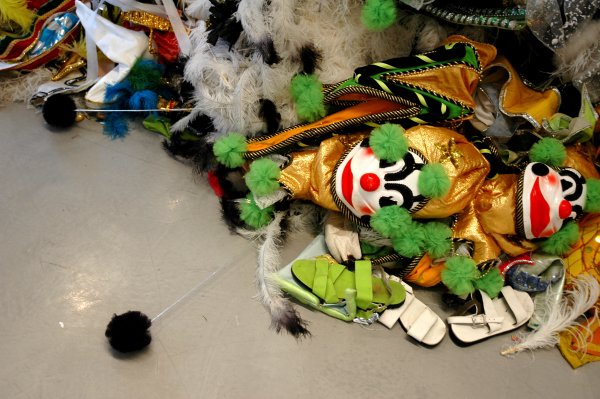
Andrea Fraser Um Monumonto As Fantasias Descartadas 2003 mixed media (Brazilian carnival costumes) dimensions variable [detail of installation]
BalkDennis.jpg
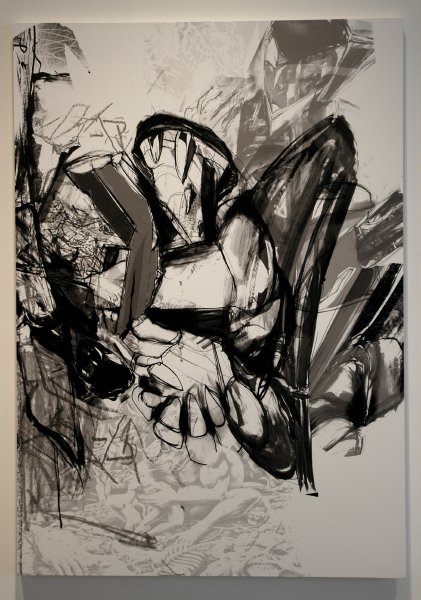
Dennis Balk Untitled digital print on canvas 68.25″ x 48″ [installation view]

RicardReneboyrunning.jpg
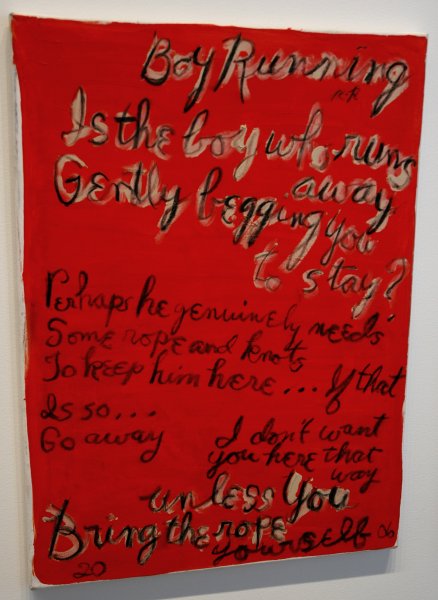
Rene Ricard Untitled (Boy Running) 2006 30″ x 22″ [installation view]

BurrTomChristmasCollapse.jpg
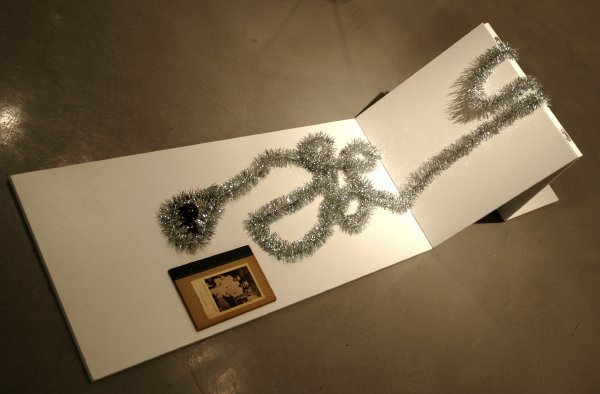
Tom Burr Christmas Collapse 2005 wood, latex paint, metal hardware. galss, paper [installation view]

WitensteinIvan.jpg
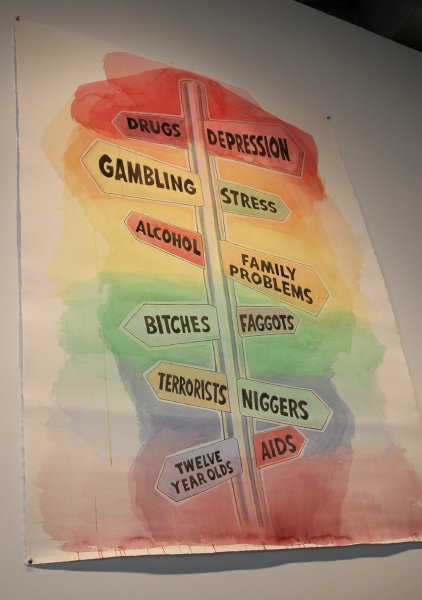
Ivan Witenstein Help 2006 watercolor and graphite on paper 68.75″ x 51.75″ [installation view]

It’s a terrific title for a show, and an even better excuse for a great press release, but best of all is the work itself. The artist Jack Pierson has curated one of the most arresting group shows of the year for Paul Kasmin’s main space on 10th Avenue.
Pierson introduces his choices under the headline, “THE NAME OF THIS SHOW IS NOT GAY ART NOW“:

It seems to me the notion of Gay Art is somewhat passé and this show is an ode to its passing. It includes work by over fifty artists, not all of whom are gay, identify as gay, and not all of whom are living. The name of this show is not Gay Art Now. Maybe the link being made is about sensibility, maybe it’s about society. –Jack Pierson

31 Grand shows up at the National Arts Club

GarberHelenYoungAmericans.jpg
Helen Garber Young Americans 2004 oil on panel 35.5″ x 29.5″ [installation view]

31 Grand has come to Manhattan! No, the space is still anchored to its eponymous address, but the two gutsy Williamsburg gallerists in charge have been chosen to mount a show, “Love Will Tear Us Apart”, in the 19th-century main, or Grand salon of the National Arts Club on Gramercy Park.
The “clean white space” was already a cliché decades ago, but there’s still more than a little usefulness in being able to show art for the first time in a way which neutralizes its immediate environment.
Megan Bush and Heather Stephens made no compromises in introducing their aggressive aesthetic to the ancient club’s dark brown walls, spaces which on Tuesday night seemed to be anxiously awaiting the return of familiar portraits and landscapes. Maybe I would have been more comfortable with how this odd room worked with this show if I had at least an ounce of the Goth in me [that is, other than my Germanic origins], but I think sometimes serious darkness needs some lightness to be seen. Having already come across the work of most of these artists inside white walls in Brooklyn, I have to say that much of what is being shown at the Arts Club this month would be a challenge anywhere.
That’s of course what attracts me. This provocative show would be an eyestopper if it were hung on flowered wallpaper above textured wall-to-wall capeting and lit by bridge lamps. It shouldn’t be missed as installed in the Tilden Mansion.
In addition to this and other paintings by Helen Garber, the installation includes exciting work in a number of media by Claudine Anrather, Maureen Cavanaugh, Mike Cockrill, John Copeland, Jan Dunning, Jon Elliott, Magalie Guerin, Jeph Gurecka, Carol “Riot” Kane, Jason Clay Lewis, Francesca Lo Russo, Vincent Skeltis, Adam Stennett, Barnaby Whitfield, and Jeff Wyckoff.

[the image shown above is from the artist’s series, “Love Letters From Crawford”]