Jenny Holzer: bigger will be bigger

7WTC2Holzer.jpg
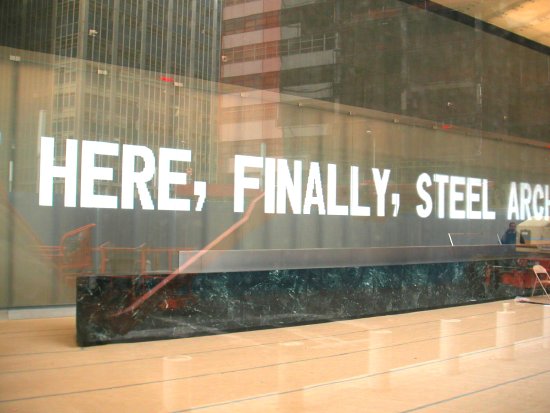
Le Corbusier* via Jenny Holzer via Larry Silverstein

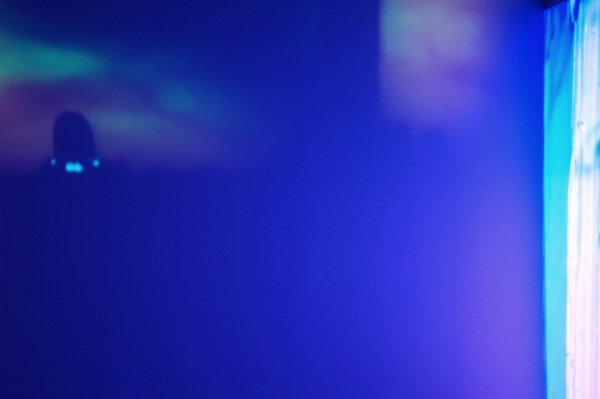
Speaking of large works of art [from my March 4 post: “…the Whitney rooms are devoted almost exclusively to large works; almost everything can be seen easily from a distance.”], Jenny Holzer is completing the installation of a 65-foot-wide, 14-foot-high wall sculpture of moving text commissioned for the lobby of the new 7 World Trade Center. I was downtown this afternoon so I sneaked what looks here like a spy camera shot while I stood in the midst of the construction machinery outside the building shielding my little Minolta.
In an upbeat report in the NYTimes this morning we are told, “Though the artwork resides in the lobby, it is already visible several blocks away.”
That even beats the Biennial’s “Peace Tower” installed in the dry moat below the Whitney’s front windows.
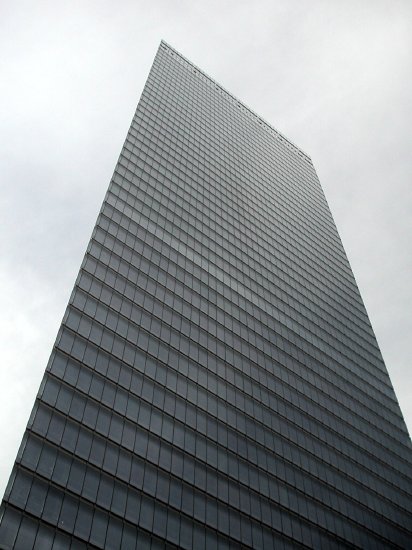
I think it will look fine, perhaps even very, very fine. At least from a distance the Childs building seems to be an improvement over the old 7 WTC, even if much of its virtue may be tied to its glassy near invisibility. I worked in the old fortress for years, and even with a lobby stocked with decent, large-scale late twentieth-century art I shuddered every time I had to walk to or from the elevators. The Lichtenstein, the Held, the Nevelson and the Bleckner [all destroyed] were all basically add-ons inside that pompous and brutally cold corporate control center lobby.
Today’s article describes some of the process of the collaboration between the artist, architect David Childs and developer Larry Silverstein. While it clearly won’t be one of Holzer’s more provocative projects (the texts which had to be cleared by Silverstein, will apparently be as close to sweetness and light as Manhattan ever gets), we may still be able to hope for more later on: “I hope to feed it again,” Ms. Holzer said. “It would be nice to keep it alive.”
For the sake of all of us, I wish her success.

*
the complete quote reads:

The George Washington Bridge over the Hudson is the most beautiful bridge in the world. Made of cables and steel beams, it gleams in the sky like a reversed arch. It is blessed. It is the only seat of grace in the disordered city. It is painted an aluminum color and, between water and sky, you see nothing but the bent cord supported by two steel towers. When your car moves up the ramp, the two towers rise so high that it brings you happiness; their structure is so pure, so resolute, so regular that here, finally, steel architecture seems to laughÂ… The second tower is very far away; innumerable vertical cables, gleaming across the sky, are suspended from the magisterial curve that swings down and then up. The rose-colored towers of New York appear, a vision whose harshness is mitigated by distance.

7WTChighside.jpg
the new 7 WTC: very clean, but nothing new

[it was Barry who drew the connection between what I had written earlier about the Biennial and this project when I mentioned the Times story at the breakfast table]

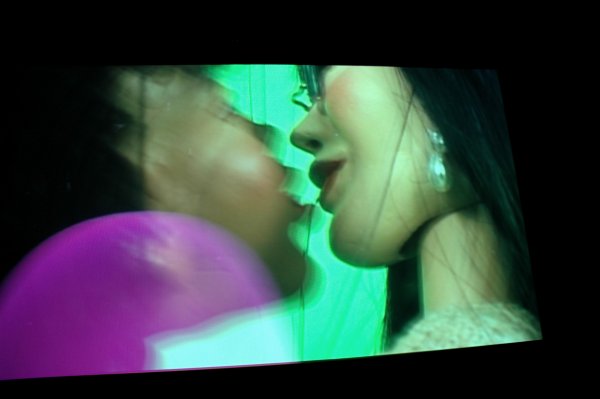
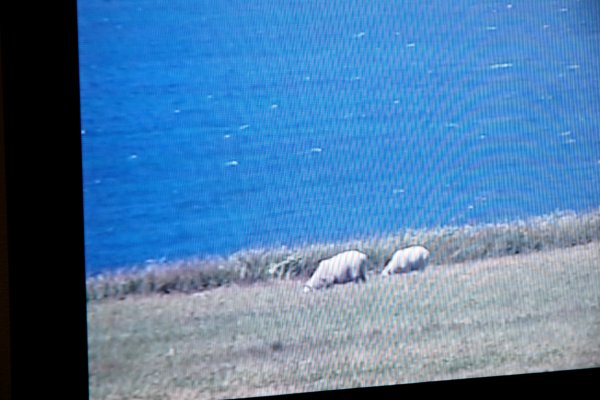
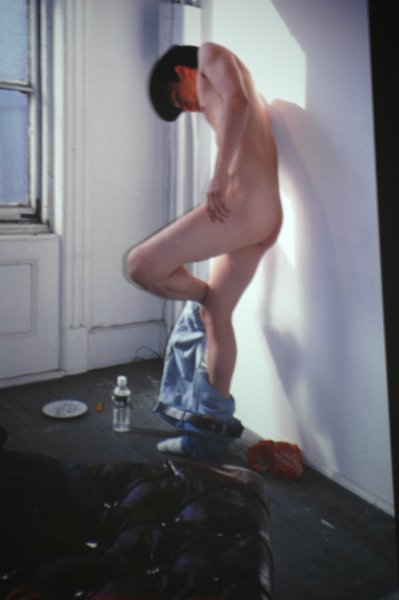
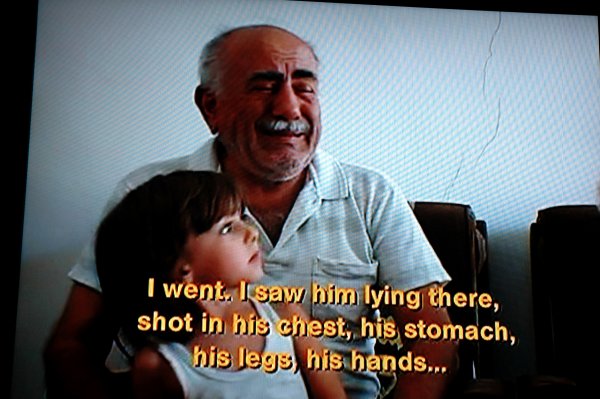
images from the Whitney Biennial

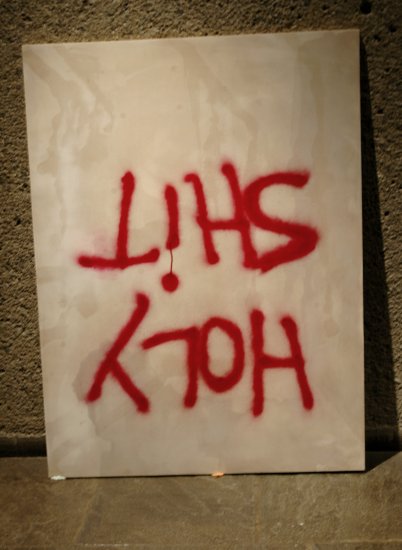
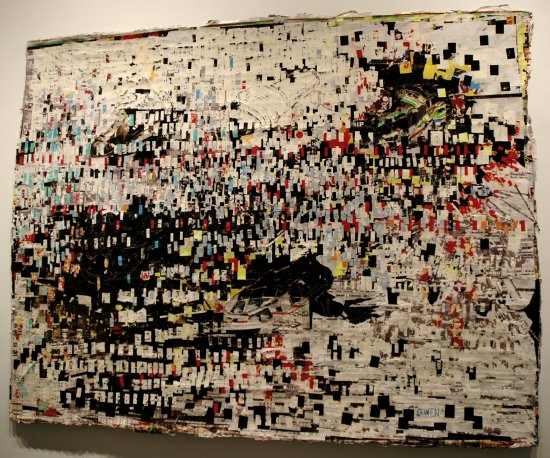
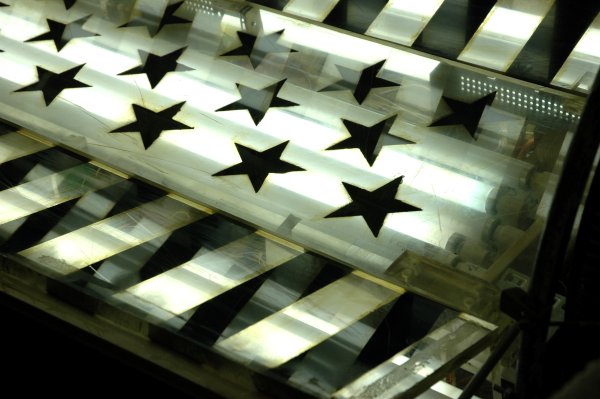
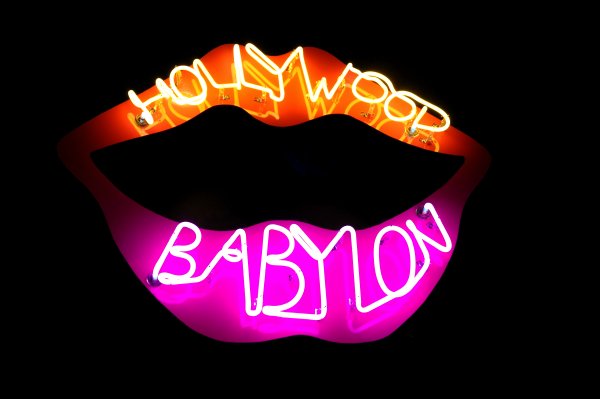
I’ve uploaded below some two dozen images of work from this year’s Whitney Biennial, but I’m not suggesting they represent anything but a sampling of the work in the show, especially since I’m not going to include any notes.
Some of these works appear here mostly because I liked the image I was able to capture, even if it may be little more than an abstraction. For instance, by description alone any still from a film or video is an abstraction. A certain number of the choices were favored both for the image and the work, but I have no illusions about representing the artist’s creation.
Oh yes, the Whitney has the its own images, but honestly, I haven’t looked at the site. For the purposes of this blog, as usual, I just can’t resist trying to show original images of original work.

ColenDanHS.jpg
Dan Colen

BradfordMarklighter.jpg
Mark Bradford

WardNari.jpg
Nari Ward

PeaceTower.jpg
Marc di Suvero, Rirkrit Tiravanija, and others

WolfsonJordantitle.jpg
[complete title of Jordan Wolfson’s video installation]

WolfsonJordanDictator.jpg
Jordan Wolfson

DonnellyTrisha.jpg
Trisha Donnelly

AngerBabylon.jpg
Kenneth Anger

O'RourkeJimplane.jpg
O'RourkeJim(right).jpg
Jim O’Rourke [two details]

KoetherJutta.jpg
Jutta Koether

ParrinoSteven.jpg
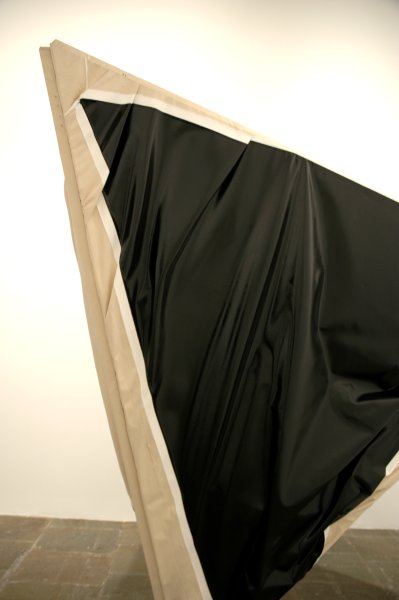
Steven Parrino

GrafDeva.jpg
Deva Graf

TribeKerryWrong.jpg
Kerry Tribe [in the Wrong Gallery installation]

WojnarowiczDavidKid.jpg
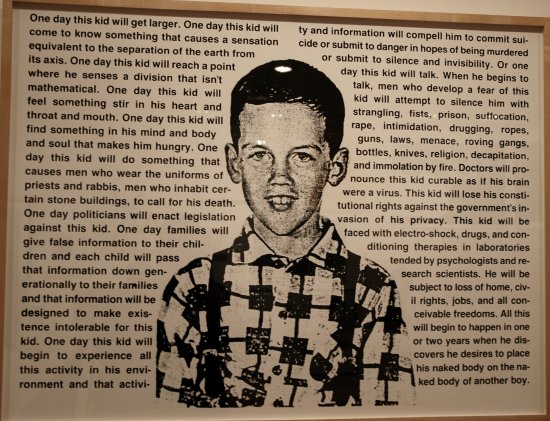
David Wojnarowicz [in the Wrong Gallery installation]

EzawaKota.jpg
Kota Ezawa

Caligula.jpg
Franceco Vezzoli

CoupdeclatKateMoss.jpg
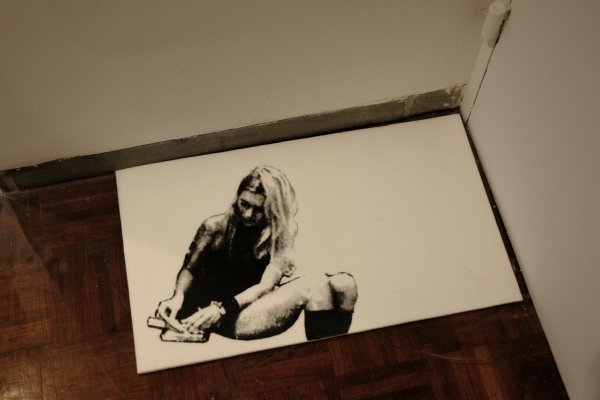
Coup d’Eclat

Coupd'Eclat.jpg
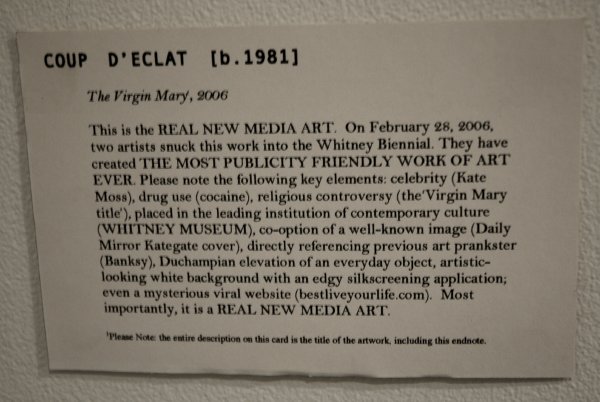
[label for the Coup d’Eclat installation]

Oursleretalvideo.jpg
Tony Oursler, with Dan Graham, Rodney Graham, Laurent P. Berger, and Japanther

SnowMichaelSheeploop.jpg
Michael Snow

SullivanBilly.jpg
Billy Sullivan

DeepDishRealFace.jpg
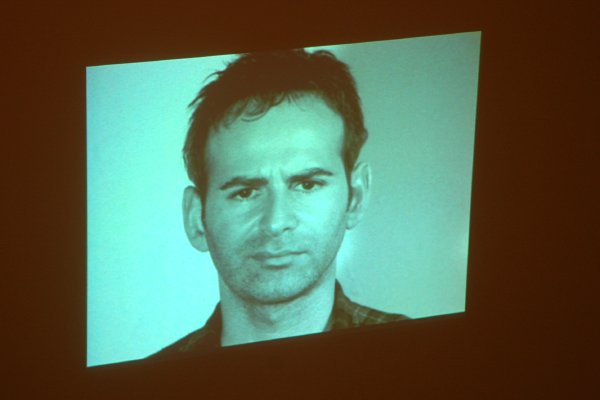
Deep Dish TV [“The Real Face of Occupation”]

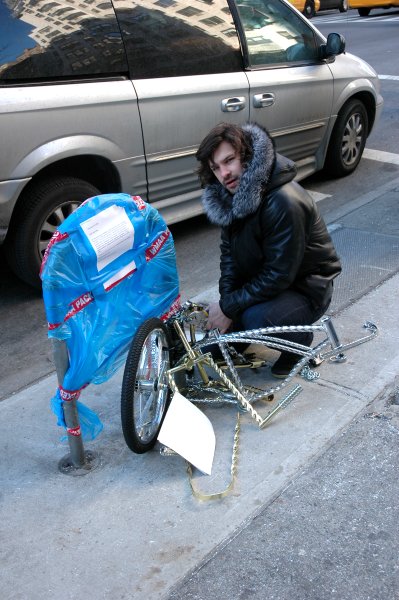
I did say this was just a press preview. As we left the Museum we looked for Aaron Young’s work outside on the sidewalk, but it seems there had been some delay in its completion. Another bicyclist had locked his own machine to the designated bike rack located outside the Whitney’s front door, holding up Young’s installation. Just as we first spotted the still-incomplete piece, the artist returned to continue its assembly. The artist and the curators anticipate that once it is attached to the rack the shiny locked bike will gradually disappear during the term of the Biennial.

YoungAaronbike.jpg

off-Chelsea in Chelsea, with Nick Mauss

OkiishiKenWoj.jpg
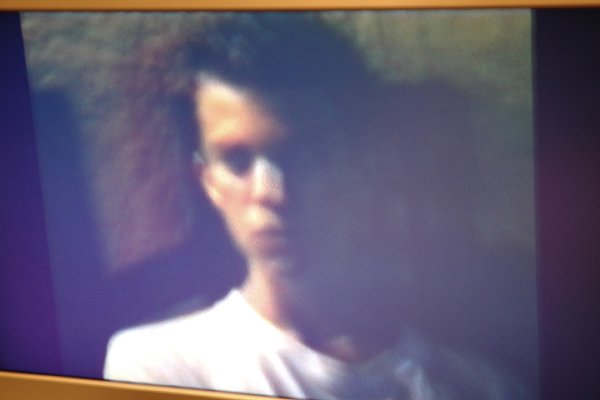
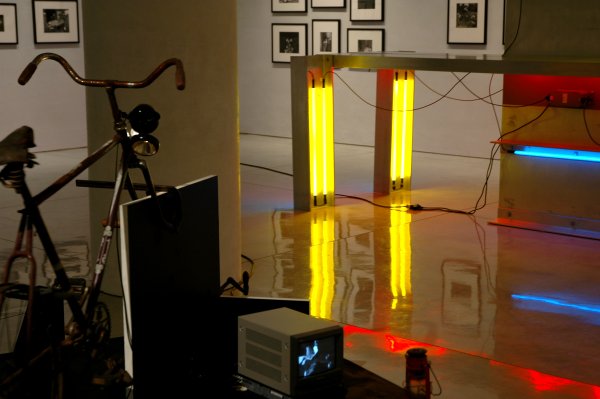
Ken Okiishi “David Wojnarowicz” in “New York” 1999 DVD [still from video installation]

O'GradyLorraineRenaissance.jpg
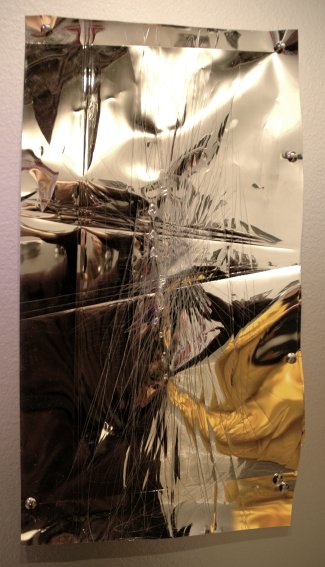
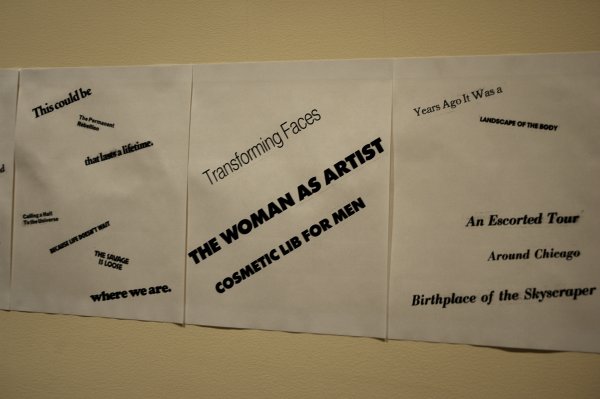
Lorraine O’Grady The Renaissance Man is Back in Business (The New York Times, Sunday, September 25, 1977) xerox from newspaper collage/poem [detail of installation]

We slipped into the opening reception for “Between the Lines” at Daniel Reich’s Temp. Space this afternoon, and in fact the party continues while I’m posting this back in the apartment.
Nick Mauss has curated a group show which is definitely worth a detour. In addition to these and other pieces by Ken Okiishi and Lorraine O’Grady, there is work by Charles Henri Ford, Tariq Alvi, Daniel McDonald, Kianja Strobert and Paulina Olowska.
I’ve often talked about the need for interesting alternative spaces in the midst of all the shininess in West Chelsea, and this hot “temporary” space (the prevision is even in the name) definitely works. It’s also in my beloved and not-so-shiny Chelsea Hotel, so at least for me it’s not even out of the way.

the Whitney Biennial

It’s back. But is it too much art after all? Or maybe we should just be asking if we’re taking it too seriously.
We should at least be grateful for the grace of the extra year indicated by the “bi” in “biennial”. An annual would just be too much for more than the organizers (although it might bring the pressure down a notch or two for a lot of people). The Whitney Museum’s regular survey of American art can’t help being a pretty stressful experience for those who take their art seriously.
Barry and I were at the press preview on Tuesday afternoon. It was difficult sorting through hundreds of works in just three hours, especially for me since I was lugging a bulky camera, but at least we had some decent sightlines. I understand that at the guest preview on the following night scenesters and VIP’s were more easily spotted than the art.
Umm. I’m sorry but I’m not sure what’s wrong. It’s taken almost five days to do this post. Why am I still trying to avoid it, and why am I going to be so unhappy about what I end up with? Am I really such a contrarian (or Frondeur) that if you were to drop me into the middle of any big pile of art I knew had been assembled by one agent for a specific event, regardless of the merit of its parts or the whole, I’d be compelled to put up some serious resistance? Or is there something fundamentally off about the concept of a quasi-competition in the arts to begin with? I have a private horror of institutional competition in any faculty, but I suspect that if I have a problem with the Whitney salon and any similar phenomenon the source lies inside both my own baggage and that of the institution.
The unveiling of the Biennial suggests a theatrical opening night, only this one is stretched over two or three days. But this only describes the Museum’s arrangements; the artists in most cases have already presented their work to some kind of public, so perhaps for them the Biennial is more like some an Academy Awards nomination. As a spectator I find the overall effect is not unlike that of an old-fashioned TV variety show, and that’s not an attractive analogy.
But I’m not saying the 2006 version is a disappointment. There’s no question that this show certainly feels different. I like different.
This is probably an unnecessary observation, but I think it’s very important that there’s a complete change of curators and curatorial approaches every two years. It keeps things interesting and it clears the stage each time. No one has to look back, even if it’s an inevitable temptation. Whatever the criticisms of a show in one year, there’s always next [bi-]year.
During my first hour wandering about on Tueday I was really excited by the possibilities for the afternoon, based both on what I had already heard about the eccentricities of some of the works chosen and what the rooms themselves appeared to show about the curators’ very open, even unorthodox approach to locating artists to include in their survey.
My enthusiasm waned during the next couple of hours.
Of course there was a lot of good work, but I was surprised by what I thought of as the ordinariness, the banality of some of it. Although unlike two years ago most of the artists were quite new to me, as I continued through the rooms my initial excitement just wasn’t being refueled by what I was seeing. As I’m writing this I’m able to bring up very few memorable images in my head, although I can’t underestimate the impact of my press-preview sensory overkill.
In the end I don’t think any of us are better off coming to art in big stacks. It’s really not the way either new or classical work should normally be encountered. We can’t always expect to come upon art on our streets or in our buildings, so those of us who want more have to visit galleries and museums. The insatiable will join the potentially-creative anarchy of the art fair [multiplied for enthusiasts over and over in next week’s scary schedule in New York]. The Biennial tries to help us by introducing an intelligence and a perspective, but ultimately we must all be our own curators every day.
Go see it. But don’t try to make it through with only one visit. In the end, if you’re bored it’ll be your own fault.
And when you need a break, there’s next week’s schedule, its temptations captured for enthusiasts in the words of ArtFagCity, “The Next Two Weeks in Art: Like Drinking So Much You Puke and Then Immediately Going Back to the Bar for More”. See Paige West’s ArtAddict for details.

Some notes:
I agree with Barry’s observations about the Biennial posted a few days ago, but I’ll add a few of my own:
1.) The definition of “art” has been stretched into the wings of our daily experience of creativity in this Biennial, and this can only be a very good thing. When I was growing up art meant simply painting and, to a lesser degree, sculpture. Drawing was mostly about studies for painting or sculpture, and photography was a hobby or craft.
2.) The 2006 show demonstrates little interest in painting or drawing. When either medium does show up it’s invariably upstaged by a sexy sculpture installed in the center of the room.
3.) I’ve seen a huge amount of small-scale work in drawing, painting, collage and photography in visits to studios and galleries over the last few years, but the Whitney rooms are devoted almost exclusively to large works; almost everything can be seen easily from a distance.
4.) The artists represented this year have their studios located all over the country and well beyond, perhaps making this the least provincial of the Whitney biennials.
5.) I wasn’t counting, but it seemed to me that once again women are definitely under-represented, even though so many of the artists are very young. Oddly, in the introductory remarks one of the two curators, pointing out that this was the first show to have one male and one female working together in selecting the work to be included, joked that this made it something of a “bisexual biennial”. It’s becoming more and more difficult to explain away a disproportion not substantiated by any measure of the quality of new work being done today.
Tyler Vlahovich at Feature

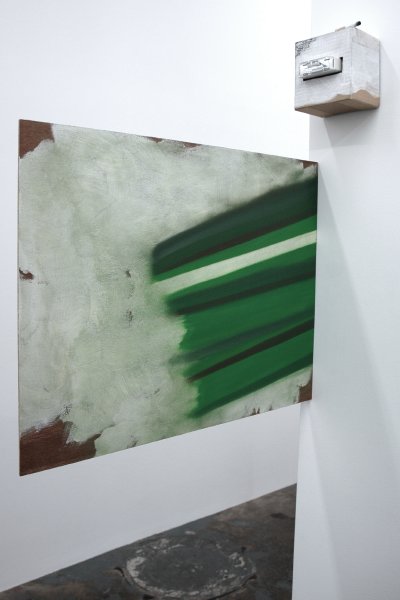
Vlahovichback.jpg
Vlahovichfront.jpg
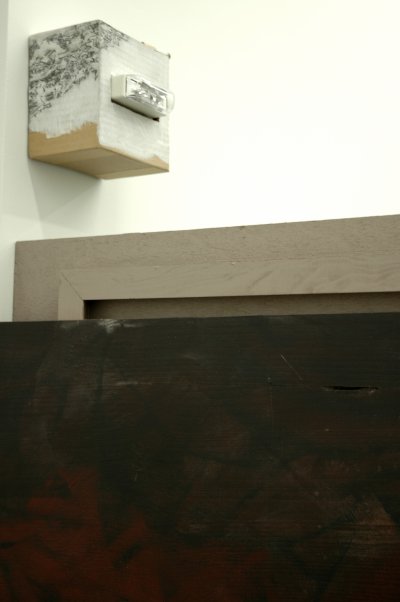
Tyler Vlahovich Cloud with Green Event 2005 oil paint on wood panel 24″ x 32″ [these images are two detail views of the installation, including one oblique view of “Cloud” in the lower one]

Also at Feature right now is the work of Tyler Vlahovich. Smart, painterly and sculptural, beautiful, witty, and brilliantly installed, this installation describes a small treasure of a room.
When I captured the images shown above I thought I was looking at a single work. Although the truth is that while the top picture may actually include nothing but a bracket and the support structure of “Cloud with Green Event” as seen from behind, it and my earlier misapprehension reveal some of the beauty and the genius of the entire installation by this young painter.
Both of these images include views of Vlahovich’s embellishment of the space’s fire alarm. The gallery describes these and other oddments the artist has included in the room as part of his deliberate disruption of the space. Yes, that really is a faux cigarette resting on the painted cardboard box which surrounds the emergency light.
For a look at some earlier work, not included in this show, go to this older gallery link.
Lest, after discussing both Lucky DeBellevue and Tyler Vlahovich, an omission be misunderstood as a comment, I have to confess that on the evening I was there I just didn’t get a chance to see the work of the third artist “Feature-ed” in the gallery’s rooms right now, Howard Johnson. Obviously I have to go back.

Eija-Liisa Ahtila at Marian Goodman

AhtilaNY.jpg
AhtilaFinland.jpg
AhtilaBenin.jpg

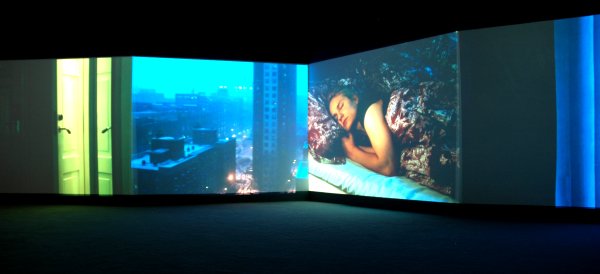
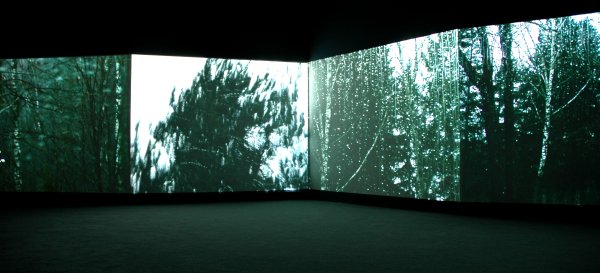
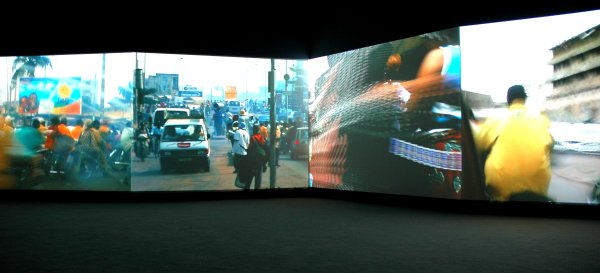
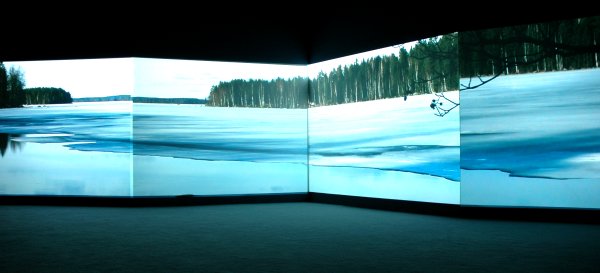
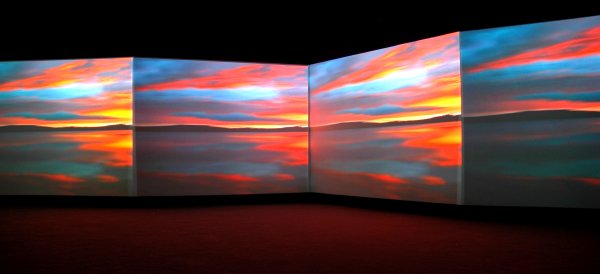
Marian Goodman has beautifully installed a four-channel video, “The Hour of Prayer”, by the Finnish artist Eija-Liisa Ahtila in the South Gallery. Alright, it’s essentially a story about a girl and her dog, but it’s much more. You don’t need the press release to know it’s “a short tale of [several kinds of] attachment and loss” as this beautiful film steps onto three continents.
The images above represent, in sequence, scenes in New York, Finland and Benin.
I wanted to add two additional images from the Finland section, for their beauty alone. Since they would only be a distraction from the simple sequence shown above, I’ve installed them separately below, as thumbnails.

AhtilaFinland2.jpg
AhtilaFinland3.jpg

Jose Freire curates Mary Boone

POST CARD


FreireJoseBooneMary.jpg
“I Love My Scene: Scene 1” [detail of installation]

Mary Boone has asked Jose Freire of Team to curate a series of three shows at her uptown gallery. The idiosyncrasies of the first installment “I Love My Scene” promise a continuing, very personal tour inside a very active mind. In any event, the promise alone brought us into an uptown space for the first time in months.
The first installation closes Saturday and includes a surprising group of works by Lothar Hempel [in forground above], Keith Sonnier [in middle distance], Weegee [on wall], Cecil Beaton, Pablo Bronstein and Banks Violette.

Lucky DeBellevue at Feature

DeBellevueLuckytinsel.jpg
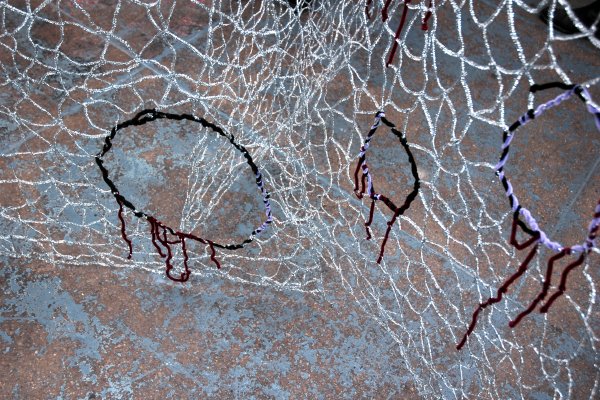
Lucky DeBellevue Untitled 2005 chenile and tinsel stems 98″ x 109″ x 101″ [detail of installation]

I should have gotten an image of one of the paintings [a new medium for the artist?] included in the show at Feature, but Lucky DeBellevue’s sculptures were at least as distracting as usual. Before I turned to look at the walls more carefully the gallery lights were already going off following the opening on Saturday night.
We were very lucky to aquire a small drawing by DeBellevue several years ago at a benefit, and the open lines in the large piece pictured above in detail is probably the closest I’ve seen any of his sculptures come to both the delicacy and the violence of that ink sketch.

Ryan Humphrey at DCKT

HumphreyRyangroup.jpg
HumphreyRyanclose.jpg
HumphreyRyanshells.jpg
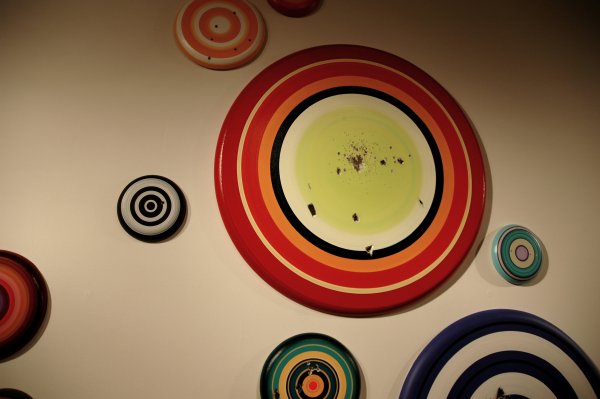
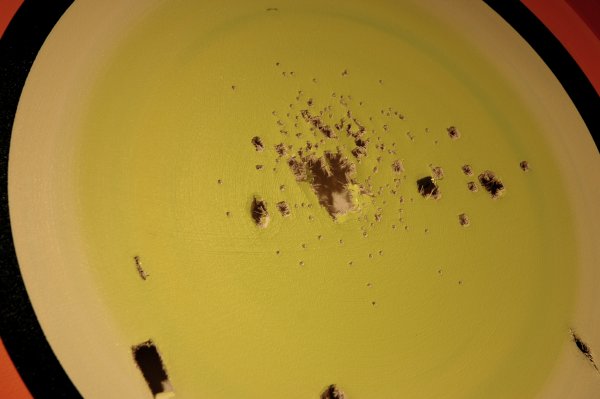
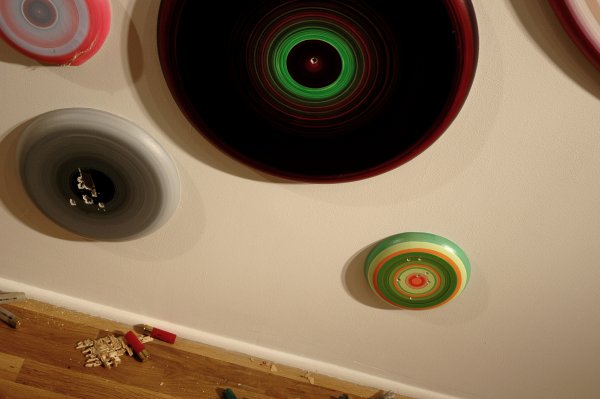
Ryan Humphrey [various titles] 2005-2006 acrylic on canvas, dimensions vary [three detailed views of installation]

Ryan Humphrey pulls out all the stops every time he does an installation, including near-arrest scenarios [think of selling guns on the street, even terrifically-fake guns, and even if you’re an artist, should you happen to be peddling your stuff near an insecure gallerist].
I like his style, but I always stay for the execution and the intelligence of his work. Humphrey’s art has never lacked targets, but this time he created real, target-practice targets. Then he went and labelled each one, referencing, according to the press release, “adverse events with individuals, the pettiness of the ‘art world’ and engagement with larger entities.” He completed his project by pulling them out of the studio and shooting them.
Humphrey’s show has been beautifully installed at DCKT Contemporary on West 24th Street. There’s a larger variety of work to be seen in the gallery than what I’m showing here – more than just the targets. I think I just got totally distracted by the beauty of these injured objects.
A sampling from the 150 or so titles:
Patriotic treason
Sliding scale of ethics
Any reference to impressionist painting
Soft-handed architect
SUV stroller steamroller
Numbing effects of nothing newcasts
Urban hillbilly
A place so nice they named it twice
Trust fund failure
Sweatpants and work boots
Strip malls and box stores
Town car disservice
Yoko Ono
Take what you can and leave the weak behind
Prosthetic charisma
Glossy pages of nothingness
911 Weiss (bubba bear)
Music so thin that it is difficult to hear
Vampire diner
Mediocre meteoric rise
Icky, jazzy, sticky, uck.
Diamonds
Extinguished flame
Worse to be exposed as a failure than to be one
Hoser poser
Transcendent lameness
Strengthened grasp of undertow
Pain enhancer habits
Battered brother
Humble beginnings that last forever