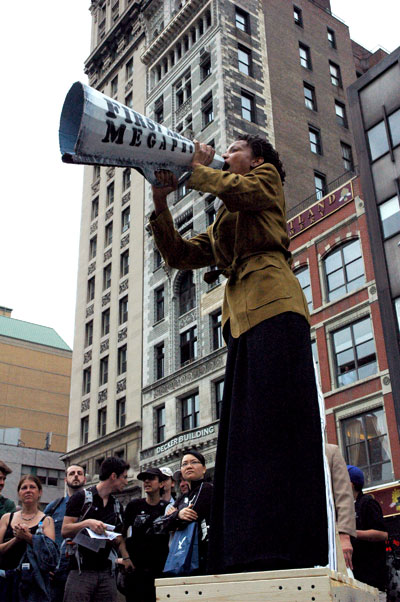
Lucy Parsons on a soapbox, defending the people’s park
WHY WE CARE
Union Square absolutely must remain a place for public assembly and its park pavilion must remain open to everyone, as it always has been. Both must continue to serve the whole community, and for the pavilion that service must include its traditional and essential function as a podium for public speakers at gatherings which are not permitted anywhere else in this city.
The city came to Union Square instinctively immediately after September 11, 2001. We were there many times before and we’ve returned repeatedly since. There we shared and broadcast our feelings about war, threats to the Constitution and any number of other issues. But none were so important as the fundamental freedoms of assembly and movement and speech. The park was always there for us. Now it needs us. Today the site of so many rallies, visible and vocal expressions of unpopular popular opinion is barricaded behind a chain-link fence. If civic authorities and real estate interests have their way, we’ll never get it back.
Central Park is already gone; it’s been privatized and sanitized. No more rallies there: We’ve been told the lawn is just too precious for regular people. Bryant Park is a club. Union Square is all we have left.
Yesterday some of its defenders rallied inside the park, eventually taking their protest across the street onto the sidewalk in front of the large windows of the luxury W Hotel’s street-level lounge. There civic and business planners were meeting to discuss the future of the park. They envision that future as one which includes the privatization of this classic people’s “temple” (first constructed in the nineteenth century, rebuilt 75 years ago, and always intended as a public amenity), as well as additional appropriations of or incursions into the area below its steps which has served as a great open public forum for 150 years.
The rostrum of the park pavilion is in fact no longer available, since it’s in the midst of the construction project already begun. Instead, General Washington, who had gathered his troops here in 1776, and who addressed the crowd first yesterday, stood on one of the half dozen sturdy soapboxes furnished by a crew of imaginative and industrious volunteers. The beautiful and indefatigable Lucy Parsons took it from there. Upon completing her own remarks she handed the baton to Emma Goldman, who was followed by Paul Robeson. Robeson ended his words raising his voice in song, before he turned to a very eloquent Norman Thomas. Dorothy Day completed the list of scheduled guest speakers. They were all pretty hot.
After a musical and tumbling interlude and some words from Rev Billy, a community leader from the 21st-century figure appeared. Rosie Mendez asked for and was given the rally’s improvised podium and an electric bullhorn to read a statement to the crowd (our standards for public speaking have slipped). Mendez is the district’s local Councilperson and just about the only local elected official who actually supports the current plans for the park. I had first thought that she had come to announce her conversion to the side of those opposing privatization, but her statement very quickly told us otherwise.
The commercial media doesn’t seem to be interested in covering this rally, so I feel I have to at least mention that there were hundreds of people of all ages and sorts, some super graphics and props, young patriots wearing three-cornered hats, the Rude Mechanical Orchestra, a staged linked-arms-around-the-Park moment, and some really sweet anarchists with a great black sign.
Curiously, in so far as I could see, the police absolutely did not interfere at any time during the course of the rally.
I accumulated a stash of pictures from yesterday’s very colorful rally. It began at 5pm with speeches from many of the heroes who once stood on this hallowed ground and the energy continued until just about 6:30.
UPDATE: I’ve added a Flickr set here with more photos of the rally.
Category: Politics
Union Square NOT FOR SALE
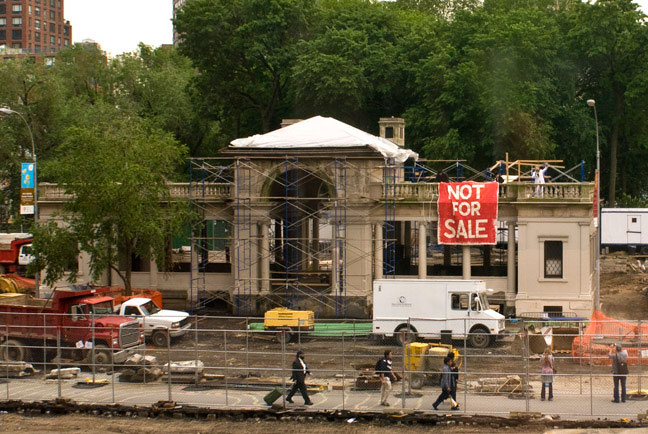
Ceci n’est pas un restaurant privé
It looks like some proud park owners were pretty busy yesterday.
For the background story, see my previous post and still more on the Reverend Billy site. The next act begins at Union Square this afternoon at 5.
Note that the white figure waving from behind the balustrade is the Rev himself.
[John Quilty‘s image furnished by park gremlins]
privatizing and sanitizing Union Square Park – again
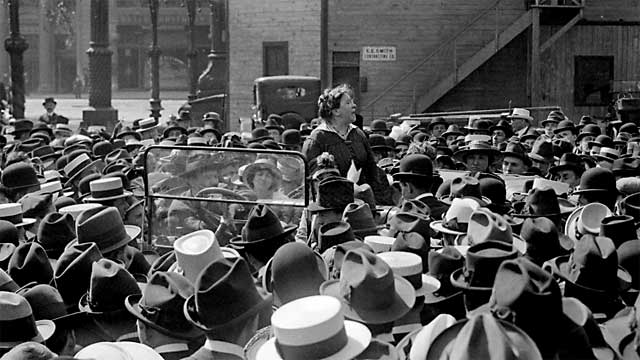
come back tomorrow and there’ll be a lovely restaurant here instead
(Emma Goldman speaks to garment workers about birth control in Union Square, 1916)
Some folks have the strange idea that Union Square Park, historically (and continuingly) the site of social and political activism in New York, should remain the park of the people. Others have been trying for years to reduce or eliminate the “troublesome” more open public plaza areas to the north, west and south of the greener areas of the park. These same people also think some of its public space should be handed over to private business. These operatives include tin-pot mayors, tin-whistle police, certain tin-eared planners and a number of tin-horned businesses.
It’s about Free Speech, as much as or more than anything else.
In the past it was basically only about controlling the rabble; the latest campaign to destroy the park appeals to “gentility” and comes supplied with the irresistible attraction of money as well.
New York’s public parks have become Business Improvement Districts [BIDS], or at least that’s true of those located wherever there’s real money; the others are just left neglected and dangerous, since they are viewed by both public and private authorities as “unprofitable”,
The City and the Union Square Partnership Business Improvement District plans a costly renovation plan for the north end of Union Square Park. The plan, currently being held up because of a lawsuit filed by the Union Square Community Coalition would take away thousands of square feet of potential playground, community and free assembly space to accommodate an exclusive year-round restaurant.
This amenity would be located only steps away from dozens of eateries of every description already serving the neighborhood. Union Square represents nothing like the isolation of much of Central Park – as if the hugely-embarrassing model of the ridiculous Tavern on the Green weren’t disgusting enough to put a stop to this proposal long ago.
The mayor supports the BID plan, but the opposition doesn’t come from Leftist heirs of the Emma Goldman, Paul Robeson and their like, the people who helped make the park what it stands for today. Opponents to the privatization plan include the familiar New York names of Carolyn Maloney, Tom Duane, Dick Gottfried, Jack Taylor, Sylvia Friedman, Deborah Glick, Carol Greitzer, Eadie Shanker and Scott Stringer. This is establishment.
So why is it still a live issue? Because there’s so much money pushing it. The courts may still allow the alterations which the community opposes to proceed, but a greater visibility (I mean direct action and attendant media attention) will surely effect the resolution of the case.
There’s a demonstration tomorrow, Thursday, at 5pm near the northwest corner of the park (17th Street and Broadway).
I expect it to be pretty colorful, and tuneful: The announcement I’m looking at asks us to:
Join George Washington, Dorothy Day, Emma Goldman, Paul Robeson, and Lucy Parsons. Join The Stop Shopping Gospel Choir and The Rude Mechanical Orchestra. Join Reverend Billy. Join your fellow citizens for a 90 minute festival of freedom at Union Square Park!
Save Union Square 2008 promises to be at this same location every Wednesday at 5, performing, recruiting support, and urging passersby to sign an online petition and to contact local Councilperson Rosie Mendez.
[image from historycooperative]

ACT UP oral history marathon
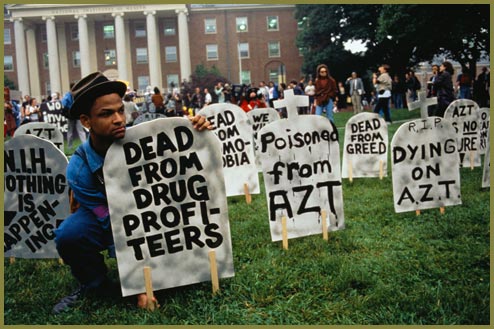
we were never alone*
CORRECTION: I’ve corrected the text for screening location
ACT UP veteran Deb Levine is viewing the entire ACT UP Oral History Project videos from start to finish in a performance project she calls “ENDURING ACT UP”. She is inviting us to join her.
Levine has been working on her PhD. in Performance Studies at NYU and is writing about ACT UP for her dissertation. She says she’s focusing on one aspect in particular:
. . . how collectively people took care of each other during meetings, demonstrations, in committees and affinity groups, and especially as members became ill. I am most interested in the ways in which those relationships became an ethical and political practice – a topic that is not often foregrounded in other histories of the organization.
While she has been watching the interviews recorded by the Oral History Project, which was undertaken by Sarah Schulman and Jim Hubbard, and I assume she’s been through them all, she says that what she is missing is the opportunity to turn around and discuss what appears on the screen with others who witnessed and were a part of the phenomenon of this remarkable band of AIDS activists in the 80’s and 90’s.
The screenings began this morning at 10 at 721 Broadway on the 6th floor, room 613. They will continue through June 15. For a complete schedule and more information, go to the project’s web site.
*
the image is from the ACT UP protest at the National Institutes of Health [NIH] in May, 1990, when we stormed the NIH to protest the slow pace of research; things picked up a bit later (the troublemaker seen in the foreground is Brian Keith Jackson)
[Donna Binder image from NIH library – yes, the NIH!, and the site has much more about medical activism]
memorial to Nazi homo victims: “but no survivors”
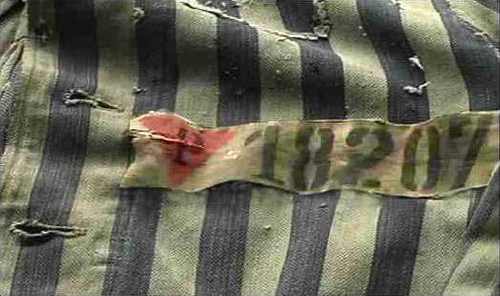
only part of the story
Berlin’s memorial to the thousands of homosexuals who were variously persecuted, tortured or murdered by the Nazi regime was dedicated yesterday. The official name of this German parliament commission, Denkmal für die im Nationalsozialismus verfolgten Homosexuellen [National Memorial for the Homosexual Victims of the Nazi Regime], may be formidable, but the structure itself is incredibly simple and ineffably moving in its sylvan setting within the Tiergarten, Berlin’s central park.
Positioned close to the iconic Reichstag Building, not far from the buried ruins of Adolf Hitler’s concrete bunker and across the street from the German capital’s very different but equally-astonishing Holocaust Memorial, the new memorial was designed by Elmgreen & Dragset, Danish-born Michael Elmgreen and Norwegian-born Ingar Dragset. The artists, who are based in Berlin, used the block shape, gray color and slight tilt of the individual steles of Peter Eisenman’s masterpiece for part of its inspiration, but a small video screen embedded in a recess on one side of this somewhat larger slab will portray a one and a half minute film loop by director Thomas Vinterberg of either two men or two women kissing. In the background of the figures in the videos, which were created before construction began, can be seen the same trees which surround the memorial as built.
Near the end of a very short article in the NYTimes today: “On hand for the unveiling was Berlin’s openly gay mayor, Klaus Wowereit, but no survivors.” The short article goes on to explain that Pierre Seel, who was the last known survivor of the camps, died in 2005.
As a queer man who first heard about this project in the mid-nineties when it was being proposed, and having now seen images of the powerful monument that these two wonderful artists have created, I’m unable to think of this work as a memorial only to the German and European victims of 1933-1945. Many homos who were not murdered but were imprisoned by the Nazis remained incarcerated in the new Germany long after the war. Homosexuality remained illegal in the Bonn Republic until 1969 and was only formally decriminalized in 1994.
Of course queers have been persecuted everywhere on the planet for thousands of years, but especially during the last few decades some societies have managed to grow up. They now recognize and protect the rights of all their members, while nowhere in the Western world do queer men, women and children remain more abused today, both by law and society, than they do in the U.S.
Berlin’s newest monument can be a memorial to all homos hunted in the past. Let it also be a foil for those who would hunt us still.
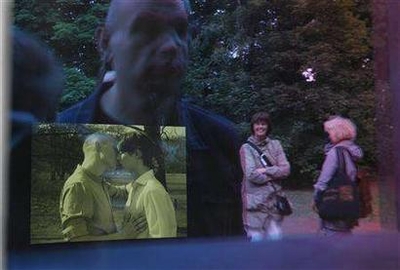
the protective glass in front of the video screen reflects viewers and surroundings
Note, and more: As the ambient landscaping is still immature, I haven’t included an image here of the structure or “pavilion” in its environment. This link to the memorial’s own site [currently in German only, but with a pretty exhaustive list of links in many languages]; and there’s an AP video below, recorded on the grounds of the memorial during grounds cleanup, with a short statement from the artists:
[image at the top from andrejkoymasky; image of memorial’s screen by Johannes Eisele from Reuters via Yahoo!]

when bigger prisons are built, we’ll build them – anywhere
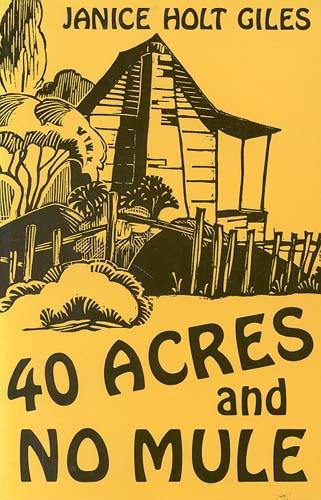
Wait, wait, are you kidding me? Is this real? Where does the U.S. get off building big prisons in other people’s countries just willy-nilly? We already have less than 5 percent of the world’s population but something like a quarter of the world’s prisoners inside our own borders, and now tonight I’ve just come across this NYTimes report:
WASHINGTON The Pentagon is moving forward with plans to build a new, 40-acre detention complex on the main American military base in Afghanistan, officials said, in a stark acknowledgment that the United States is likely to continue to hold prisoners overseas for years to come.
The proposed detention center would replace the cavernous, makeshift American prison on the Bagram military base north of Kabul, which is now typically packed with about 630 prisoners, compared with the 270 held at Guantánamo Bay, Cuba.
40 acres, no mules – and no exit.
[image from jsfbooks.com]
not my voice
After a night’s sleep and especially after reading this morning what others who have read my post of yesterday are saying about the subject of artistic censorship and our relationship to the world, I realized that what I wrote just wasn’t really in my voice. Although I suppose not everyone would agree, I think I was way too concerned with being gentle to everyone and everything: Uncharacteristically, I didn’t make my own position clear on issues about which I have very strong opinions.
While this next section looks like a partial creed, maybe I should just call it a small glossary, even if it won’t be arranged alphabetically.
GOVERNMENT: [okay, I know the word is missing from yesterday’s post, but that’s part of what I mean] I abhor everything the current administration in Washington stands for. I also believe that its enablers in the other two branches of government share equal responsibility for its domestic and foreign crimes, and that the corrupted system which has brought us to this juncture is an abomination we may not survive.
CENSORSHIP: I believe that censorship is a substitution for thought, and is its mortal enemy.
CHILDREN: I argue that children should be educated and protected through the active engagement of all adults, and not by a passive, dumb curriculum of barricades or screens.
LBIF: I am aware that simple-minded, do-good arts organizations can sometimes do as much harm as they do good. Sorry.
FOUNDATION FOR CONTEMPORARY ARTS: I probably couldn’t say enough about the good they do.
TRANSFORMATION: I regret that when it comes to the public presentation of their work artists are not always free to determine either its site or the manner in which is presented.
SUSAN DESSEL’S SCULPTURE: I affirm that the artist Susan Dessel has a great mind and a soul which is its equal, and that her work, “OUR BACKYARD: A Cautionary Tale”, is a powerful human statement and an exceptional work of art (even if I still can’t decide whether it might suffer or thrive from the remarkable gentleness of the title attached to it by its gentle creator).
I am angry, yes, but especially after reading reactions to this story from other bloggers and those who write comments, I am also optimistic about the future of art, perhaps even socially-engaged art.
I mourn the fact that this country has virtually no use for artists and thinkers, so I’m still gravely pessimistic about the future of our polity.
Susan Dessel’s “OUR BACKYARD” censored by gallery
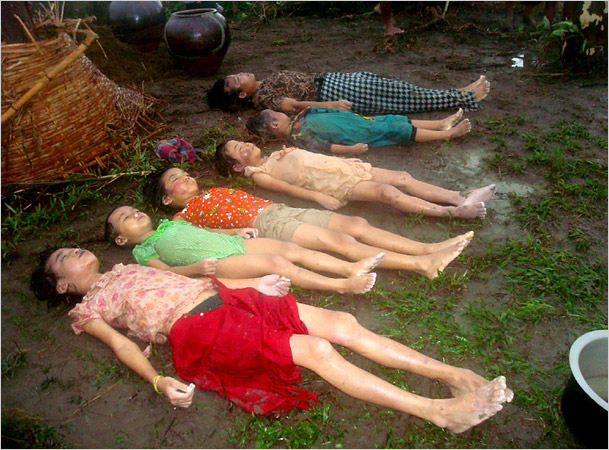
this too is our backyard
In the twenty-first century the entire world really has become our “backyard” and along with its beauty and energy, there is also much unnecessary misery and death everywhere in that yard. Provincial fears and mindless censorship cannot reconstruct fences around the familiar, confined spaces which now open onto a much larger world, nor can they make the misery and death go away.
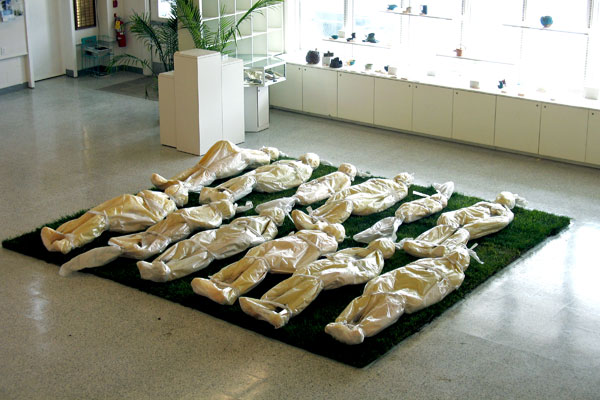
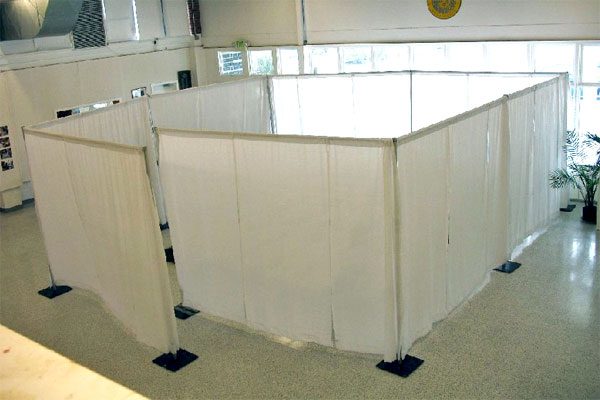
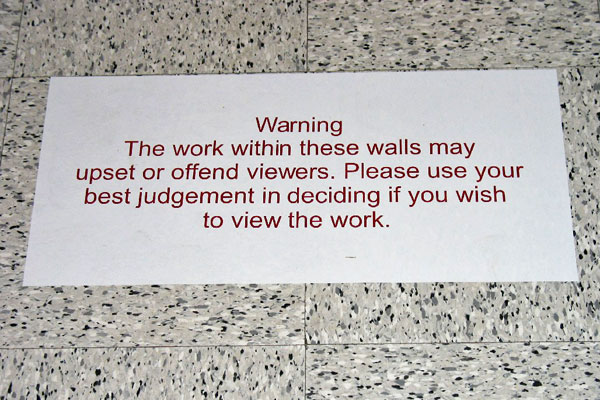
Susan Dessel’s sculpture, “OUR BACKYARD: A Cautionary Tale” has been censored by its current host, the Long Beach Island Foundation for Arts & Sciences [LBIF]. She had been invited to participate in its current Artist Residency and Retreat Exhibition, titled “ART CONCEIVED SINCE SEPTEMBER 11”. Support from the Foundation for Contemporary Arts (NYC) made Dessel’s participation in this exhibit possible. On the eve of the show’s May 3rd opening LBIF Interim Executive Director Chris Seiz told the artist that he had been advised by some LBIF members that they found the piece offensive and were considering ending their support of foundation. In the hours prior to the opening Dessel’s installation was walled off from the rest of the gallery. Visitors who now wish to see the concealed work must first step across signage warning that them that the piece may upset or offend.
The artist has released a statement:
“OUR BACKYARD: A Cautionary Tale” was an opportunity for me to re-imagine the world as I understand it: our shared backyard. Despite the expression of dispiriting conditions found in my work, underlying it is a robust sense of hope that it might encourage viewers to consider their own role in transforming the community – local and global – through their actions and inaction.
Dessel describes LIBFs transformation of the piece as having turned the artist’s fundamental intention on its head, since it now represents our containment and continual isolation from the outside world.
This profoundly moving large-scale work was first seen at a show Barry and I curated at Williamsburg’s Dam, Stuhltrager Gallery in September, 2006. It was a site-specific installation which the artist described as a response to wide-spread images of violent death in many parts of the world. The work has been fundamentally altered with the decision to wall it in during the current show in New Jersey. Dessel sees the LIBF’s restriction of her expression as an artist as raising the new and separate issue of the role we permit art in our society generally.
It 2006 was installed in the “backyard” of the gallery in Brooklyn. There were no warnings posted, and it managed to attract more positive attention from visitors and press (both old and new media) than any other work in the group show.
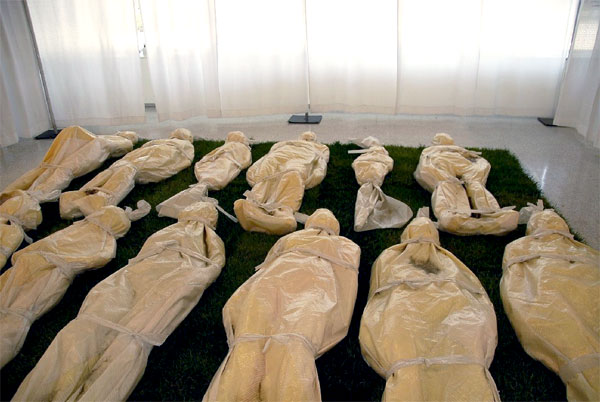
The picture at the top of this entry was taken only a few days ago. It is not an image of a sculpture. Nor were any of the other horrific news images we have seen in our lifetimes from New Orleans, Jonestown, Haiti, and Cambodia, from Lebanon, Israel and Palestine, from Sarajevo, Darfur, Argentina, Sudan and Rwanda, and of course from Afghanistan and Iraq. Dessel’s “OUR BACKYARD” addresses our response to all of these tragedies and too many more, perhaps with the hope that if it helps us to engage in their reality with a shared humanity the world might do a little better going forward. I cannot begin to understand how people accustomed to viewing the horrors presented on what passes for ordinary entertainment on large and small screens today could possibly be upset or offended by twelve carefully-assembled shapes wrapped in sandbag tarp and lying on fresh sod.
I’d like to think we could do better, but the kind of censorship being exercised by a gallery in southern New Jersey this month is hardly unique even in the art world, and it’s certainly of a piece with the bowdlerization which has been standard media practice in this country for decades. It’s no wonder we continue to do so little to help prevent or ameliorate, and in fact contribute so much ourselves to creating, the catastrophes which litter our global backyard.
The Long Beach Island Foundation for Arts & Sciences is celebrating its sixtieth anniversary. I can’t know the motives behind its censorship of Susan Dessel’s art, but it’s unfortunate that so many of us will have first come to know the LBIF not for patronage of arts or science but for institutional behavior not worthy of an amateur craft club in Colorado Springs, and at this juncture that analogy may do a disservice to the city popularly considered the most radically “conservative” in the nation.
The images which appear below show Dessel’s installation before the curtained wall was in place, after it was installed, the sign at the entrance to the curtain baffle, and finally what it looked like inside the enclosure.
[Burma image from European Pressphoto Agency via NYTimes; remaining images courtesy of the artist]
May Day!
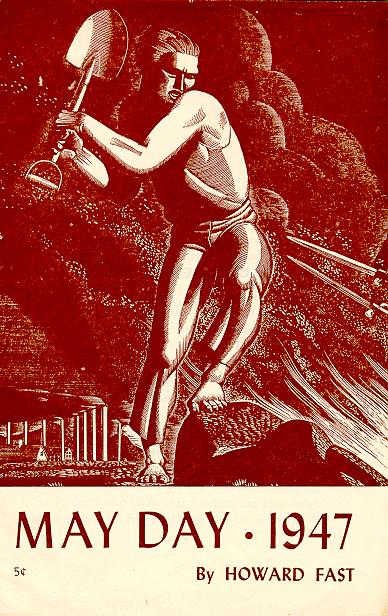
What gives them the right?
I heard the news of our latest murderous bombing strike in Somalia on Public Radio this morning, just after the network had reminded me today was May Day. Almost in the same breath which described the massacre of at least eleven people (and perhaps many more) in a home in Dusamareb as a part of the war on terrorism, there was this interesting attachment [quoting here from the BBC story on line]:
In its annual report on terrorism published on Wednesday, the US said al-Shabab militants in Somalia, along with al-Qaeda militants in east Africa, posed “the most serious threat to American and allied interests in the region”.
So which is it? Are we fighting terrorists without portfolios (i.e., non-governmental terrorists) or people who threaten our “interests”? Is it about another Red Scare or another United Fruit?
While I thank the BBC for including this information in their report, I think they might have made more of the difference between the two explanations for our rogue state’s latest atrocity, especially since the dumbed-down American public knows nothing about events which happened the day before yesterday and is notoriously incapable of making simple rational connections between facts and statements without serious outside help.
But even aside from its clear immorality, this American obsession with bombing people and things we don’t understand and in normal circumstances would prefer not to have anything to deal with is ineffective, and much worse. Reasonable people can see it’s not in our true interest, and it accomplishes the opposite of what we intend (or at least what we are being told we intend). How are what the government’s report calls our “interests” being served by these kinds of horrors? Before we try to answer that question maybe our perpetual-war shoot-em-up government should explain to us just what those interests are. I won’t even bring up the question of interests of a million dead Iraqis, but are our own lives, liberties and pursuits of happiness more secure today than they were before we had our armed forces stationed on the soil of most of the nations on earth?
Almost my first thought after hearing about the overnight raid was to put it into a more objective context [very unAmerican, that]. In my mind I decided to deny for a moment my status as a privileged U.S. citizen and I threw out the (temporary) reality of American superiority in conventional arms. The somebodies in charge in Washington think they have the right to bomb people on the other side of the world whenever they decide it’s the appropriate thing to do – to protect our “interests”. What’s to argue against the right of the somebodies in charge somewhere on the other side of the world to bomb us here? We are even more obviously a serious threat to the interests of most of the people in the world than any of them are to ours.
I believe some of them have already told us this, and I expect that bombings in Somalia and a series of aggressive wars initiated in poor countries on the other side of the planet will only persuade them of the truth of their position: That their interests are not those of the mad somebodies who author these atrocities. We can expect they will continue to remind us of this.
In 1787 Benjamin Franklin addressed the Constitutional Convention in Philadelphia in these words which were read to the assembly by a friend:
I agree to this Constitution with all its faults, if they are such; because I think a general Government necessary for us, and there is no form of Government but what may be a blessing to the people if well administered, and believe farther that this is likely to be well administered for a course of years, and can only end in Despotism, as other forms have done before it, when the people shall become so corrupted as to need despotic Government, being incapable of any other.
I had read this passage long ago, but I came upon it again yesterday while reading Gore Vidal’s erudite and extremely entertaining little 2004 volume, “Inventing a Nation: Washington, Adams, Jefferson“. In the next paragraphs Vidal looks ahead, and back, at the government left to us today:
Now, two centuries and sixteen years later, Franklin’s blunt dark prophecy has come true: popular corruption has indeed given birth to that Despotic Government which he foresaw as inevitable at our birth. Unsurprisingly, [the current edition of a popular biography of Franklin] is now on sale with, significantly – inevitably?, Frankin’s somber prediction cut out, thus silencing our only great ancestral voice to predict Enron et seq., not to mention November 2000, and, following that, despotism whose traditional activity, war, now hedges us all around.
Happy May Day.
ADDENDUM: For me one of the most painful parts of the continuing nightmare of our post-2000 world has been the deathly (literally) silence of most of the people of this country. We may repeatedly have been proven powerless, our opinions irrelevant to the conduct of the state, even when polls and balloting have finally revealed clear opposition to what is being done in our names, but how can so many still remain silent?
This bombing raid will go almost totally unnoticed, and unremarked.
[image of Howard Fast’s pamphlet, with Rockwell Kent illustration, from trussel.com]
Vincent Gagliostro with Margaret Thatcher at Pulse
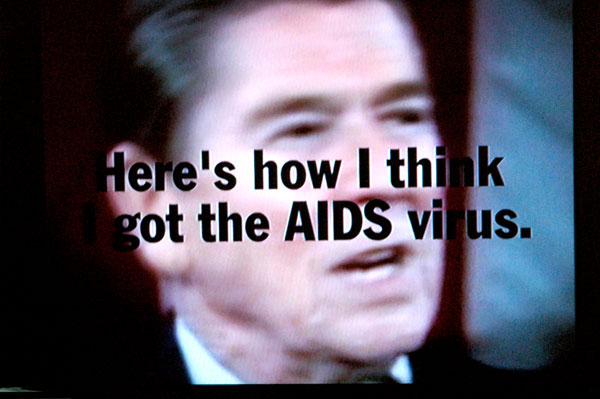
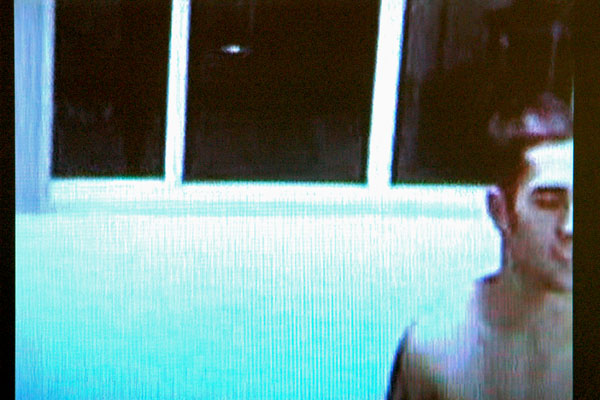
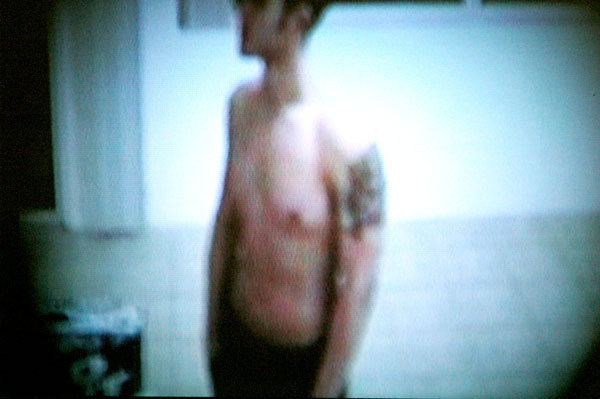
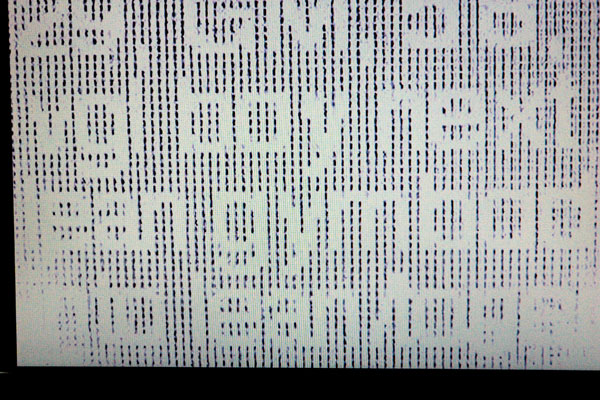
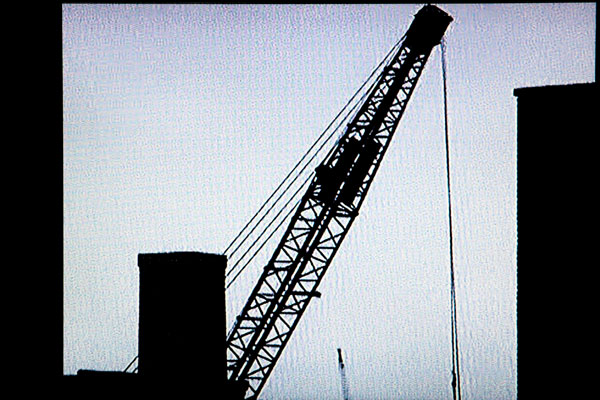
Vincent Gagliostro After Louie, an excerpt video [stills, and large details of stills, from installation]
Margaret Thatcher showed a video by Vincent Gagliostro at Pulse. I’d like to describe it as an art trailer for a full-length film not yet produced, but even in its current form it’s certainly a complete work of art. There’s not a single ugly or unnecessary frame in this piece. I snapped only five images while standing in front of the video screen last month; five images appear here.
Gagliostro describes the work as:
. . . a political love story set against the backdrop of a time when the gay movement mattered, when lovers were not looking for their rights within mainstream structures and when activism existed in its rightful home: the streets.
The artist is a friend and an activist colleague of mine.
Although I’m also no stranger to the world which inspired Gagliostro in creating this film, I prefer to let the gallery press release set the scene with the help of the director’s own input:
“After Louie” hits you like a time bomb . . . was there really ever a New York like that where adventure and discovery and sexual tension were still palpable and possible on the skinny island of Manhattan? Was there a meatpacking district before Pastis? When you watch Gagliostros video, you actually remember, for a moment, the streets and the clubs and the boys with nice abs.
In the visual and audio collage of Gagliostro’s piece you recall that New York City from the not-so-distant end of the last century like it was yesterday. You remember it all not with nostalgia, but, quoting Gagliostro, “with relief that this New York actually existed and actually happened before it was too late; that despite the tragedy and loss and pain of that era there was still the nourishment of real off-line experience and the comforts of heart and sex and art and strangers and bodies and life, and soul growth before everything was already discovered, developed, trained, tracked, exploited, done, over.”
There’s a clip of the video here, on the artist’s very beautiful site.