only in America: of the government by age of consent

I find it absolutely incomprehensible that in the end, after all the horrors of the last twelve years of Republican Congresses, the last six with a totally disastrous Republican administration, we might see the Republican ascendancy overturned because my fellow Americans are upset about another sex scandal.
I am amazed every time I open my laptop or newspaper, or listen to the radio, and find the story still continues. A middle-aged man who works in downtown Washington flirted with a “child” who was in fact of legal age in our nation’s capitol at the time he was the object of the older and more powerful man’s unwelcome attentions and poor judgment. Okay, it was several children, but it is for this that the Republicans must apparently now pay, not for their lies or their incredible venality, not for the deaths of tens or even hundreds of thousands of people in the Middle East or elsewhere, or for our fall (rise?) to the status of rogue terrorist nation, and not for the destruction of our ancient liberties or for the cynical incitement and manipulation of the fears of ordinary people all across the land.

Incidently, the idea of maturity or specifically the practical or legal “age of consent” is more a game of numbers than a science. Peter Tatchell, who has an argument with the laws of his own country, Britain, points out:

Already, 20 European countries have ages of consent lower than 16. The minimum age is effectively 12 in the Netherlands, Spain, Portugal and Malta. It’s 14 in Slovenia, Iceland, Montenegro, Serbia, Italy, San Marino, Albania and, in certain circumstances, Germany. All these laws apply equally to hetero and homo sex.

Adam McEwen at Nicole Klagsbrun

McEwenDresdenPhosphor2.jpg
Adam McEwen Dresden (Phosphorbrandbombe) 2006 phosphorescent paint and chewing gum on canvas 90″ x 70″ [installation view]

McEwenDresden.jpg
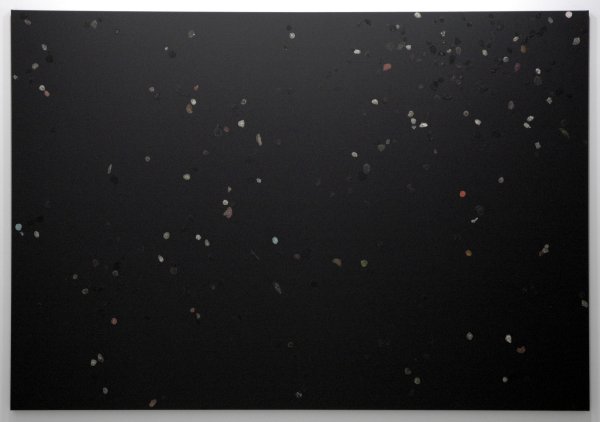
Adam McEwen Dresden 2006 acrylic and chewing gum on canvas 90″ x 130″ [installation view]
McEwenAdamDresdendetail.jpg
[detail of above]
I’m not even going to start addressing this show in writing myself. I could go on forever about the subjects which inspired Adam McEwen’s “8:00 for 8:30“, installed at Niclole Klagsbrun this month, historical crimes of necessity with which I am probably too much engaged. I’m going to turn the task over to João Ribas, writing in The New York Sun because he pulls together their different strings with intelligence and sensitivilty while never losing sight of the art which holds them together in this very smart exhibition. An excerpt:

The ability to deal out inhumanity with equanimity is at the core of British-born artist Adam McEwen’s second solo show,”8 for 8:30,” at Nicole Klagsbrun Gallery. A timely meditation on the cold rationality of the military-industrial complex, Mr. McEwen’s shrewdly political show asks more questions than it tries to answer.
Yet by looking at the horror of the Allied bombings of Nazi Germany, and the post-war American boom that was its euphoric aftermath, the show makes the case that the link between profit and obliteration applies today more than ever. First raze, then rebuild, and as Kurt Vonnegut likes to say, so it goes.

the American Airlines homo scare: even worse than reported

UPDATE ON THE AMERICAN AIRLINES INCIDENT:

AApedalcar.jpg
the airline’s straights-only security rules don’t fly

I have now heard from our friend David Leisner, who was quoted in the The New Yorker story I wrote about on Thursday evening. David was one half of the couple which witnessed the threats delivered to two other passengers seated in front of them, a homosexual couple, by (successively) the flight attendent, the purser and the captain of an American Airlines flight en route from Paris to New York. Both he and his partner Ralph Jackson were quoted in the magazine, but David has added some perspective and one damning fact which makes the airline’s confrontation even more outrageous than initially reported.
David writes, in part:

You can assure anyone that questions the degree of affection these guys were showing that it was very innocent – hand-holding, resting one’s head on the other’s shoulder and repeated kissing (but not French kissing!). Nothing disturbing about it at all, unless it had been a straight couple :-).
Also, the New Yorker writer got the punchline wrong: what the captain said to one of the couple was that he would divert the plane not if the arguing continued, but if he heard any more reports of such behavior (kissing). [my italics – JAW] It made an increasingly weird situation even more surreal and disturbing.

[image from pedalcarzone]

the antidote to 9/11 24/7

I wasn’t going to say anything more today about the fifth installment of our annual orgy of mourning and revenge, the anniversary of September 11. But things just got out of hand once we walked into Pierogi this evening and now I can’t help myself.
For some this sacred holiday was all about a service held around a small temporary wading pool installed downtown at the bottom of a very big hole (by now the flower-filled tank of water has probably been drained and its parts tossed into some recycling bin), but some of us decided we had to be around other, more thoughtful New Yorkers on the evening of the day which just won’t shut up, the drubbing from which most of our countrymen seem to have learned all the wrong lessons.
Barry and I decided to go to Brooklyn, and specifically Williamsburg, always a reasonable choice in stressful times.
Tonight Pierogi Williamsburg threw an opening party for “Matt Marello and Matt Freedman, Five Years After” and it would have been a smash even without the presence of most of Brooklyn and Downtown Manhattan’s art world working aristocracy and creative yeomanry. Matt Marello was in Gallery 1. From the press release:

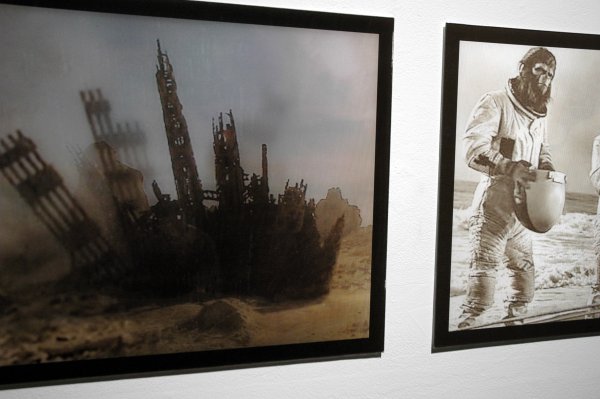
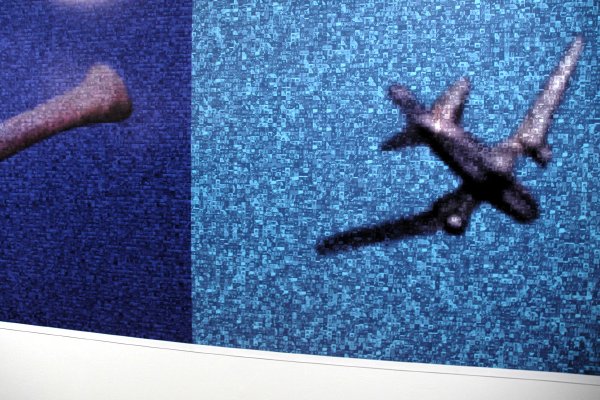
Matt Marello’s “1968/2001” is an extensive multimedia presentation based on the phenomenon of apophenia [the experience of seeing patterns or connections in random or meaningless data, according to the press release]. A few years ago, while digesting the events of 9/11, Marello began to notice an odd synchronicity between the destruction of the World Trade Center and Stanley Kubrick’s sci-fi epic, “2001: A Space Odyssey.” His further explorations led him into a strange and murky world, linking together such diverse elements as the moon, apes, 9/11, “2001: A Space Odyssey” and the historically pivotal years 1968 and 2001.

MorelloMattwtcapes.jpg
Matt Morello Lenticulars: Ground Zero/Planet of the Apes/Apollo 8 Astronauts/Escape from the Planet of the Apes 2006
2 Lenticular prints 20″ x 63″ [large detail of installation]

Morelloboneplane.jpg
Matt Morello Bone (WTC)/Plane (2001: Space Odyssey) 2006 large format ink-jet print 60″ x 158″ [large detail of installation]

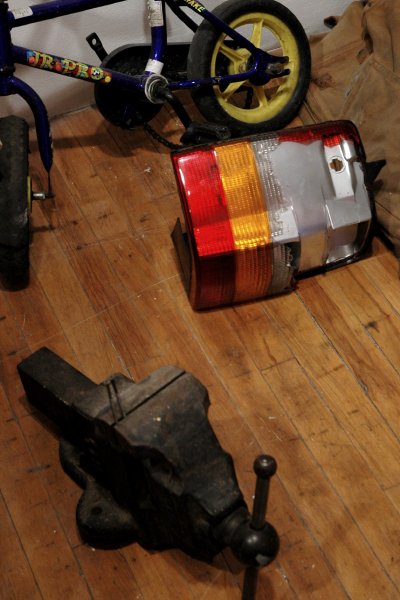
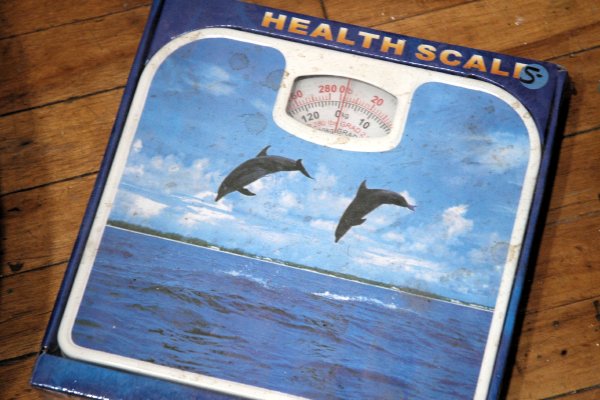
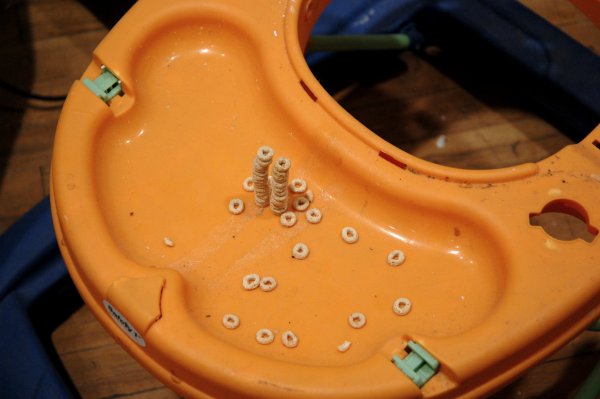
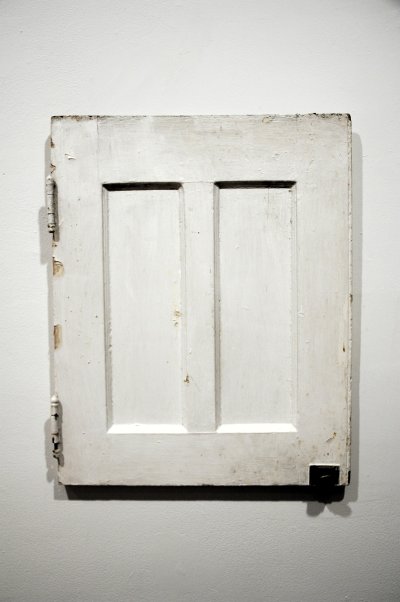
Matt Freedman’s “Twin Twin II” in Gallery 2 was a wonderfully silly and welcome magical antidote to the baneful effects of our self-inflicted twenty-first century affliction: 9/11 24/7. From the artist:

I kept coming around to the notion that the images of the towers were sort of recurring waking dreams, and that collecting them should be a continuing process of perception and manipulation. What I keep looking for in all the material I am using is something uncanny–either in the found objects themselves, or in the nature of the interventions I make–that leaves a lingering sense of unresolved discomfort in the mind of the viewer. The overriding and consciously dumb idea behind the work is that whatever else the towers are, they are definitely not gone from our lives, and they never will be. (Freedman, 2006)

Thumbnails of only a very few of the twinned objects seen tonight in Freedman’s ongoing project:
FreedmanMACcover.jpg
Freedmangummachines.jpg
FreedmanMFelix.jpg
FreedmanMcarlight.jpg
FredmanMFlippers.jpg
FreedmanMbelts.jpg
FreedmanMCheerios.jpg
FreedmanMpanels.jpg
FreedmanMrug.jpg
Presto! Exorcism complete.

the terrorists have won, without lobbing another shot

I suggest we haven’t had another terrorist attack within our borders in these five years precisely because it hasn’t been necessary.
Bush has managed to exactly fulfill the objectives of the last one. To begin with, it’s now official: He’s murdered more Americans in Iraq alone than the terrorists murdered in the destruction of the World Trade Center (and not all of those were American citizens).
This administration has also destroyed America’s ability to do anything but think about, or rather pretend to think about, the threat of another strike, and it has succeeded in destroying whatever sympathy or support the world had extended to a wounded nation immediately after September 11, 2001.
Even absent this regime’s record of abysmal incompetence, ordinary and extraordinary domestic imperatives which demand political attention have been forgotten or deliberately ignored largely because of our fear of terrorism and the manipulation of those fears. The same factors have caused us to casually abandon most of the fundamental liberties which were once our boast and the envy of much of the world.
Because we are tied down in a totally misconceived and disastrous adventure in the Middle East the world’s only remaining “superpower” is virtually helpless to impact events elsewhere, especially since we have also managed to isolate ourselves diplomatically.
Finally, because our domestic political process has been so corrupted by fear, simple timidity, opportunism, greed and cynicism we are arguably in an economic decline from which we may not recover even if we somehow manage to shift political personnel between now and 2008. We are intellectually and morally bankrupt.
Only because the worst may be yet to come, I won’t say the terrorist victory is already complete. But I’ll wager they’ve been smiling for five years.

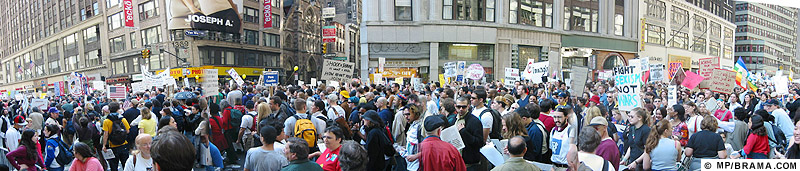
asking why there isn’t a protest movement?

antiwarMarch03ny.JPG
some kind of “Silence in the Streets”, NYC, March 23, 2003

I saw this “Editorial Observer” piece by Andrew Rosenthal in yesterday’s NYTimes and I could hardly believe my eyes. The writer asks, in the words of the piece’s title, “There Is Silence in the Streets; Where Have All the Protesters Gone?”, and then goes on to complain about how indifferent to injustice, or plain soft or cowardly, today’s generation is when compared to the nobility of his own:

. . . it’s hard to imagine anyone on today’s campuses willing to face armed troops. Is there anything they care about that much?
Student protesters helped drive Lyndon Johnson — in so many ways a powerful, progressive president — out of office because of his war. In 2004, George W. Bush — in so many ways a weak, regressive president — was re-elected despite his war. And the campuses were silent.

Yes, the lack of a military draft is an important explanation for the lack of political involvement on today’s campuses, but Rosenthal is being more than a little disingenuous in not mentioning the most important element of what he portrays as, at best, the apathy of our youth.
I’m outraged that an Assistant Managing Editor of the Times can pretend to be blind to the fact that we have taken to the streets, repeatedly, in numbers of up to a million people in New York alone. We were virtually ignored by our President, our Senators and Representatives, our courts and, most importantly, our media, notably his own employer. Little has changed even today, when two thirds of the country opposes the Iraq War and just about everything else done by this administration. We’ve also voted, tried to nominate candidates, written letters, made phone calls, leafletted, hung posters, organized action groups, started committees and blogs, created art and eventually screamed at the top of our lungs. We’ve been arrested for protesting, or for looking like we were going to protest, and sometimes we’ve been injured or held for days without charges. We remain nevertheless virtually invisible and even less effective in impacting Washington than, say, Miami Cubans have had in influencing Havana. Now there’s something worth thinking about, Mr. Rosenthal.
Fortunately some Times readers know a fool or a villain when they spot one, as I was pleased to learn in going through all five letters on the subject of his column which appeared in today’s edition. Theodore S. Voelker speaks for so many of us:

Andrew Rosenthal raises a timely question. The silence in the streets is partly a sign of millions of tired or retired protesters. There is also silence because we currently have an administration that would not listen to protests if 200 million Americans marched on Washington.

And Nancy Goor is more specific:

I think one reason we have so few protests is that the news media in general did not and do not cover any protests in more than a cursory way.
From the earliest antiwar marches, protesters learned that it wasn’t worth the effort because their demonstrations were not covered by the news media and thus their message was not reaching their audience.

But Leslie Kauffman gets right to the heart of the matter:

Andrew Rosenthal writes that there is silence in the streets about the Iraq war. Does he mean the streets of New York City, where a million people have marched and protested since before the war? Five major antiwar demonstrations have been held here since February 2003, most recently last April 29.
Or is Mr. Rosenthal referring to the streets of Washington, where hundreds of thousands of people have marched and protested since before the war? At least four major antiwar demonstrations have been held there since January 2003.
More than 1,000 local antiwar groups are active in at least 530 cities and towns. Every week since the war began, peace vigils have taken place in at least 90 locales.
Mr. Rosenthal says that “it takes crowds to get America’s attention.” Large crowds have consistently taken to the streets to call for the troops to come home. Why is the scope of today’s antiwar movement, like the war itself, “largely hidden from American eyes”?

The idiot in Crawford would have gotten nowhere without the pass he got from the commercial media from the very beginning; the ultimate blame for our potentially fatal national agony, Mr. Rosenthal (and you should be squirming by now), lies on your own conscience and that of almost every editor and publisher in America.
In fact that failure began at least as far back as the campaign of 2000, but who’s counting anymore.

[image from brama.com]

UPDATE: Josh Wolf free on bail – after 30 days in prison!

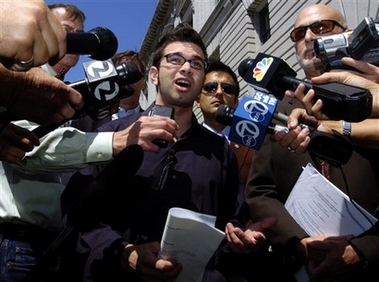
Josh Wolf, the young California video blogger and freelance journalist who was imprisoned August 1 for refusing to turn over videos of a political protest to a federal grand jury, has just been freed on bail by a federal appeals court, exactly one month later.

wolfjoshbailed.jpg

Wolf has left the Dublin prison facility, but he hasn’t left the community he found there. Yesterday, before once again thanking those who have supported him while he was inside, he wound up his statement before the press:

I’m sure that many of you are curious about my experiences being imprisoned in Dublin; I have been very fortunate and much of my time incarcerated was actually quite positive. While locked up, I met many fellow prisoners who are truly stellar individuals and a observed a community which is actually one of the healthiest that I have ever lived in. To my friends in Unit J2, thanks for everything and I wish you all the best of luck.
In an effort to help get the stories of those incarcerated out into the world, I have started to develop a not-for-profit organization which will be known, for now, as prisonblogs.net – the project is dedicated to giving a voice to the voiceless, and is something that I am very excited about. Expect more details about this initiative in the coming weeks.

For more on the story of Wolf’s release, see the San Francisco Chronicle and his own website.

feds throw blogger Josh Wolf into prison

WolfJosh.jpg
Wolf at work

“I feel a little bit responsible for this mess he’s in right now, because he told me, ‘Mom, you taught me to do what’s right.'” Liz Wolf-Spada
A Federal grand jury investigating the alleged vandalism of a San Francisco city police vehicle have imprisoned Josh Wolf, a weblog video journalist for refusing to hand over a video tape.
More.
Be afraid, Americans, be very afraid.

[image from SF Weekly]

the most dangerous war

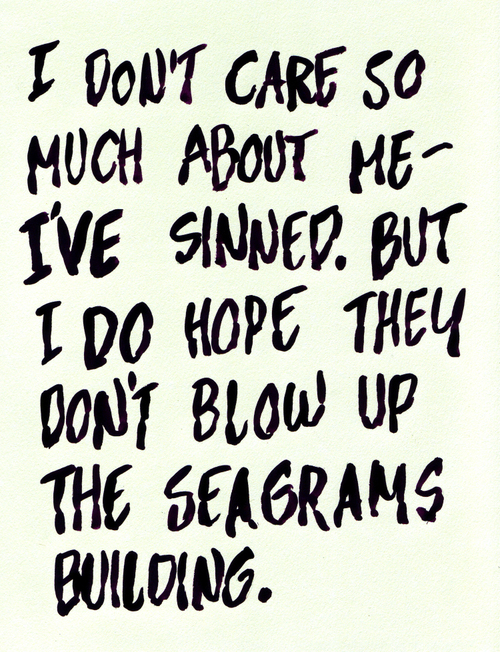
BuckwalterSeagramBuilding.jpg
Timothy Buckwalter [title not given] 2006 acrylic ink on paper 8.5″ x 11″

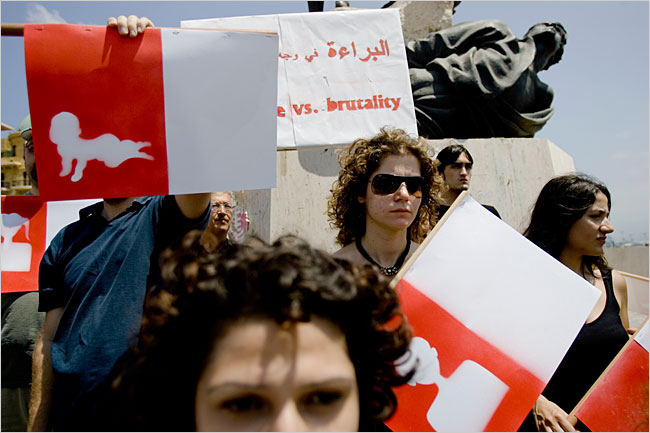
The destruction and invasion of Lebanon is very likely to spell disaster for New York, and for any other people or place rightly or wrongly perceived to be the agent of this “war”.
While it is only the latest consequence of incompetent statecraft in which these two have been joined, the rapidly disintegrating and certainly doomed U.S.-Israeli adventure in the Middle East is clearly the most dangerous in the entire history of their relationship.
Not surprisingly, Washington has already lost support the support of its allies, nations which were once vested unequivically both morally and materially in the defense of the Israeli state. Elsewhere even governments in islamic nations which in the past have been inclined to sit more or less quietly on the sidelines during conflicts in which either the U.S. or Israel has been involved now fear for their own survival. The increasing frustration and anger of their own populations threatens regimes in a virtually continous line stretching across Africa and Asia from the Atlantic to the Pacific Oceans.
Many people who have not accepted our arrogant imperium naturally see opposition to American involvement in their own lands as a necessary crusade for self-respect, if not for cultural, even physical survival. Governments which are unable to adapt to this movement will fall, to be succeeded by regimes our own is unlikely to find quite so manageable.
The most angry members of the opposition are not likely to wait at home.
This morning on the Brian Lehrer Show [although he annoys me so much I can’t usually listen, even lying in bed waiting to wake up] I was impressed by what his guest, Colonel Sam Gardiner had to say about events in Lebanon. Gardiner, who has taught strategy and military operations at the National War College, predicted that if the fighting were allowed to continue it would mean that governments would fall and the new ones were likely to produce a much larger conflagration. In a brief reference to a war from another world altogether and one which wouldn’t normally come to mind in this context, he described a multi-nation [multi-people, multi-agency?] conflict initiated, not as in World War I where it began with the rulers at the top, but from the bottom up.
Although not all of us will admit it yet, the U.S. is also burdened with a government operating independently of its people. None of us has any real impact on its composition or its policies, but no one expects a revolution here, while Americans lie asleep in front of their TV sets. Those who actually do see and care about what’s happening can only “hope” for the best – for the Seagram Building of course, and for lots of other folks and stuff too.

[image, via a tip from Barry, from Timothy Buckwalter]