showing rules of all kinds at PaceWildestein

Normally I don’t do posts about shows of established galleries or established artists, since they are usually covered by so many others in the (established) media, but sometimes I find an excuse to make an exception. The current show at PaceWildenstein 25th Street, “Logical Conclusions: 40 Years of Rule-Based Art,” provides one of those excuses. I am excited about it for the quality of the work, the quality of the installation and the quality of the curating. I think it would mean a lot to anyone, artist or fan, interested in the art emerging today, perhaps especially when that work seems to reject all rules.
But not surprisingly, in a contemporary art world which has rejected all schools, its youngest generation is also represented in this show.
I totally agree with Barry, who said it felt like a very good museum show. Maybe we should spring for the handsome catalog.
The press release describes the general idea, beginning:

A remarkable group exhibition featuring more than 50 fundamental works by key artists from the 20th century who use objective systems to explore the complex and chaotic realms of the subjective . . . .

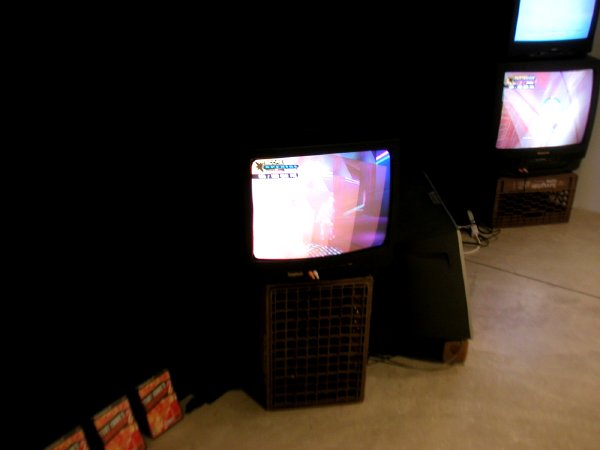
RSGprepplaysta.jpg
RSG Prepared Playstation (RSG-THUG2-1) 2005 large detail

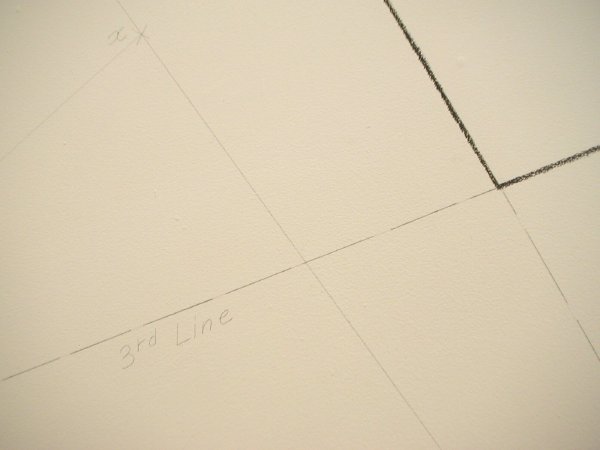
Lewittwalldrawing.jpg
Sol Lewitt Wall Painting #231 – The location of a quadrangle first drawn 1974 detail

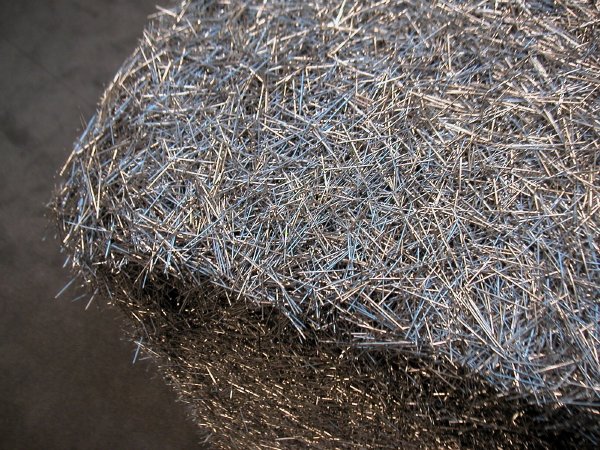
Donovanpins.jpg
Tara Donovan Untitled (Pins) 2004 37″ x 37″ x 37″ detail

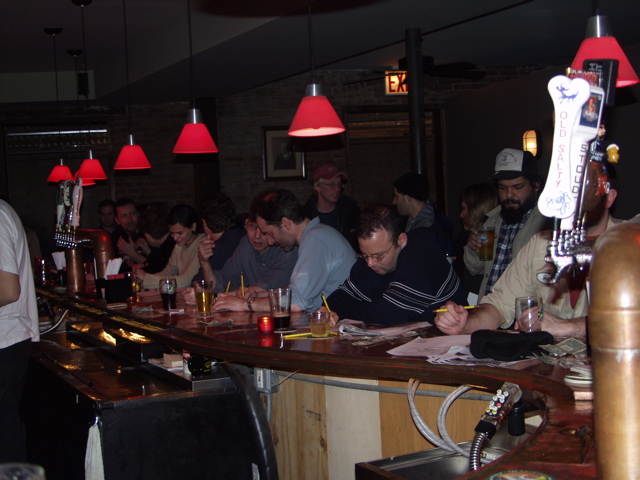
2nd Annual Drinkin’ and Drawin’ Championship

bard&d.jpg
intense bar scene from last year’s competition

Dunno exactly why, but this sounds like a wonderful thing.
The promoters (yeah, that sounds so big-deal), M.River and T.Whid, have their explanation:

It might be interesting if an art idea conceived in a bar could use a bar as a site and context for said art idea and it’s been a long hard winter.

But I like the sense of place and proportion provided by the description of the first prize:

Win a $100 bar tab [at the event’s venue, Greenpoint’s Bar Matchless]

This year Inka Essenhigh and Steve Mumford will be the judges.
For images from last year’s event, go to MTAA.

[image from MTAA]

Alexander Ross at Feature

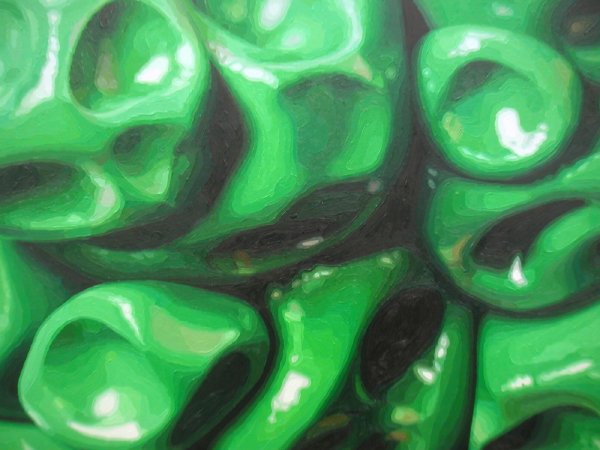
Ross2.jpg
Alexander Ross untitled 2004 oil paint on canvas 96″ x 85″ detail

Alexander Ross is in the main gallery at Feature through most of April. My visit was unfairly short today, but I have to admit a gut attraction for the detail of his new grotesque, very sculptural paintings, especially the luscious green parts, which are built up like isobars.
The Feature Gallery site hasn’t been updated for a while, so for images of Ross’s work, see Miami’s Kevin Bruk Gallery.

out of the mouths of older babes in silk stockings

[overheard in one of the aisles at the Armory show the week before last]
Near a wall displaying some of the less extreme of Robert Mapplethorpe’s photographs, an almost painfully-thin, elegantly-dressed Upper-East-Side matron of a certain age was explaining her aesthetic preferences to a friend:

I never liked any of his work, except for the really, really early photographs with the leather and penises.

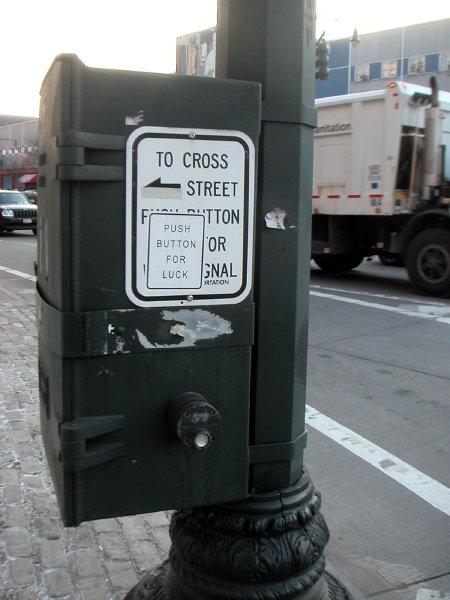
“push button for luck”

pushbutton.jpg
11th Avenue and 22nd Street, Saturday, March 19th

I’m gratified to see that someone has found an honest use for these dummy buttons which are found all over the city. The Department of Transportation installs them to make pedestrians feel that DOT cares, but I understand (based only partly on personal experience) that they actually aren’t connected to anything.

Robert Gober at Matthew Marks

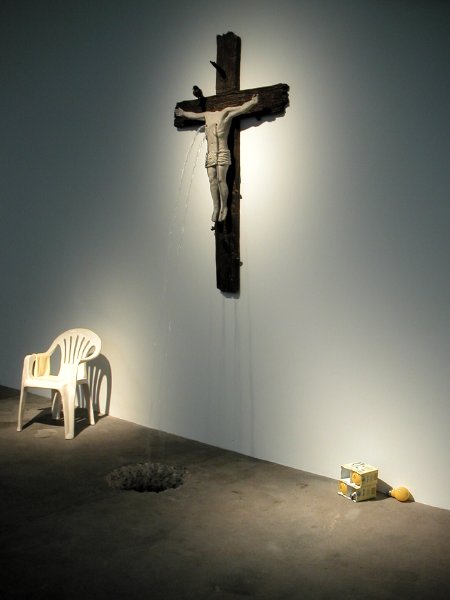
Gober2005.jpg
but not the Pope’s scene at all (detail of Robert Gober installation at Matthew Marks)

Robert Gober’s exhibition of several dozen new works at Matthew Marks (his first New York show in eleven years) is absolutely stunning. Even with the large room pretty crowded with visitors this afternoon (long lines waiting to peer into the two spaces behind doors left only slightly ajar) the atmosphere was very subdued, even reverent. As usual, his art is very much about our increasingly-damaged world, even though there’s never any shouting.

Robert Gober has produced a large-scale installation of new sculpture exploring questions regarding sexuality, human relationships, nature, and religion, all informed by the current political climate. The artist conceived this new body of work over a three-year period, beginning shortly after the events of September 11, 2001, and culminating shortly after the recent presidential election.

Curtis Fairman at scope art fair

FairmanCurtis.jpg

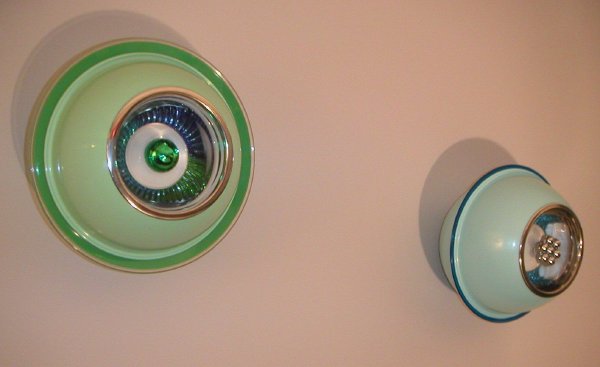
The Las Vegas contemporary art gallery Dust showed a number of small sculptures by Curtis Fairman at -scope New York last week. The piece on the left is titled Attar; that on the right, Ari. The work is made up of quite ordinary materials, assembled together as found or slightly altered, such as kitchen bowls, spiral wrist bands bicycle light lenses and fishing floats. They carry their clean, toy-like beauty modestly, but they aren’t easily forgotten. So here they are, a week after I first saw the sculptures. I like them a lot.
I’m shocked that he hasn’t shown work in New York before, but that will probably change now.
Fairman lives and works in Las Vegas, but to see additional work, look at the Rebecca Ibel Gallery in Columbus, or Google image search his name.

an opera house for all folks

AltesTheater.JPG

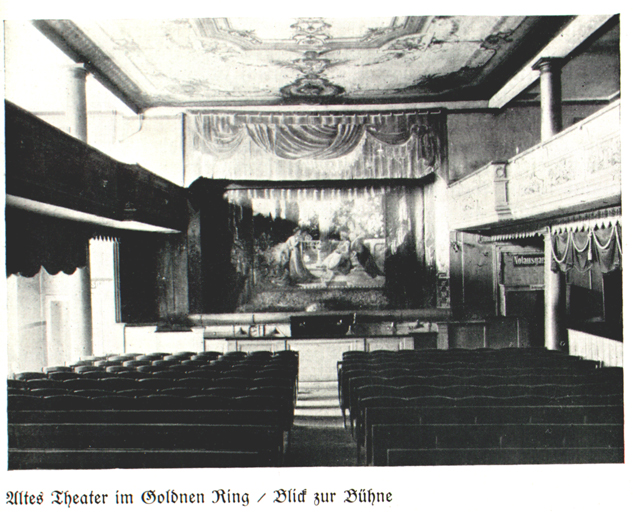
I came across the link where I found this picture while looking for images of the “Dada Baroness,” Elsa von Freytag-Loringhoven [she seems to have had an early and remote connection to the theatre shown above].
Wouldn’t it be wonderful if everyone had access to such a performance space in their own community? I mean wonderful for both audiences and artists!
When I saw this century-old picture of a basic, but absolutely complete theatre inside a small hotel in the provincial German town of Cottbus I thought about opera, and what fun it would be to see small productions in a space like this. Well, okay, I was also thinking of a scene in Fellini’s “Amarcord.” In our own experience, New York at least never seems to run out of spaces for non-musical theatre, so I thought it was fair to talk specifically about an opera house, maybe one in the west 20’s for instance. The hall shown above seems to have everything audiences and artists need, just a lot less of it. There’s a stage, curtains, an orchestra pit, parquet seats, boxes to see and be seen, wings, possibly a backstage area, carved or painted decoration, and even something most larger theatres don’t have, daylight when the large windows don’t have to be darkened.
It seems so simple. If a modest inn located in a provincial central European town could have this little jewelbox of a theatre, why can’t every town in America?
We know the answer, of course, because there was a time when every small town in America, and virtually every neighborhood, did have these stages, even if their productions might be high, low or anything in between. Then cinema appeared, and live entertainment began to disappear. Later, when television entered every home in America, if not every room and now most every SUV, the audiences stopped showing up altogether.
But today, for reasons discussed regularly in the cultural media, opera, especially new creations, and including work which would not be acknowedged as opera by the old guard, is once again hot and getting hotter. This is especially true in Europe, where there are still stages in every modest-sized town, most in appropriately-sized halls, and where there is serious public funding. But people everwhere seem to like what they are seeing and hearing – if they can find it. The boundaries between high and low are becoming blurred, with neither suffering diminishment. Once again, after almost a hundred years, whether grand or chamber/loft-sized, opera isn’t just for the elite, even if usually we can no longer whistle its new melodies in the streets.
I say let the Metropolitan Opera go on doing its museum thing in its big colliseum for increasingly older and wealthier audiences, but let’s create our own opera houses, and produce our own brand-new, unjustly-neglected or re-created operas, and let’s do it everywhere.
Although even the small halls I am imagining would need money, in the U.S. we would need only a fraction of the private or public [hah!] patronage which is thrown at television. Decades ago our government handed over the airwaves, which belong to the people, to a very few huge corporations which profit from an infinite number of other corporations which in their turn profit from selling stuff to the people who have been robbed of the patrimony of the airwaves. It’s an outrageous scam.
We need to get back what is ours, meaning the tools, both theatres and airwaves, with which we might build a culture beyond mere consumerism.
More opera, less soap.

[image from Klaus Martens (scroll down)]